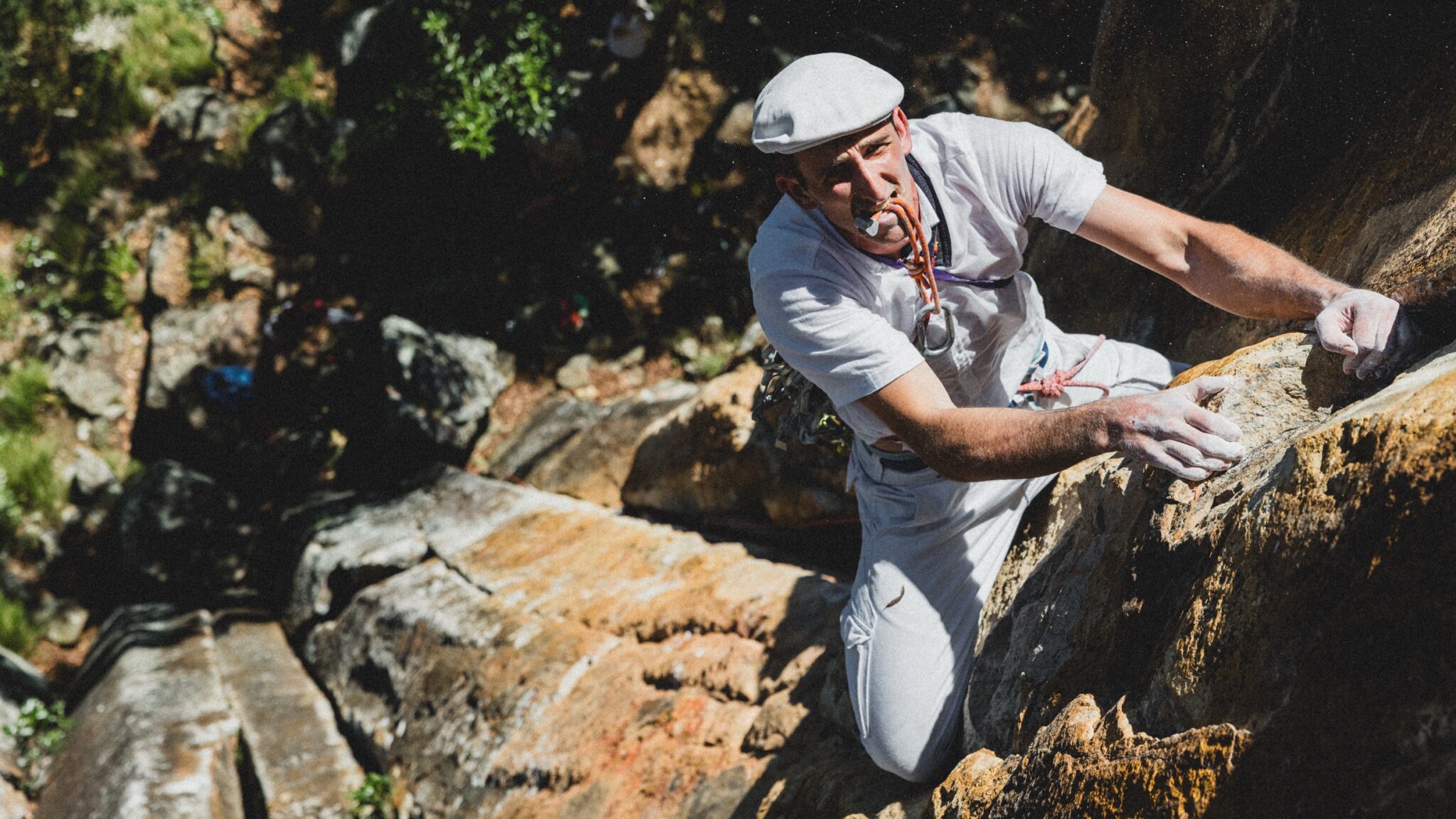
Reel Rock 2026 is coming soon, with American paraclimber Ben Mayforth featured in one of this year’s films. Ben took on the challenge to be the first adaptive climber with spina bifida to climb a 5.13. What followed was a 42-day project on Slim Shady that pushed him to rethink movement, persistence and what his body is capable of.
Ben Mayforth has spent much of his life learning how to navigate a world that was not necessarily built for his body. A professional climber for The North Face, Evolve and Wild Country, competitive paraclimber and he is now pushing the boundaries of what he thought was possible, one sequence at a time.
Mayforth was born with spina bifida. He has partial paralysis below his knees and multiple birth defects that left him permanently disabled. Despite this, he has always been active.
Growing up, he played a range of sports, including wheelchair basketball. He played from the age of 10 until 22, including four years at university at a collegiate level.

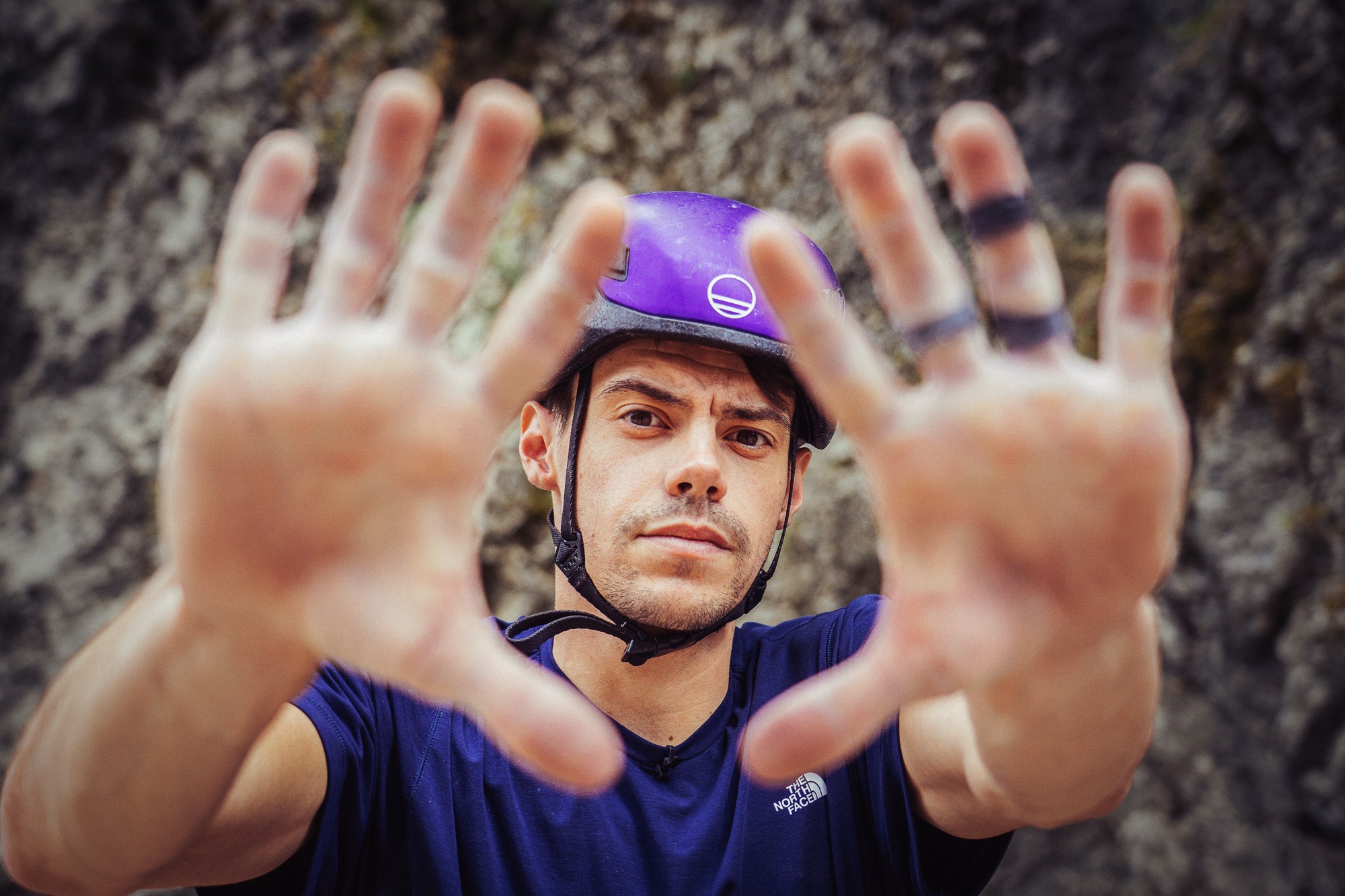
Ben Mayforth. Image by Gareth Leah
Climbing had always been somewhere in the background. His father and uncle were climbers and would tell stories about climbing in their 20s and 30s, which inspired him, although he never climbed with them, he later found climbing when a friend took him to a bouldering gym.
“As soon as I pulled onto the wall, I thought, ‘Oh, this is what I’m supposed to be doing, not playing wheelchair basketball.’”
The transition made sense almost immediately. Mayforth had spent most of his life as an upper-body athlete and quickly discovered that strength translated well to climbing.
“I figured out I could campus pretty well right off the bat,” he says. “I took all the discipline I had from being a collegiate athlete and put it into climbing, and it just kind of worked out.”
What started with bouldering developed into competition climbing and eventually sport climbing.
Learning how far he could go
Around 10 years after first pulling onto a climbing wall, Mayforth has now built a career around finding out just how far he can take it.
He clearly remembers his first outdoor bouldering send.
“It was a very different experience sitting on top of a boulder, looking out at all the rhododendron trees that were around, and then realising I’m not exactly sure how to get off the boulder.”
He sat there for a while and then moved onto the next problem which was figuring out how to walk off the boulder and how to do it safely. Without elaborating further, he said it was an “interesting experience”.
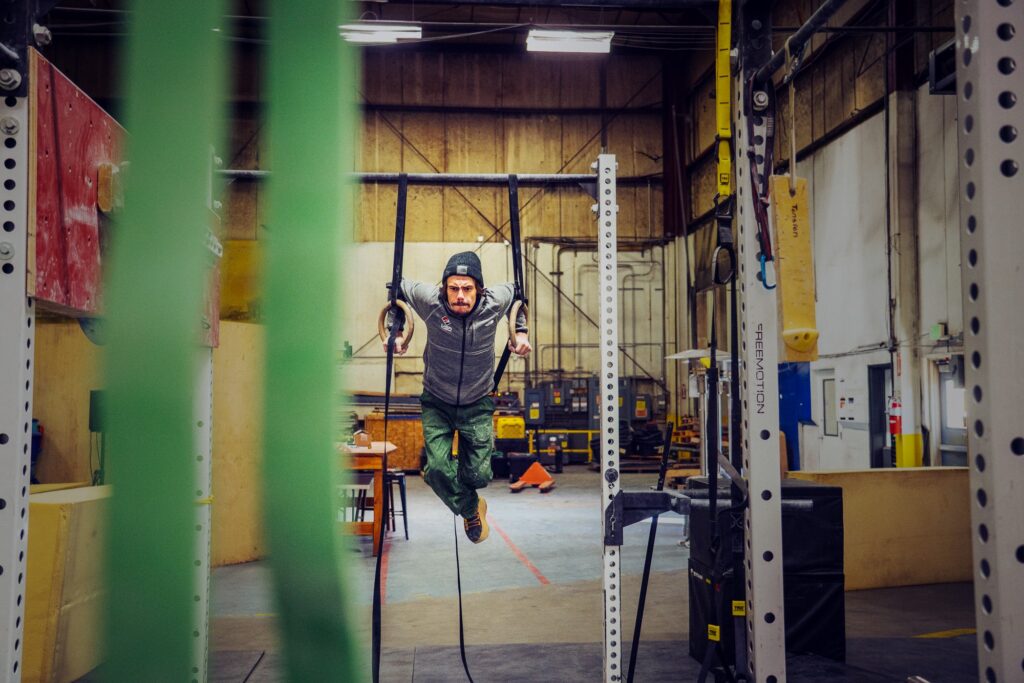
Ben Mayforth training. Image by Gareth Leah
In 2018, Mayforth began competing and quickly established himself as one of the strongest athletes in his category in the United States. He was ranked number one nationally and was beginning to consider what a future in climbing might look like.
Then came the opportunity to compete at the Paraclimbing World Championships in Innsbruck.
“I did horribly in the competition, I think I got 10th place. Going from first or second place in the United States to then not even hitting close to the podium. I realised I could settle down and reevaluate what I was doing for my training and now I think I can go a lot further.”
The result forced him to reassess. He began experimenting with different training methods and protocols, studying everything he could find to improve both his outdoor and competition climbing.
“It was kind of a kick to the gut. I thought, ‘I’m not that big of a competitor on the world circuit, and all of these climbers have so much more experience than I do.’”
Rather than backing off, he wanted more experience. Each season became another opportunity to work out what needed improving, whether that meant competition performance, outdoor grades or simply learning how his body responded to different demands.
One of the climbers who inspired him was American Ronny Dickson, one of the first above-knee amputees to climb V10.
“To look at what he’s done in his outdoor career, how hard he’s pushed and what he’s done to tune in his skills has been a big inspiration to me.”
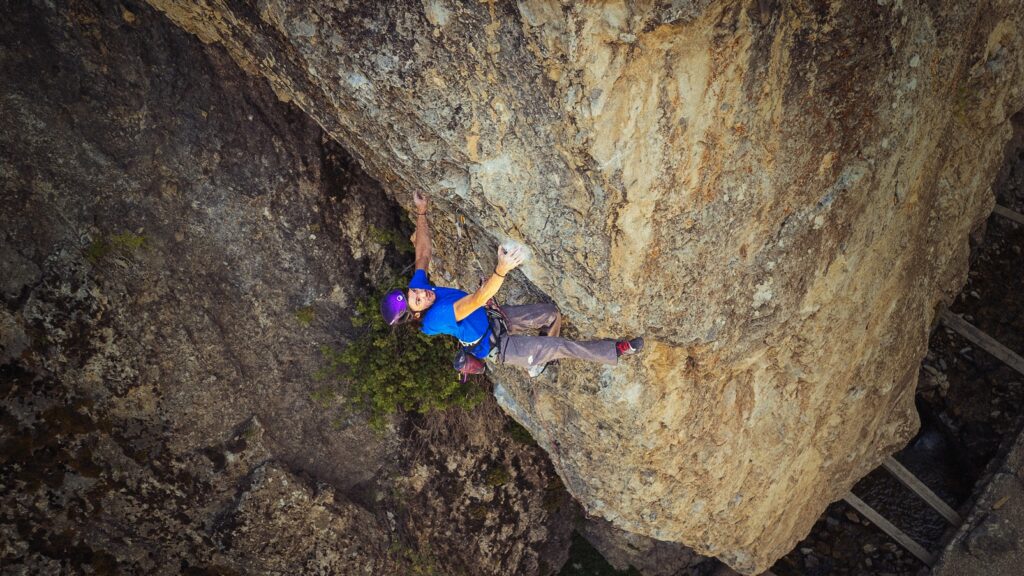
Ben Mayforth on Slim Shady (5.13). Image by Gareth Leah
Why 5.13?
Mayforth had primarily been bouldering outdoors, climbing around V8 and V9, while 5.12 was generally within reach in a day. He wanted something different: a route hard enough that he would have to learn how to project properly.
The number wasn’t chosen at random. For Mayforth, 5.13 represented a significant step into a style of climbing that would demand more than simply having the strength to do individual moves.
“I could do 5.12 pretty easily, usually a day’s session, and I hadn’t had the opportunity to put in the work for a long-term goal. I thought a 5.13 would be a good test if I could put together each sequence with more limiting movements. My ultimate goal is 14b and maybe even higher. We’re learning what the possibilities are.”
That goal gave him a clear starting point: find a 5.13 and learn how to project it. There were a lot of days out searching for the right climb but he eventually landed on Slim Shady.
42 days on Slim Shady
The route would later become the centrepiece of his upcoming Reel Rock film, but when Mayforth first started working on it, there was no guarantee he could send it.
Two months into the project, he hit a wall. One sequence remained stubbornly out of reach, complicated by a bolt that was particularly difficult for him to clip.
“I thought I had hit my breaking point. I just wasn’t able to put together this one sequence. It was a lot to clip, especially for my body type. I thought there was no way I would be able to work this sequence efficiently.”
The solution was not simply getting stronger. It meant changing the way he approached the route. Eventually, Mayforth decided to skip the bolt, something he found daunting as he had never done that while pushing his limits.
Before committing to the idea, he tested the system, clipping the permadraw into itself so he wouldn’t be tempted to clip it and taking large falls to make sure the fall was clean.
“I eventually figured out I needed a really high foot for that last bit of the sequence. It just kind of came together.”
That is a recurring theme in Mayforth’s climbing. His body presents him with a set of limitations, but those limitations also force him to approach movement differently.
On his right side, he can’t pull with his toes or hamstrings. Sometimes that means using a drop-knee position and extending his foot to rock onto a good foothold. Dynos are difficult unless the handholds are particularly good. His spine is fused, meaning he can’t arch backwards to look around holds or bulges in the same way as other climbers.
“I don’t feel my feet much at all, so it’s a lot of looking down and looking at the specific foot I’m using to make sure my foot is firmly placed on the hold.”
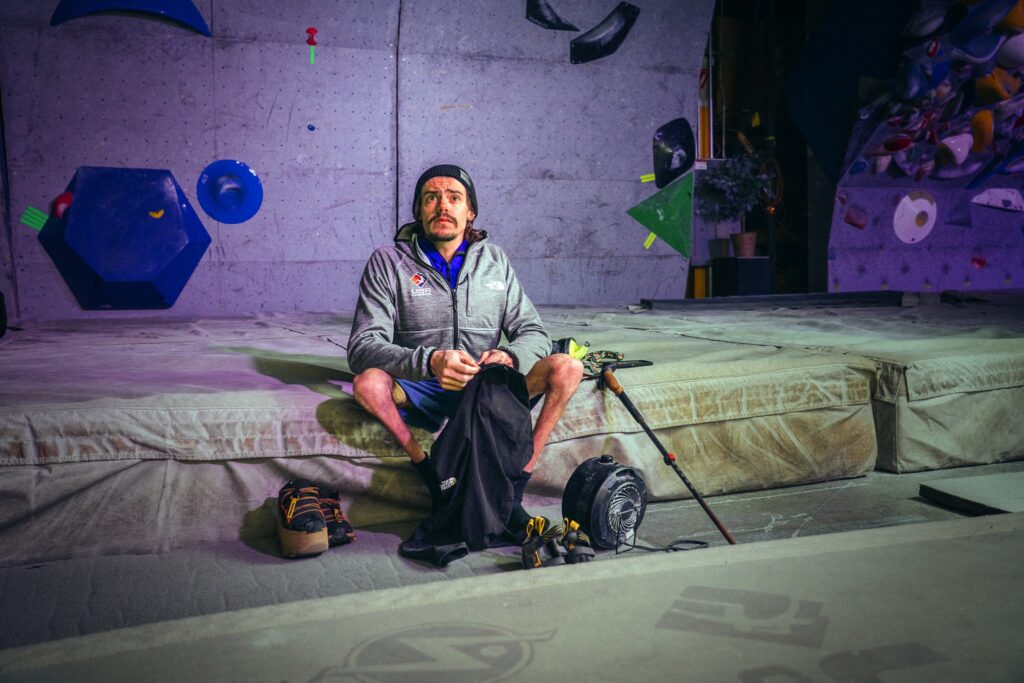
Ben Mayforth in the bouldering gym. Image by Gareth Leah
Climbing between everything else
There are also challenges before he even gets on the wall. Long approaches can drain enough energy that he has less capacity left for the climbing itself, so food and pacing become part of the equation.
“I do have these limitations with my body and it’s really fun and interesting to watch myself work around it and figure out new ways to climb and be myself in general.”
For much of the project, Mayforth was working a day job while competing heavily, travelling for events and photoshoots, and trying to maintain enough time on the route to make progress.
“I think I did a total of 10 competitions last year.”
His schedule became a constant cycle of travel, work and climbing.
“I would go away for a trip, come home, go to work. On my day off I would go project.”
After leaving his job at the beginning of July, the schedule remained intense. He was still competing, travelling for photoshoots for his other sponsors, and fitting in two or three days a week on the project whenever he was home.
Rather than having completely separate training programs for competition and outdoor climbing, Mayforth folded the project into one larger training block.
“At a certain point I had to stop my training block because it was just so much performance climbing that I couldn’t keep up with what was in my program. Doing a 5.13 sequence over and over again. I think I would give it 7 redpoint burns a day when I would go out. The level of fitness you get from that is really good. You’re running power endurance over and over again. It was like a training day but a very hard intense training day.”
When he finally sent the route, there was barely time to process it. He was due to fly to Korea the following day for the World Championships.
“I remember flying to Korea and I was just neurologically exhausted. I feel great! But I don’t know how my body is going to respond when I get to Korea. It did not respond how I wanted it to. I did well in qualifying, but in the finals I was just tired and didn’t have the capacity to keep up that energy.”
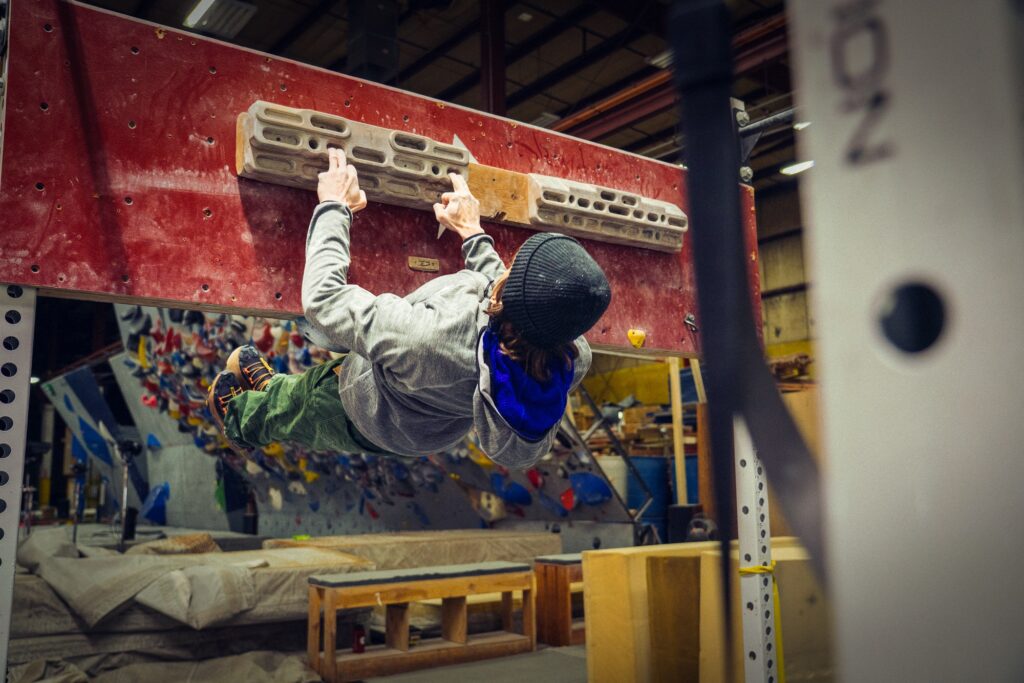
Ben Mayforth. Image by Gareth Leah
From project to film
The idea to pitch to Reel Rock started with Mayforth simply wanting to document the process of trying to climb a 5.13. His friend Gaz saw the chance to create a film.
“As he got to know me he got to know more of my story and more of my triggers, what was going on in my life at the time and saw a bigger and deeper story,” said Mayforth.
Even once they had decided to create the film, there were plenty of unknowns. The route had to be found. The movement had to be solved. The project had to fit Mayforth’s body, his schedule and his ambitions. And there was always the possibility that after months of work, 5.13 simply wasn’t going to happen.
“Gaz came out almost every single day I went on the project. I think we had 42 days in total on Slim Shady. It was quite a bit of an ordeal and he was willing to stick it out and see it through the end.”
Tickets for Reel Rock 2026 now available.
Find your nearest screening here.
More than overcoming
It’s easy to frame a story like Mayforth’s around overcoming adversity. He doesn’t particularly like that narrative. For Mayforth, everyone is navigating their own set of physical and mental circumstances. Para climbers simply have different problems to solve.
“All of us are trying to figure out how to navigate our own specific space. Everybody’s bodies are different, everybody’s situations are different.”
He is equally uncomfortable with another common part of the adaptive climbing narrative: automatically labelling every disabled athlete an inspiration.
“Assuming that everyone with a disability involved in athletics deserves a standing ovation is kind of overdone. But if the person is deserving of that, we should allow them that space for the extraordinary.”
In the end, Slim Shady became his first 5.13.
“I think the process of finding the right 5.13 and Slim Shady was a very humbling and transformative process into helping me rediscover who I am and what’s the actually potential of what i can do and understanding that there are always lessons to be learned and finding the peace and stillness inside of that.”
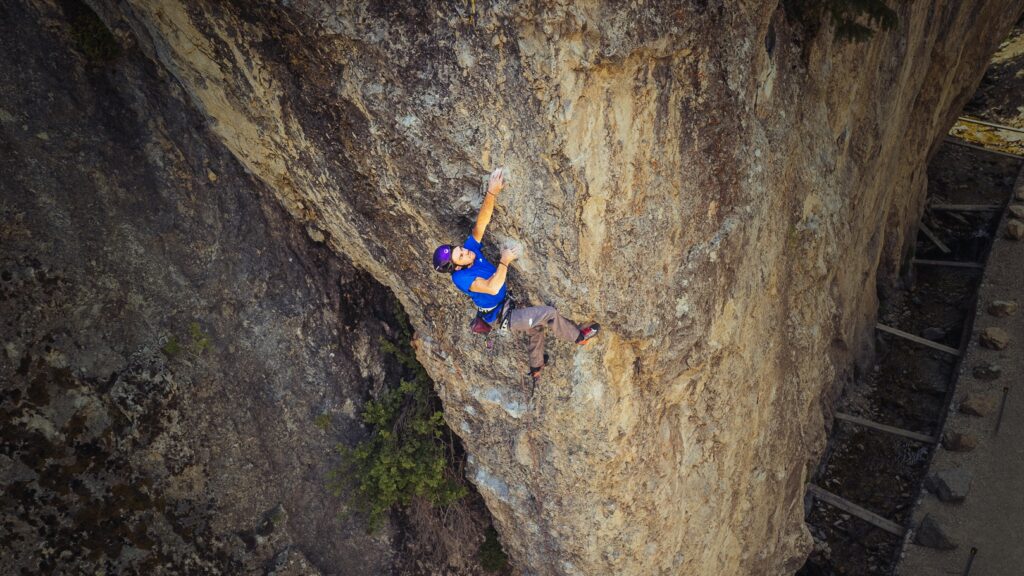
Ben Mayforth on Slim Shady (5.13). Image by Gareth Leah
Tickets for Reel Rock 2026 now available.
Find your nearest screening here.
More Articles on Paraclimbing: