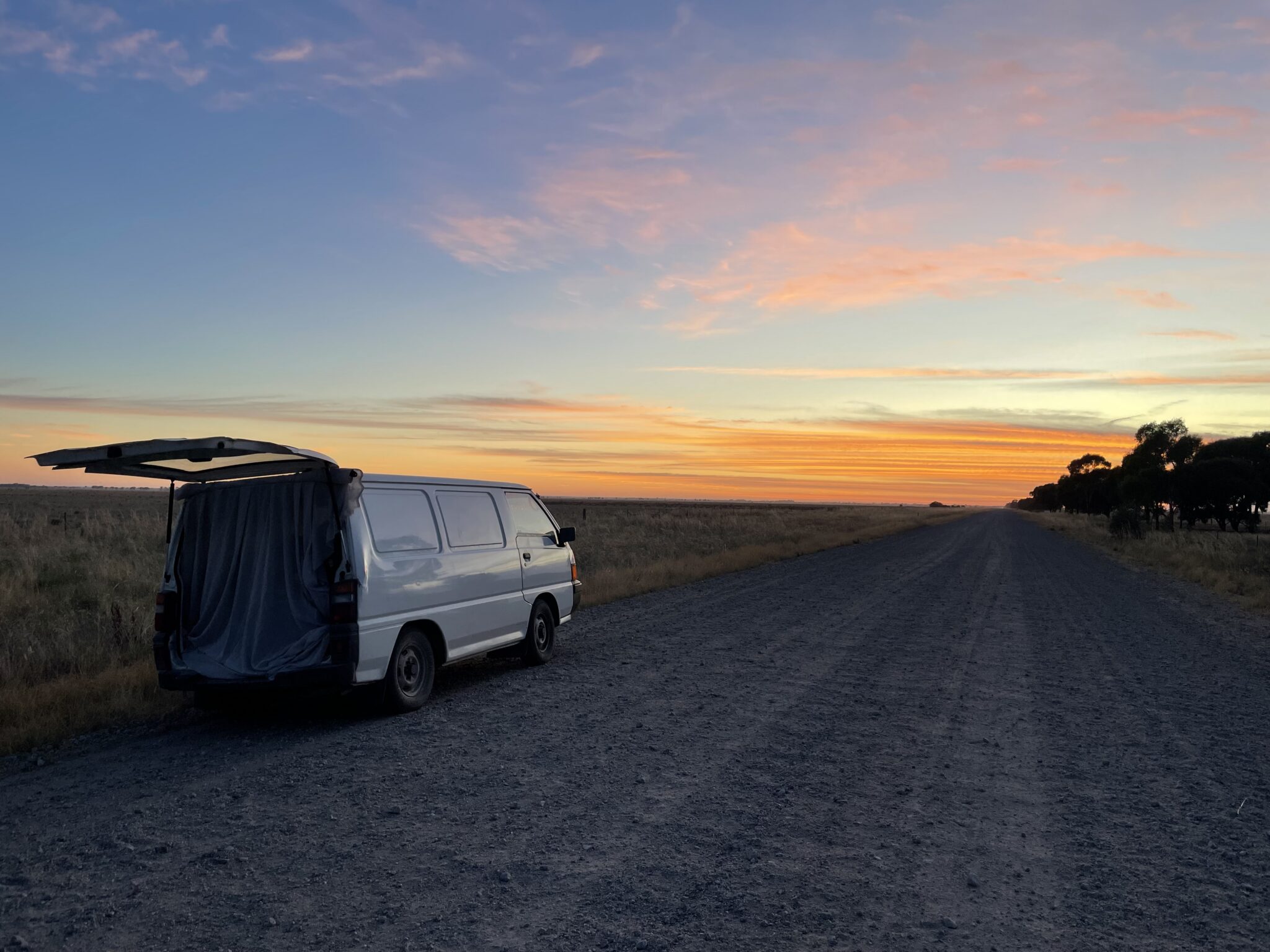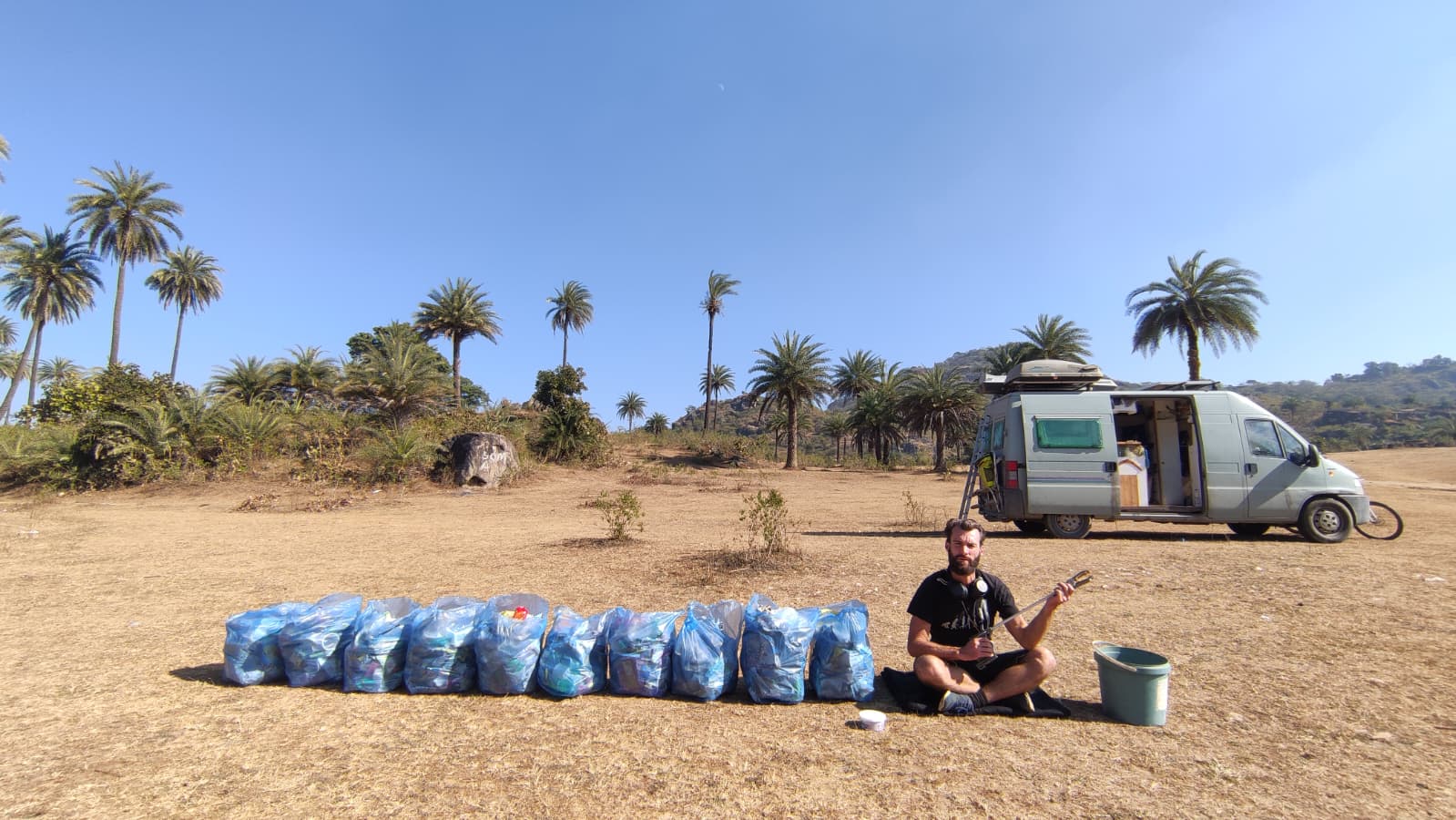
Can One Climber Solve The World’s Plastic Waste Crisis?
When stopping in at Blue Monkey Mountains, a climber friend’s café in the Blue Mountains, I never expected to meet someone who had spent the past six years travelling the world, picking up rubbish along the way. But that’s exactly where I met Tobi Riesch, a German climber on a mission to clean up the world, 2.2 kilograms at a time.
Words by Claire Williams, Images by Tobias Riesch
Plastic waste is one of the defining environmental issues of our time. Across Australia, recycling drop-off points, Clean Up Australia Day and countless community initiatives encourage people to play their part. Governments continue to discuss how we tackle plastic pollution, particularly the waste making its way into our oceans.
But what about action?
What if, instead of waiting for the next policy, campaign or organised cleanup, we simply picked up the rubbish we found in front of us?
Climbers are often criticised for their impact on the environment, but the climbing community is also home to some of the world’s most passionate advocates for protecting the places we climb. Tobi Riesch is one example. Since 2020, the German climber has been travelling across the globe as part of what he describes as the world’s longest cleanup.
To date, Tobi has travelled through more than 38 countries, collecting and weighing more than 4,790 kilograms of waste from forests, beaches, roadsides and waterways.
His goal is simple: 2.2 kilograms per person, per year.
It is a number he believes could make a meaningful difference if enough people took the time to reach it. For Tobi, that meant putting the idea into practice himself.
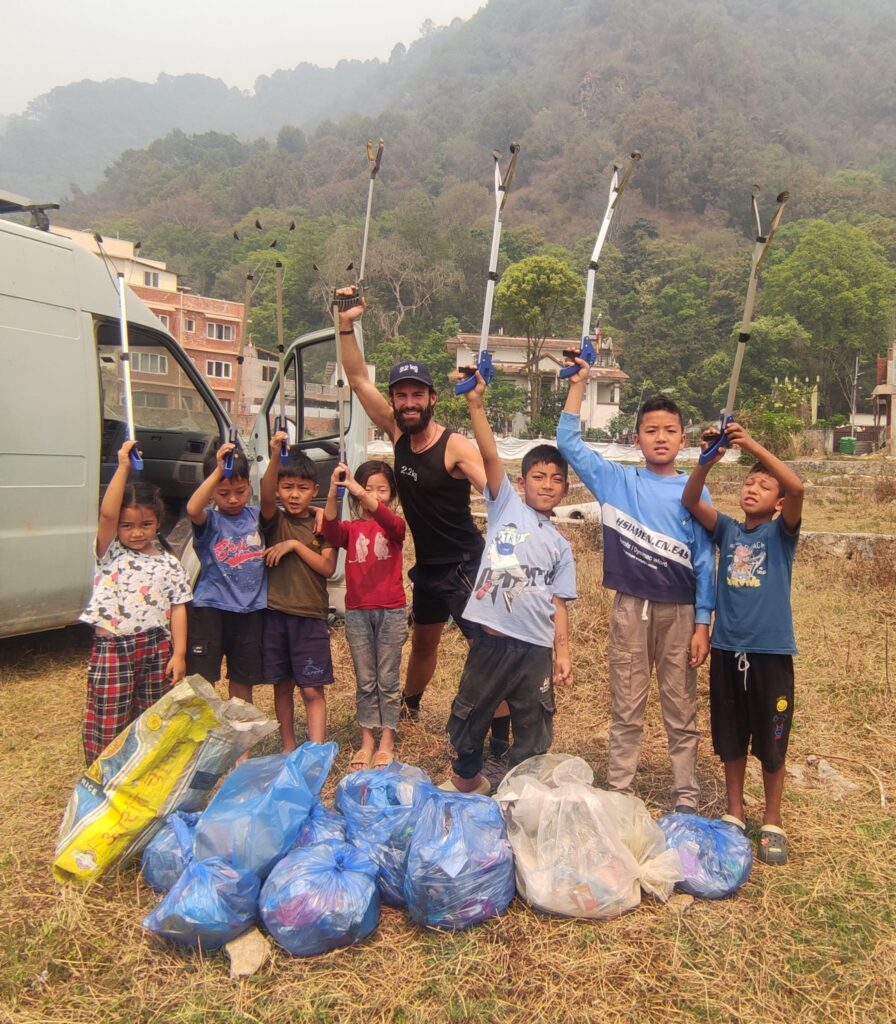
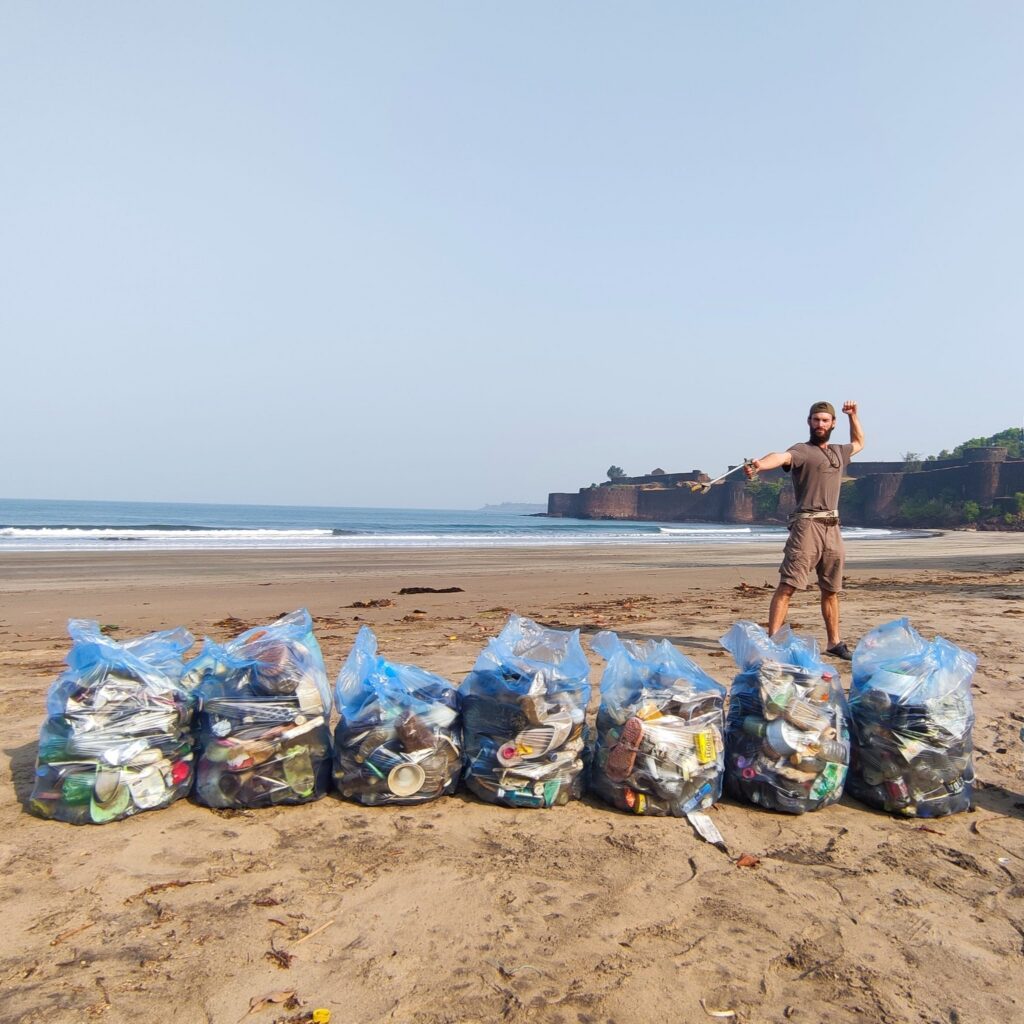
Left: Children of Kathmandu, Nepal assisting in the clean up! Right: Tobi’s clean up on a beach in India.
For the past six years, he has been travelling the world with a simple goal: pick up rubbish, weigh it, and see what happens if enough people do the same.
A mechanical engineer from southern Germany, Tobi was working in the aviation industry when COVID hit and he lost his job. He took the opportunity to travel, initially planning a year-long sabbatical around Europe. But a beach cleanup in Portugal changed the direction of his journey.
“I literally cleaned the whole beach within two, three hours,” he says. “That was an eye-opener for me that I can do something about it.”
The experience led Tobi to a bigger question: what if everyone did the same?
He began researching the scale of the global plastic pollution problem and came across an estimate of 12.7 million tonnes of plastic entering nature each year. Dividing that figure by the world’s roughly eight billion people, and adding a 35 per cent buffer, he arrived at his target: 2.2 kilograms of rubbish per person, per year.
The number is theoretical, but Tobi sees it as a simple message that people can understand.
“If a movement is starting to roll with many, many people involved, we actually could fix this problem.”
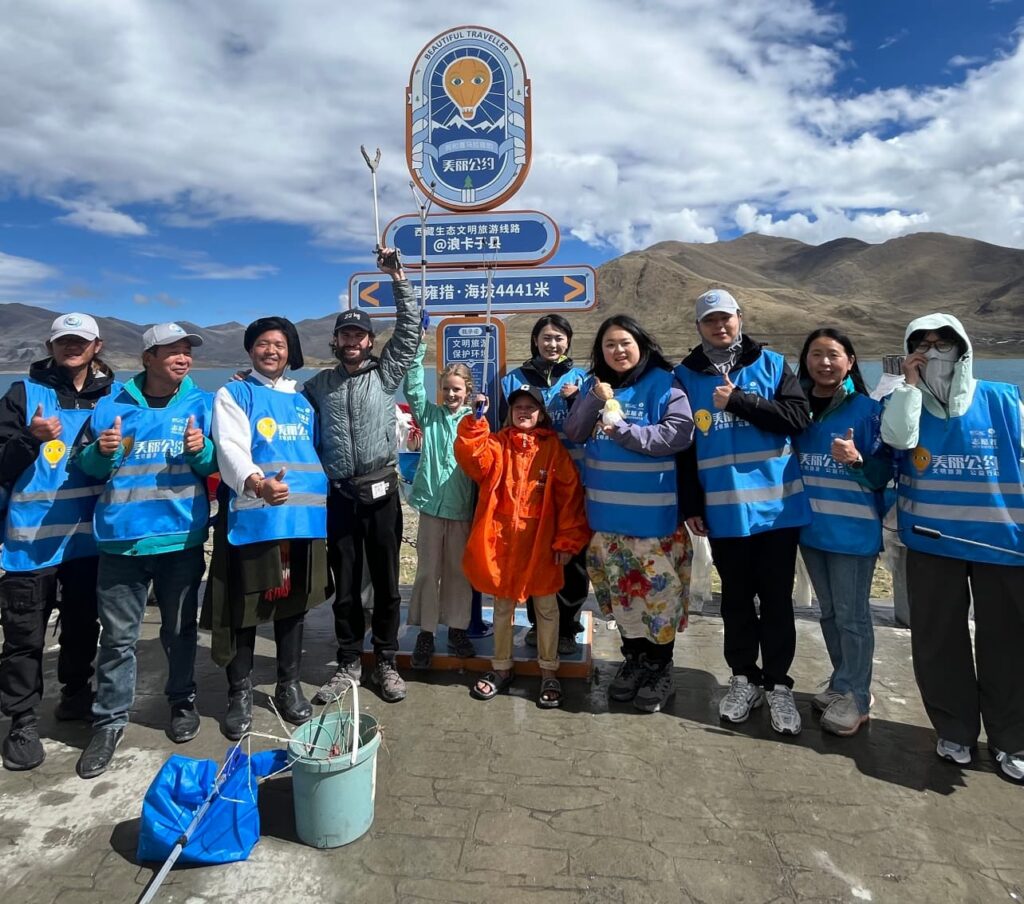
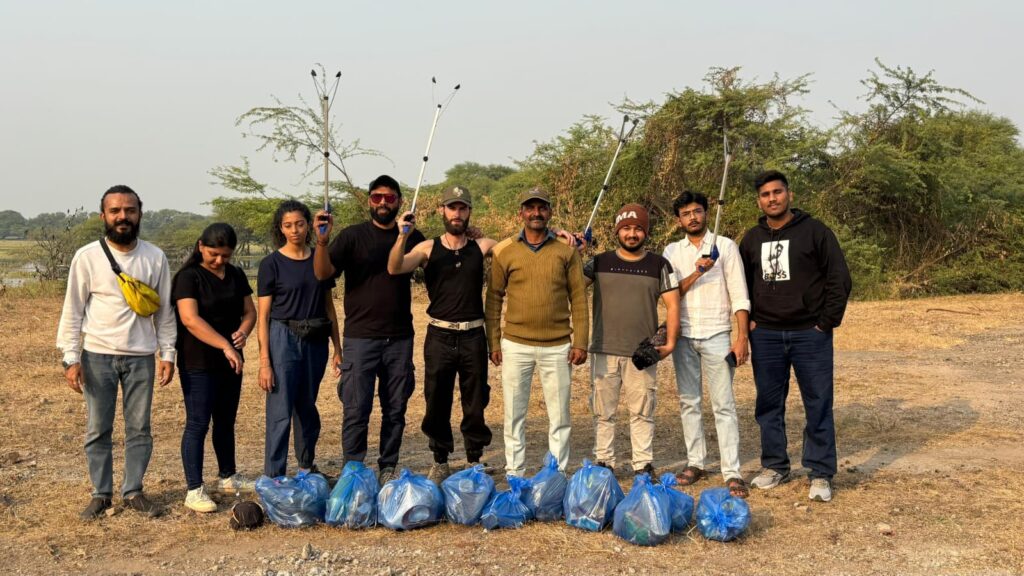
Left: Spontaneous clean up in Tibet China. Right: Tobi with local volunteers in Ahmedabad, India.
From Norway to New Zealand
What began as a personal cleanup mission eventually became part of an enormous overland journey.
Tobi decided to combine his travels with a continuous litter-picking project, cleaning up roughly every 100 kilometres or whenever he found somewhere that needed attention. His planned route would take him from Norway’s North Cape through Europe and Asia, across the Himalayas and Southeast Asia, and eventually to Australia and soon, New Zealand.
Along the way, the cleanup became a way of connecting with the people and places he passed through. In some countries, particularly where litter picking is culturally associated with low-paid work, people were initially surprised to see a foreign traveller doing it voluntarily.
“People ask because they don’t understand,” Tobi says. “In most cultures, picking up trash is the lowest job possible.”
But once he explained what he was doing, he often found people eager to help. In Iran, where Tobi spent three months surrounded almost exclusively by locals, he recalls people telling him, “Tobi, you’re a man of God.”
He believes the response demonstrated something important: people are aware of the problem, even when they don’t necessarily know how to tackle it.
“I don’t know if it was my influence because the people know the problem, and they want to do something about it.”
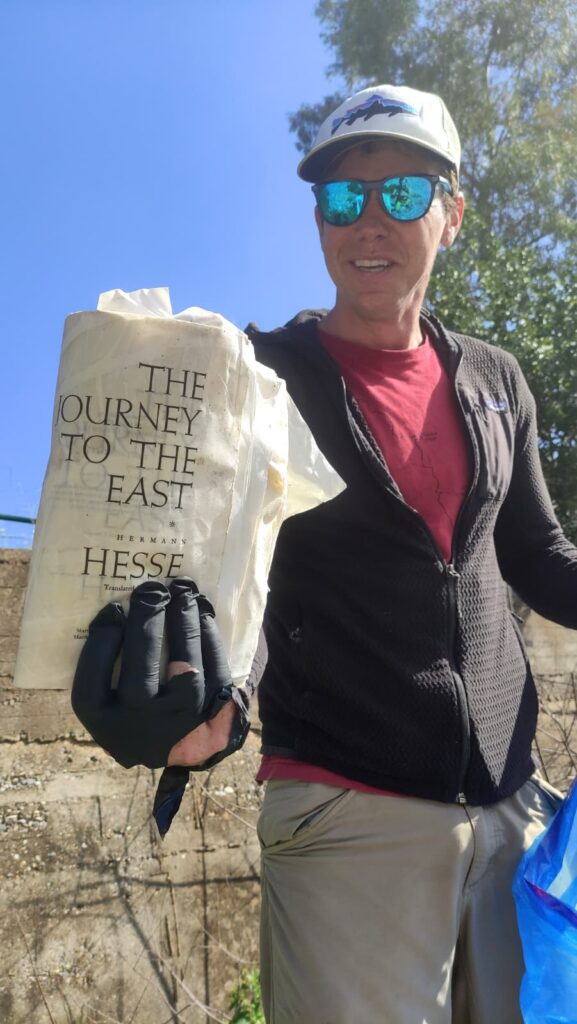
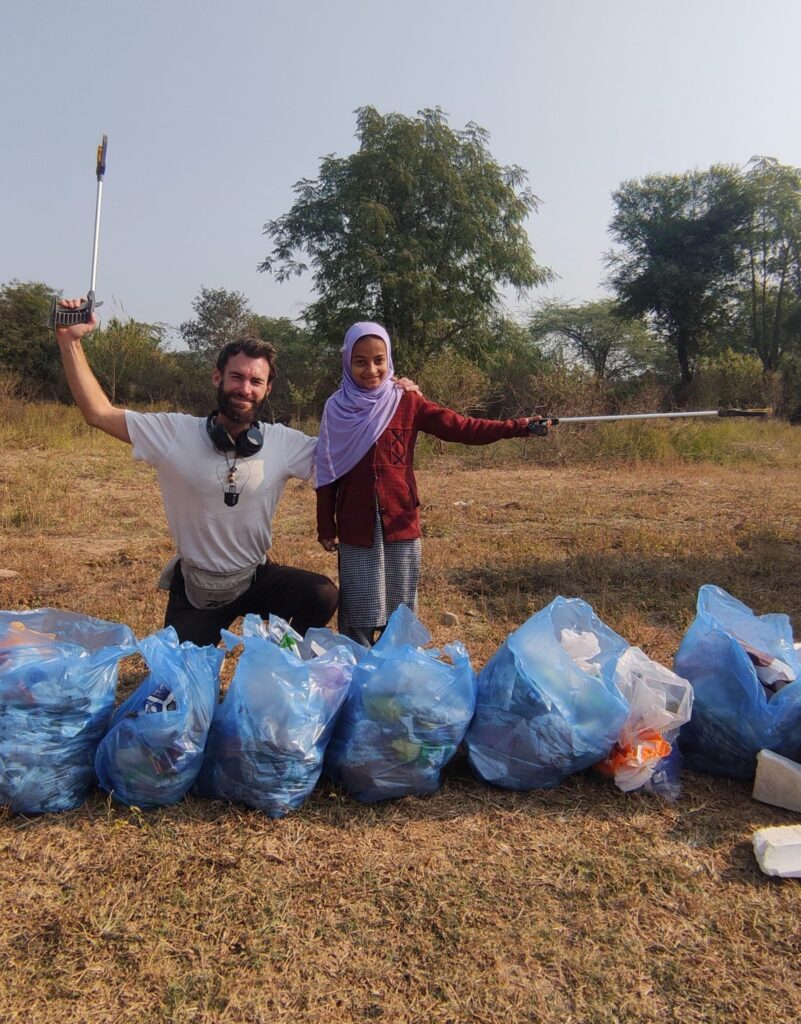
Left: Climber Igor Epof (Owner of Blue Monkey Mountains Cafe, Dargan, NSW), doing a clean up in Leonidio, Greece Right: Tobi with a village girl in India.
Five tonnes and counting
Unlike many environmental campaigns that rely on estimates, Tobi has kept meticulous records of his own contribution. Every bag he fills is weighed and recorded.
So far, he estimates he has collected around five tonnes of rubbish, with approximately four tonnes collected independently and another tonne alongside other people.
When he has time to stay somewhere, he organises group cleanups. When he’s travelling quickly, he often works alone.
“If I’m moving fast, I don’t have the time and energy to talk to hundreds of people,” he says. “I just did a quick solo cleanup, just me.”
The distinction is important to Tobi’s approach. His project isn’t simply about the amount of rubbish he personally removes. The larger goal is to encourage other people to pick up their own 2.2 kilograms.
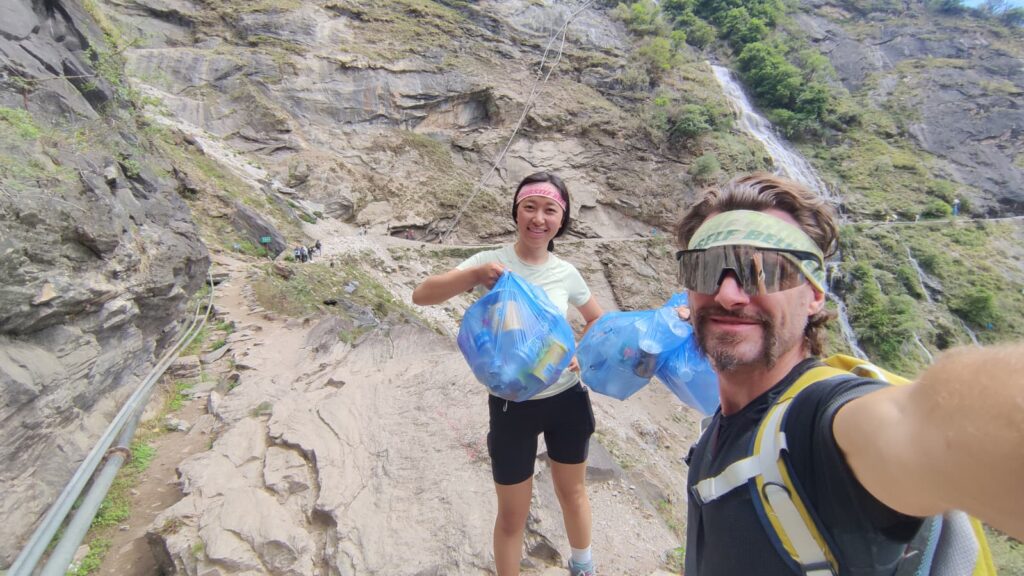
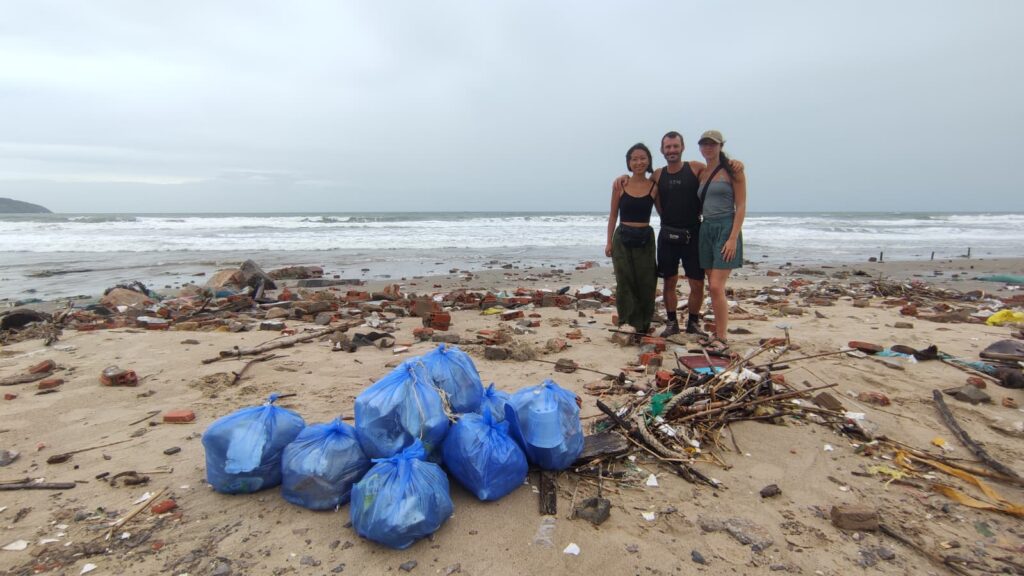
Left: Tobi with Lily in Tiger Leaping Gorge, China Right: Tobi, Lily & UK traveller in Vietnam
Following the plastic
Tobi’s journey has also given him a firsthand view of how dramatically litter levels can vary between countries and environments.
Beaches have been a particular focus because of their connection to the ocean. Unlike rubbish in a forest, which can remain in one place for years, waste on a beach can be continually moved by waves and tides.
“The waves, they grind plastic,” he says. “It becomes microplastic very quickly with the sand and the movement of the waves.”
After travelling through parts of Indonesia, where he describes encountering beaches covered in plastic waste, Australia’s coastline provided a stark contrast.
Tobi says he was surprised by how little rubbish he encountered along many Australian beaches. He attributes Australia’s relatively low levels of litter to factors including lower population density, environmental awareness and access to waste facilities.
“Wherever you go for barbecue, there are trash bins,” he says. “Australia is very disciplined. They love their environment. They care about it. They have the facilities.”
That doesn’t mean he believes Australia has solved the problem. He still encountered rubbish in towns, car parks and other areas, including shopping trolleys dumped in waterways.
But outside populated areas, he found a significant difference.
“When you leave the village and the town, nature is a lot better and very clean.”
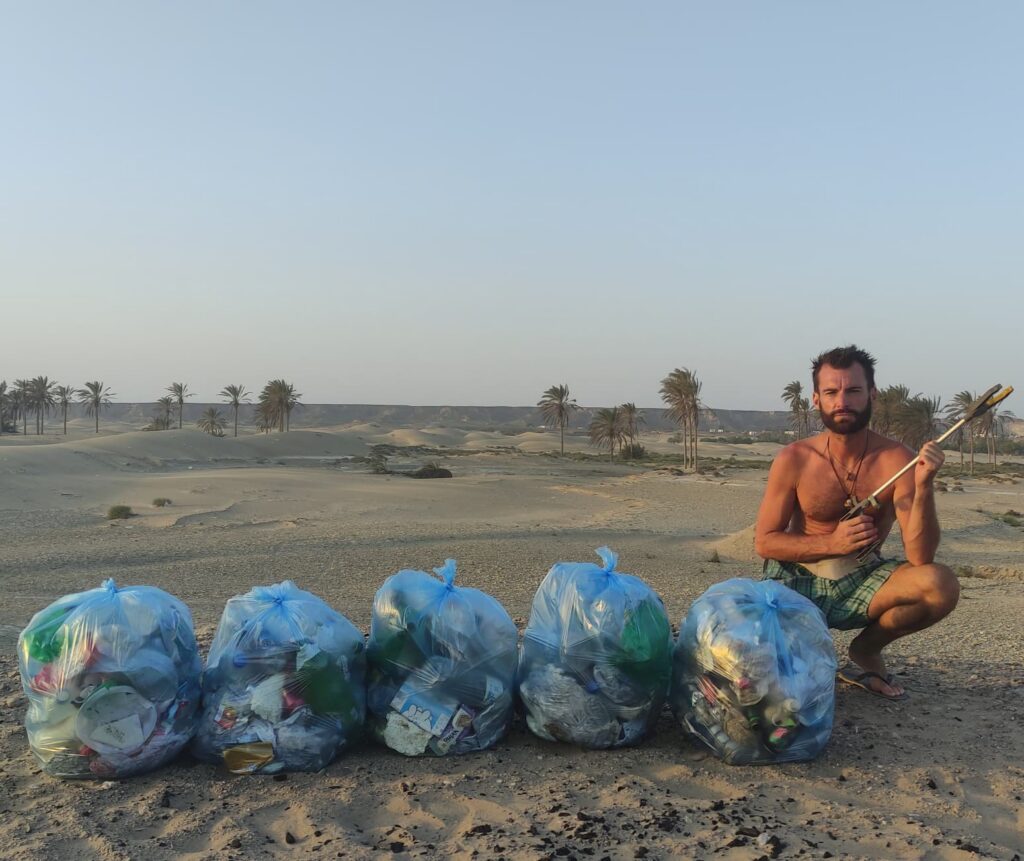
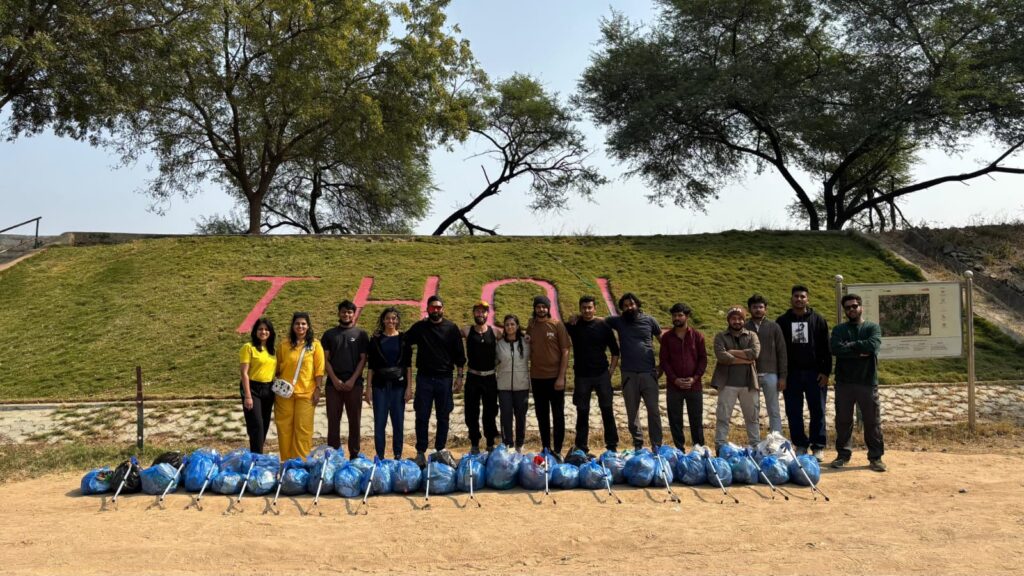
Left: Tobi in South Iran Right: A group of volunteers at the Thol Bird Sanctuary in India.
Climbers and the crags
For Tobi, the climbing community has provided another interesting perspective on litter and environmental responsibility.
Having climbed in countries including Thailand and Malaysia, he says he found climbing areas were often considerably cleaner than their surrounding environments.
“The climbing community is very homogeneous in their relationship with nature,” he says.
Tobi believes climbers understand that access to crags is not guaranteed. If people damage vegetation, leave rubbish or otherwise impact an area, the consequences can eventually affect the whole community.
“We are tolerated,” he says. “If we mess things up… the council or the government will stop climbing maybe, and everybody loves climbing.”
He also points out that climbing areas are frequently far from populated areas and outside the reach of council cleaning services.
“If you go there and there is nothing, it’s probably us who kept it like this.”
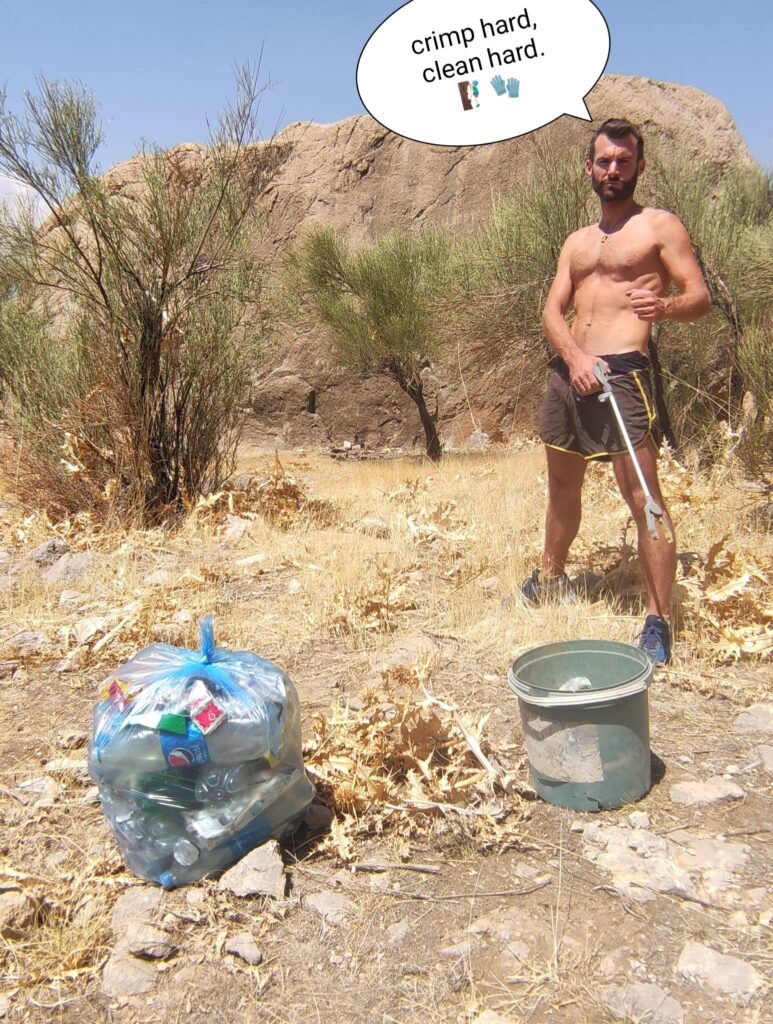
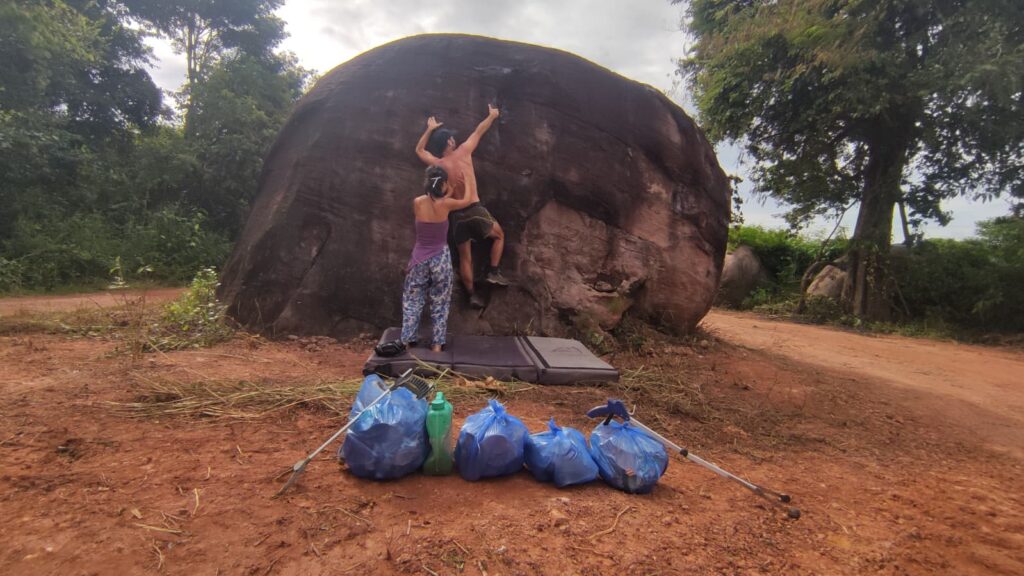
Left: Bouldering area in Iran Right: Bouldering area in Cambodia
So, how do you collect 2.2kg?
For Tobi, there isn’t necessarily a complicated formula.
If you live somewhere with regular litter, you could pick up a little every day. If you live somewhere particularly clean, you might need to dedicate a larger cleanup to reaching your target.
“If you go for a walk every day, 364 days a year, every day a piece would be the 2.2 kilograms at the end of the year.”
But the point isn’t necessarily to make the number a chore. It’s about making rubbish visible and encouraging other people to participate.
“If you live in a very clean area, you might even have problems doing that,” he laughs. “So once in a year you fly to Thailand or Malaysia, and then you can fill a bag in 20 minutes.”
More seriously, Tobi believes the act itself has a ripple effect. When people see someone picking up rubbish, it can challenge the assumption that cleaning up is somebody else’s responsibility.
“You always influence others by doing this.”
After six years on the road, thousands of kilometres of travel and roughly five tonnes of rubbish collected, Tobi’s project remains built around a remarkably simple idea: 2.2 kilograms isn’t much for one person. But eight billion people doing it would be something else entirely.
And despite everything he’s seen, he’s still optimistic.
“I hope it’s solved next year.”
You can follow Tobi on his clean up journey here.
What do you think?
Can each of us make a difference?
Join us on socials to continue the conversation.
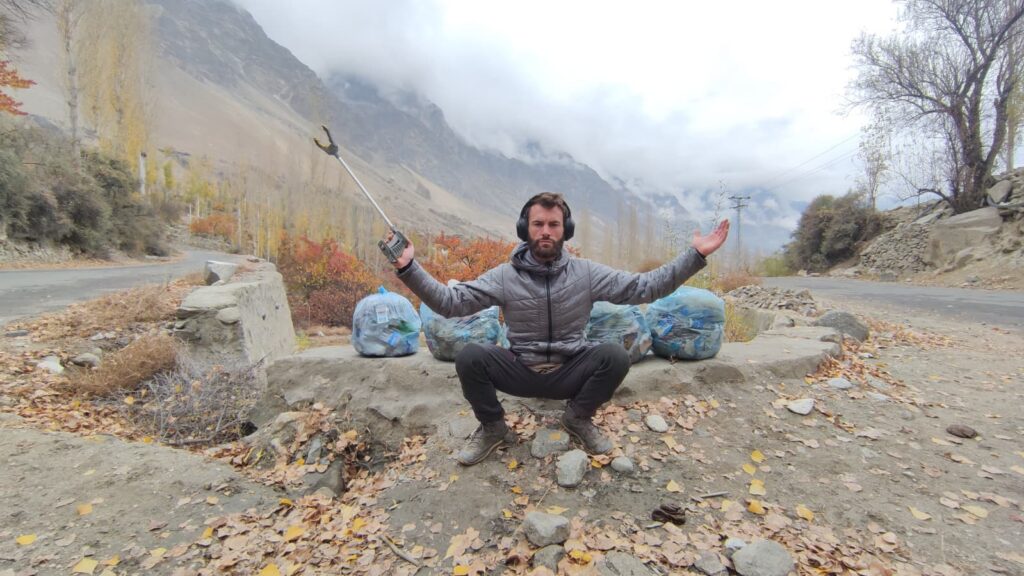
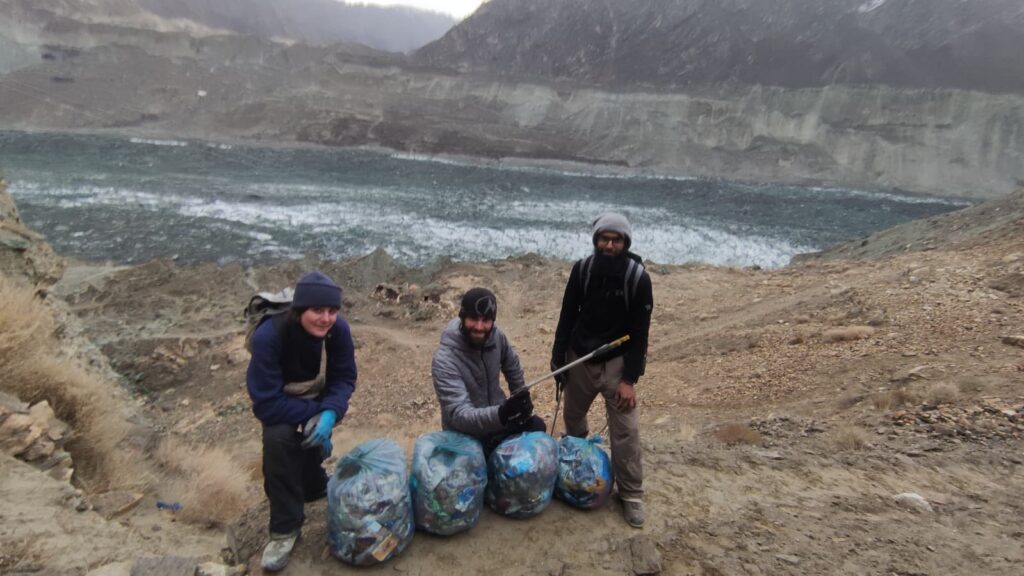
Left: Tobi in Huza Valley in Pakistan Right: Glacier clean up in Huza Valley, Pakistan
More Conversation Pieces: