Getting to know: Oliver Schmidt
Claire Williams interviews Oliver Schmidt
From onsighting Ozymandias to making the first trad ascent of Whistling Kite, Oliver Schmidt has quietly built an impressive climbing résumé in Australia. The German-born climber talks to Vertical Life about bold ascents, calculated risks, and the mindset behind pushing limits.
Let’s start at the beginning — what’s your climbing origin story, and where did you first tie into a rope?
That was back in 2011, I think. I was about 12 or 13, and living in a small town about 40 minutes north of Munich. A new climbing gym had just opened there. During the school holidays the local council ran a program where kids could try different activities, one of them was climbing. I went along to check it out and really liked it partly because it was fun, and partly because I was actually kind of good at it! After that, I started going more regularly, did a beginner’s course, and joined a weekly climbing group. It wasn’t really a “team” yet, more just a bunch of us getting together to climb and have fun.
What drew you to Australia’s crags and cliffs?
It was actually because of my girlfriend, Sophie — she’s Australian. I’d always wanted to climb all over the world, and Australia was on that list, but honestly, it wasn’t near the top at the time. Then I met Sophie in Canada, and suddenly Australia became a much more interesting destination. Back then, I didn’t know much about the climbing here, but knowing what I know now, it definitely would’ve been higher on my list from the start.
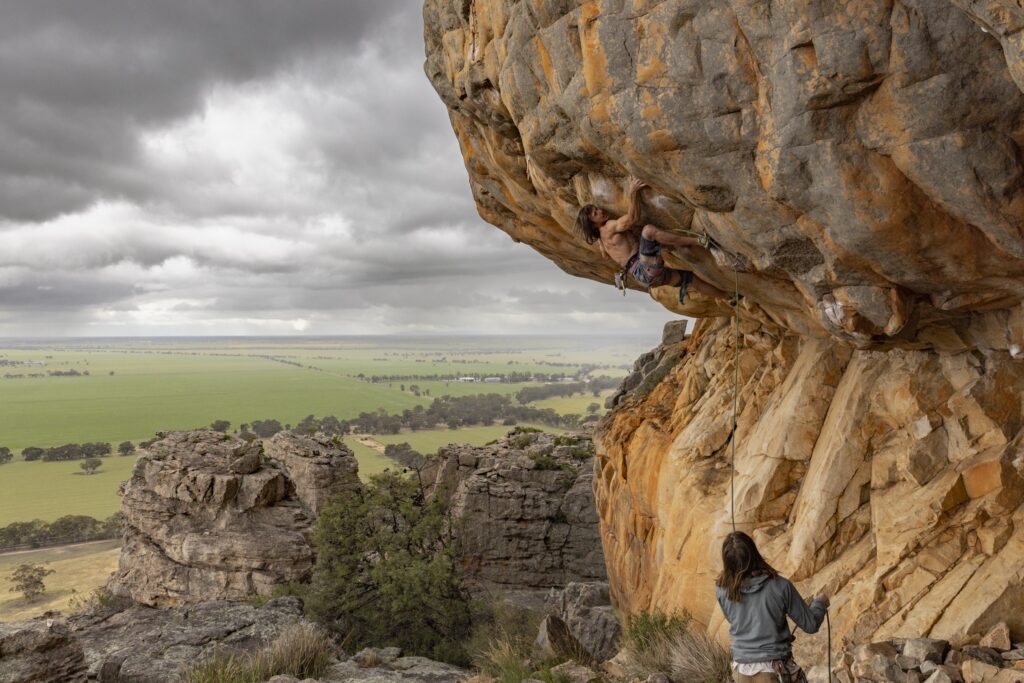
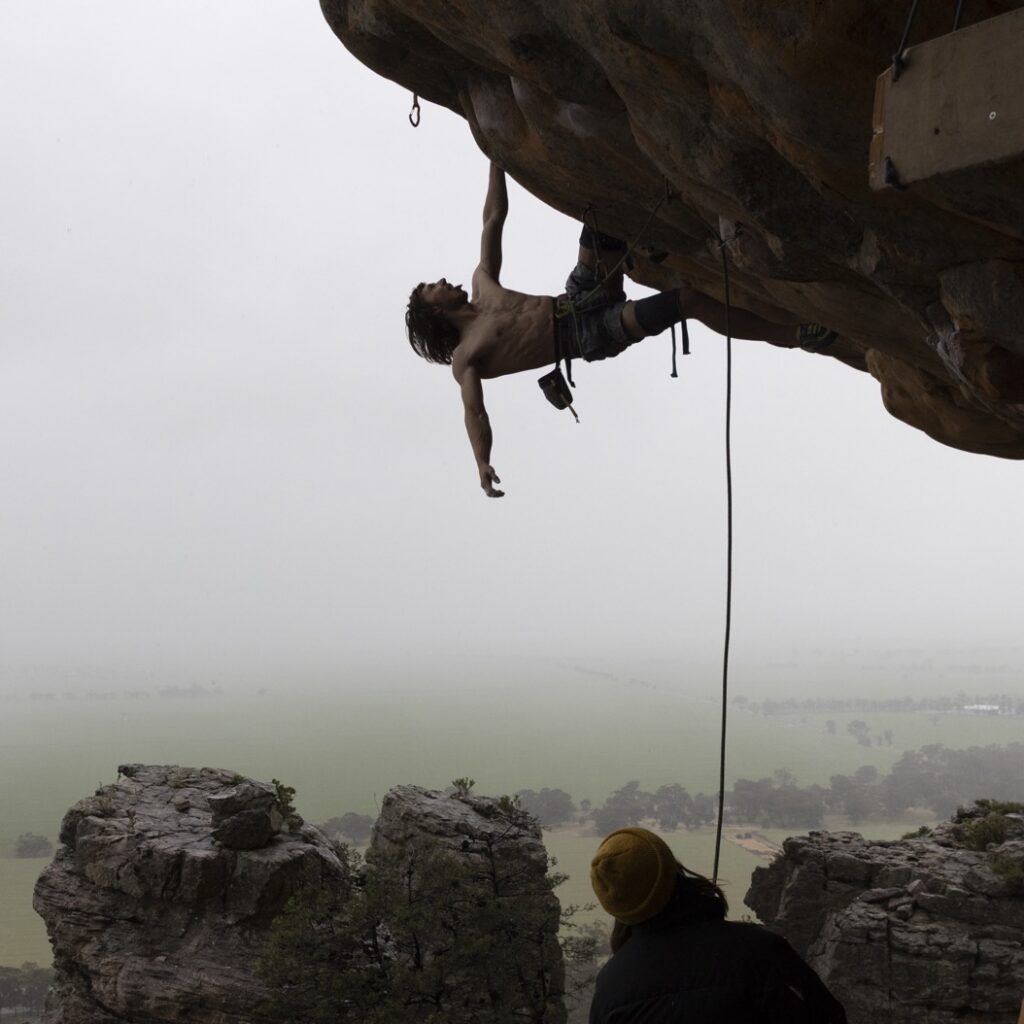
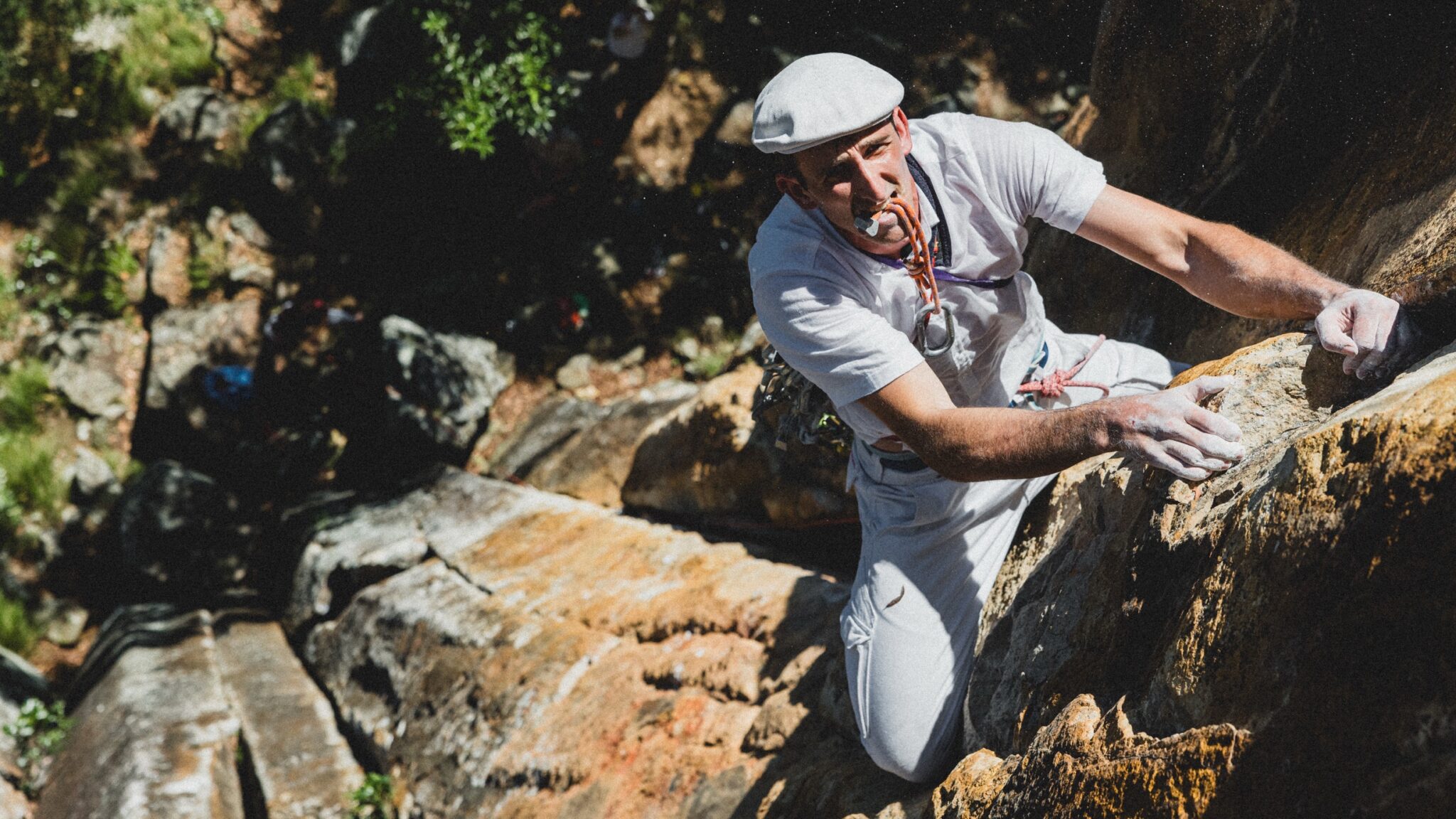
Oliver Schmidt on Lightweight Baby (34), Mt Arapiles. Images by Claire Williams
You’ve been quietly ticking hard climbs across the country. Was there an overarching goal, or were you simply following inspiration as it struck?
I think the only climb I really knew about before coming to Australia was Punks in the Gym. That was the one I wanted to do. After that, I just went with the flow. Of course, I’ve got goals now and there are routes I want to try, but back then I didn’t have some big plan or tick list, it all just developed naturally from doing Punks and seeing what came next.
Was Punks in the gym your first stop in Australia then?
I flew straight from Canada to Sydney, it was much cheaper than flying to Melbourne, and I had a friend who’d just moved there from Perth. I stayed with him for the weekend, and we decided to head up to the Blue Mountains. So the Blueys ended up being the first area I ever climbed in Australia.
It’s actually a funny story, on my very first climbing day, my friend had uni in the morning, so we didn’t leave until the afternoon. It was September, so daylight was short, and we were rushing to get a few routes in. The plan was to go to Wave Wall, but we didn’t have a guidebook, just some rough directions, and neither of us knew the approaches. We ended up getting completely lost and found ourselves at Porters Pass instead.
There was no phone reception, so we couldn’t look anything up, we just picked what looked good and started climbing. I think the first couple of routes we tried were around 23 or 24, which turned out to be great warm-ups. Then I spotted this striking line with draws and a ton of chalk on it — our “three-star” system from back home meant that if it had draws, chalk, and looked good, it was worth getting on.
So I tried it, and somehow managed to onsight it by the skin of my teeth. Later we found out it was Self Portrait, a three-star 29. Knowing what I know now, it’s probably one of the best 29s in the Blue Mountains. I got ridiculously lucky to stumble onto it on my very first day climbing in Australia.
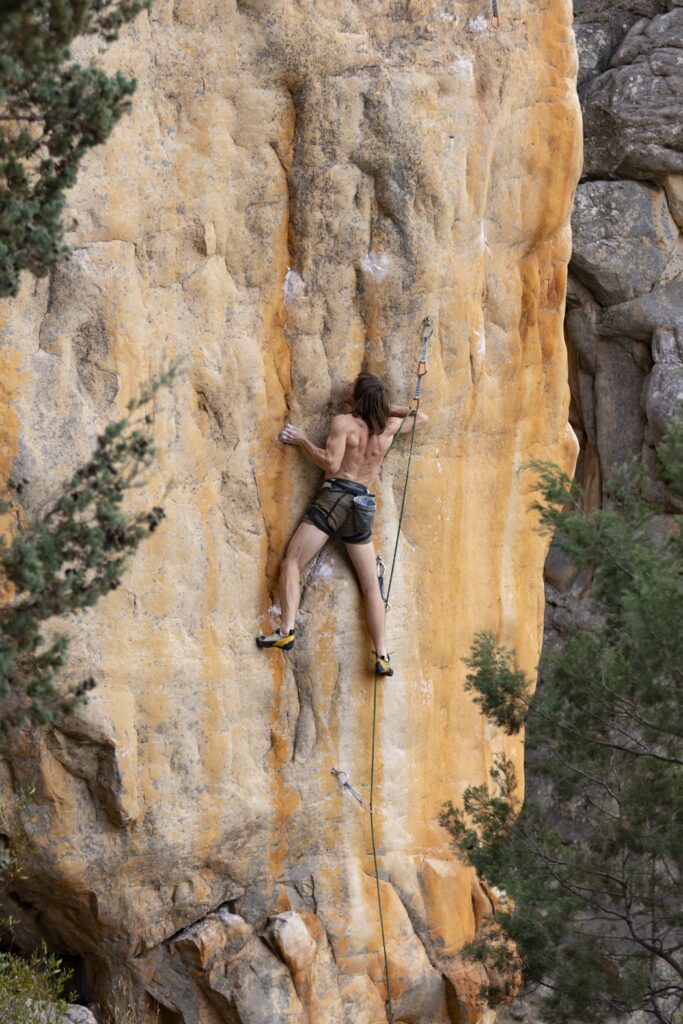
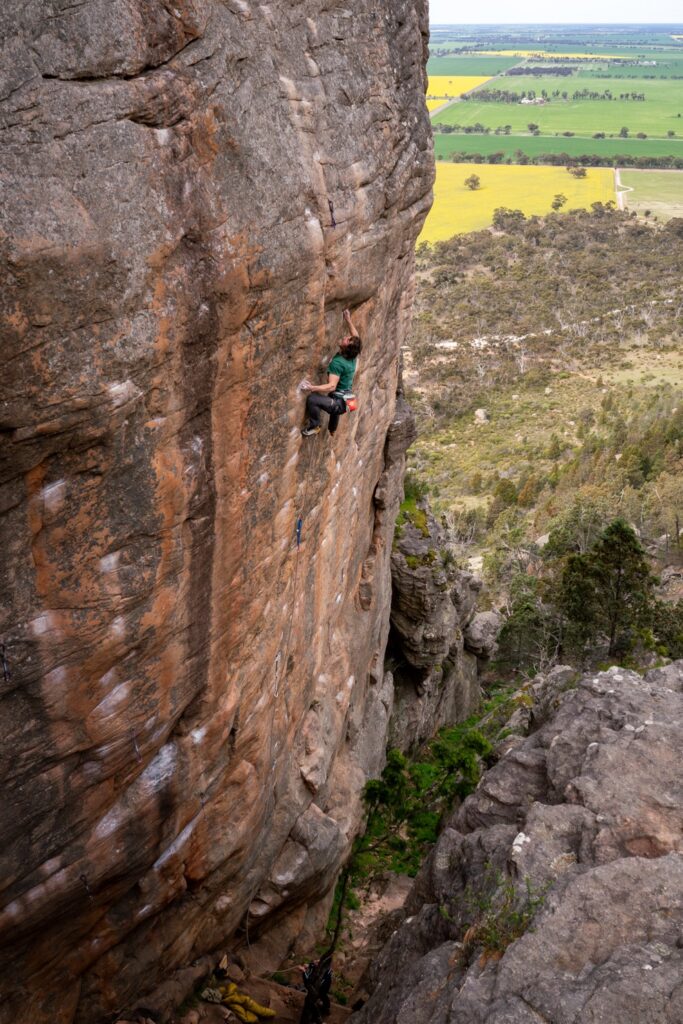
Left: Oliver Schmidt on First Blood (31), Mt Arapiles. Image by Claire Williams Right: Oliver Schmidt on Lord of the Rings (31), Mt Arapiles. Image by Simon Madden
Was there a defining “turning point” climb where you realised you could push into a new level?
I think my progress has just been really incremental, small steps over time rather than any big breakthroughs. The last time I climbed a new grade was back in 2020, when I did my first Australian grade 33.
If I did have a breakthrough, it was probably more mental than physical, specifically with trad climbing. At some point, I realised I could climb almost as hard on gear as I could on bolts. Once I started trusting my placements and approach, it opened up a whole new range of routes I felt capable of trying.
You made history with the first onsight of Ozymandias. Can you walk us through that day—the preparation, the mental state, and the moment you committed?
It’s the first onsight that we know about. You never really know; maybe some visiting European crusher did it years ago and no one found out. But that seems pretty unlikely.
I’m not sure I ever said it out loud, but I definitely had the plan to onsight it. Originally, I’d actually hoped to onsight Ozymandias Direct, but that didn’t pan out. I climbed everything onsight up to the point where the routes split, Ozy Original heads left on easier ground, while Ozymandias Direct breaks right into the crux pitch.
The guidebook gives both pitches grade 28, but the Direct crux felt noticeably harder to me. It’s also bolted with carrots, which I’d never climbed on before and they’re not exactly onsight-friendly. The clipping stances are awkward, and at one point I even dropped a bracket trying to clip one. As daylight started to fade, I realised I wasn’t going to get through the crux that day, so I decided to finish via the original line and onsighted the remaining pitches from there.
Given its legendary status, were there any moments during the climb where you doubted you could pull off the onsite?
Yeah, a few times, especially on that second pitch, the main crux. It’s got some insecure climbing and small, not-so-inspiring gear. I never felt unsafe, but it’s a long pitch — about 40 metres — and it just keeps coming at you. By the top, I was completely spent, which is probably why there was no chance I could do the direct finish that day.
The pitches after the crux are quite a bit easier, so I wasn’t too worried. Once I committed to finishing via the original route, it was mostly around grade 18 to the top, so I knew I’d be fine from there.
At Frog Buttress, you completed the first trad ascent of Whistling Kite. What made you want to tackle this as a pure trad line rather than in its bolted form?
I really enjoy that process, top-roping first, figuring out where gear can go, and solving the puzzle of how to climb it safely on trad. I also hadn’t done much hard trad recently in Australia, so it was a way to push myself. It wasn’t about saying the climb should be trad, just a fun, challenging variation to test myself without the bolts.
How do you balance bold decision-making with safety, especially on committing trad or big wall routes?
I try to be pretty calculated about the risk I take. Usually, I make most of my decisions before I even start the pitch, figuring out how far I’m willing to run it out, where the gear can go, and spotting potential dangers from the ground.
When I’m actually climbing, I often don’t feel as scared as I probably should — especially on an onsight, I get so locked in on sending that it’s hard to assess risk in the moment. So to stay safe, I make those judgments beforehand: deciding what’s too dangerous, what’s reasonable, and where I can trust the gear. It’s a process I’ve learned to force myself to do before starting the climb.
Have you ever had a close call that changed the way you climb?
With trad climbing, not really. My closest call was actually in Yosemite on a big wall. I grabbed this huge flake — about the size of a flat-screen TV — thinking I couldn’t avoid it, and it immediately came off. I had a split second to move my body out of the way and stayed on the wall, but the flake fell hundreds of metres and shattered below.
It was really dangerous, there were people just a couple of pitches behind us, including Tommy Caldwell and Alex Honnold. Luckily, a small overhang protected them, so no one was injured. But if it had hit someone directly, it could have been fatal. That day reminded me how unpredictable things can be up high, even when you feel in control.
Oh really? So you nearly took out Alex Honnold & Tommy Caldwell?
Luckily, they were tucked away below and it wasn’t a problem for them. If they’d been a couple of pitches higher, it would’ve been a very different story.
The part that really changed the way I climb, especially on loose rock. What I didn’t notice at first was that the flake hit one of my extended quickdraws and completely cut the dogbone. One of my pieces was no longer clipped because of it. It could’ve been much worse, it could have cut the rope, too. Being 500 metres off the ground, that would’ve been terrifying, like suddenly free soloing.
The carabiner stayed on the rope, but the sling was completely severed. That moment really made me rethink how I handle loose rock on big walls.
Tommy and Alex — can you tell us a bit about meeting them in person?
Both of them were super chill and approachable. Tommy’s known to be a nice guy, but I really liked Alex too, he can come off a bit direct, maybe even rough around the edges, but deep down he’s genuinely kind. It’s refreshing, especially as Germans, to have someone so straightforward but never offensive.
They were doing the same route as us, we ended up meeting just before the crux pitches. There is a natural spot for a portaledge there just before the wall steepens up and the business starts. We got there first so we used the bolted belay station to set up our camp. When they arrived they had to resort to building a gear anchor on a flake a couple of meters to the left, using a considerable portion of their slim rack in the process.
In true Alex fashion, he’d discovered his rack was incomplete that morning while packing for the route — they started out with an incomplete double rack on an El Cap. So they climbed the next pitch using our gear. We were happy to help them out, knowing it takes years of experience to know exactly what to bring for a big wall like this. We camped next to each other for a night or two, working the same pitches and sharing beta, which was really fun.
Alex especially loved interacting with other climbers on big routes. Even on faster pitches, he would chat and joke with people he passed, and it seemed like a big part of why he enjoyed climbing El Cap.
Funny story: we had a portal edge that was actually signed by Tommy Caldwell. We thought it was printed, but he had personally signed a hundred of them on a trip in Germany. It was such a cool touch.
What’s the most unusual piece of gear or beta you’ve ever used on a climb?
Just recently, I climbed this route at Mt Coolum – Haggisaurus Rex (33). For me, the bolts are kind of in the wrong spots. A lot of people have actually skipped the third bolt, most of the ascents before mine did that. There’s even a video of the first ascent where the climber skips the third bolt entirely.
But I think that creates a potentially dangerous fall. I’m fine with taking risks when it makes sense — like on a trad route — but on a sport climb, I don’t really see the point, especially if the danger comes down to poor bolt placement. If something’s naturally a bit sketchy, that’s one thing, but if it’s just because someone didn’t think the bolting through, that kind of risk feels contrived to me.
So, I decided to clip the third bolt. I used a long sling and taped it to the rock so I could clip it from a lower position and made it a bit safer. I’d seen that technique in videos and heard of people doing it before, but this was actually my first time trying it myself. The route has a bit of a traverse, so the draw hangs too far to the left to reach easily. But if you tape a long draw slightly to the right, you can reach and clip it safely.
At Mt Arapiles you did some very impressive lines, one being Punks in The Gym. Given your German heritage, were you inspired by Wolfgang’s first ascent of the climb?
If there’s any Australian route that climbers in Germany know, it’s Punks in the Gym. Climbing something with that kind of history is always inspiring. There’s probably no 32 in Australia with more significance, so it was an obvious one for me to try.
I sent it on my eighth tie-in. The first couple of goes were just working the moves, but I still count them. Back in Wolfgang’s day, that kind of projecting style — falling, pulling back on, working sections — was still new and actually frowned upon. He even got some criticism for it. Before that, climbers like Jerry Moffatt were still using the “yo-yo” style, where if you fell, you had to lower to the ground and start again from the bottom. Obviously this made figuring out beta and completing routes much harder back then.
Where else in the world has left a deep mark on you?
A proud moment was in Yosemite, I made the first free ascent of Karma on the south face of Half Dome with my partner. It was originally an aid route, but we were the first to free climb it.
What inspired you to start logging your climbs in Australia?
I started my crag account in Australia because I noticed that, especially in Victoria — and I’ve seen it in Queensland too — a lot of climbers are very capable but sometimes hesitant to try harder or more obscure routes, especially those that aren’t often repeated.
I created the account to show that these climbs can be done, that they’re fun, and that “normal” climbers can repeat them. For example, in the Grampians, I climbed Agent of Cool, which hadn’t been repeated in over 10 years since Lee Cossey’s first ascent. It’s a beautiful route, challenging, but not impossibly hard. There are plenty of people capable of climbing it, but for some reason, many just don’t believe in themselves or don’t go for it.
With the account, I wanted to demonstrate that these climbs are accessible, just another route to try. In the case of Agent of Cool, it was two Americans who repeated it recently, so at least it’s getting climbed again.
Since publishing this interview in Summer 2025, Oliver Schmidt has continued to build an impressive climbing résumé, completing the first free ascent of Business Man (33) in Freycinet National Park in January 2026, before claiming the third ascent of Somalia (33) at Mount Arapiles in April 2026.
Other Articles that may interest you:
Getting To Know Oceana Mackenzie