Remote Possibilities: Simon Carter reinvents the future of climbing photography
What happens when you mix 30 years of climbing-photo wizardry with brand-new remote camera tech? In Simon Carter’s latest YouTube videos, the results are part brilliance, part chaos—and all held together with ropes, trial and error, and a few well-placed f-bombs.
Words by Claire Williams
Images by Simon Carter
When one of Australia’s best climbing photographers finds a new way to shoot, it’s hard not to get a little excited.
For decades, getting the perfect climbing photo meant scrambling up ledges, dangling on ropes, and hanging motionless in a harness waiting for the shot. Circulation gets cut off. Jumars jam. It’s not glamorous.
But now, thanks to new tech, Simon Carter has found a way to shoot from the ground—while the camera does all the hard work up in the air. It’s safer, far more comfortable, and opens up angles that were previously unthinkable. This clever setup could signal a new era in climbing photography.
While it might look like a modern breakthrough, Simon’s obsession with remote camera rigs actually began in the late ’90s.
In 1998, he took his first crack at capturing an “otherwise impossible” angle: he designed a massive A-frame, had it built by an aluminium fabrication shop, and lugged it out to Hanging Rock. He set it up 40 metres down the cliff to shoot Oranges Poranges.
“I used it a few times over the years, but it was a huge hassle to set up.”
Eventually, the A-frame got the boot. After all, who wants to carry a small space station to a crag?
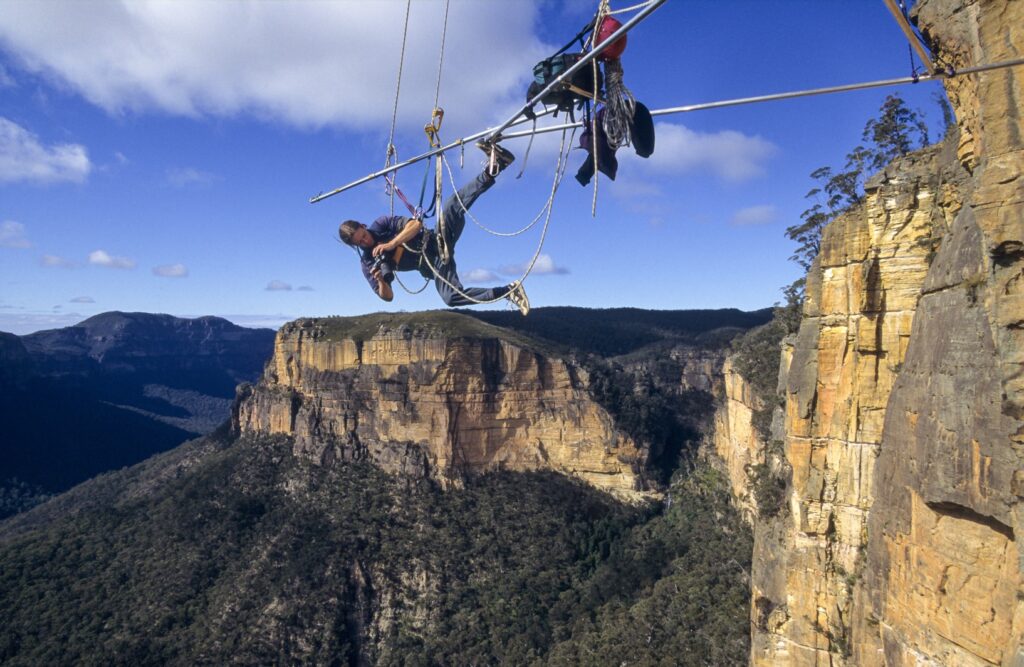
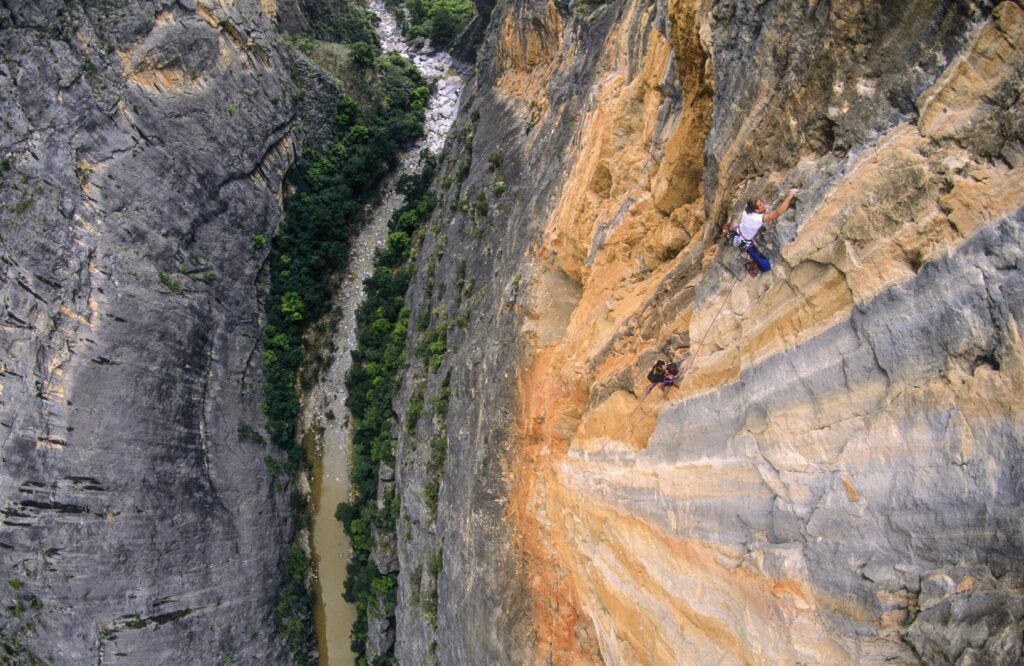
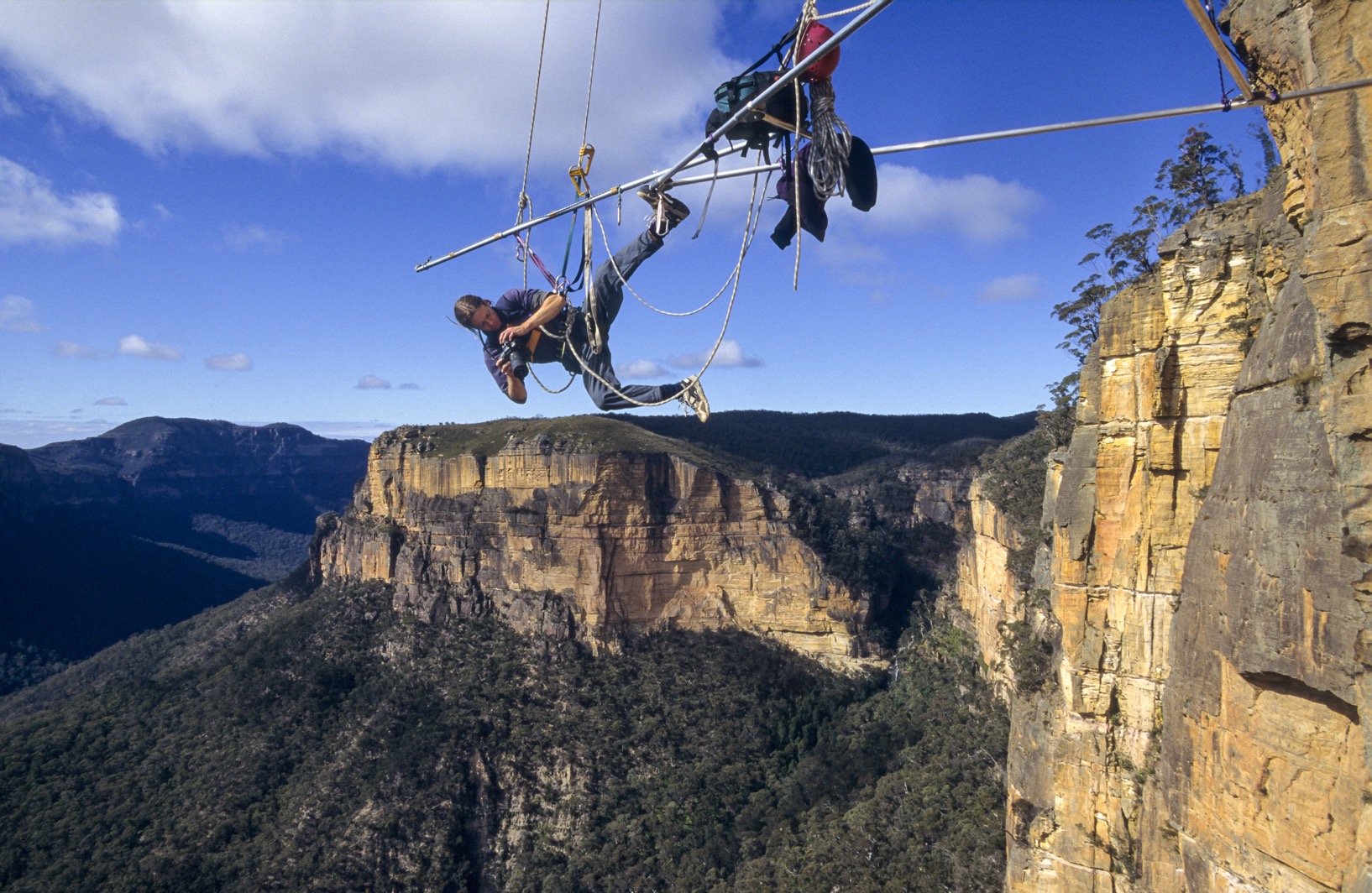
Left: Simon Carter using his ‘photo frame’ at Hanging Rock in the Blue Mountains, NSW, Australia. Circa 1997. Right: Mike Weeks leading (and Chris Jones belaying), pitch seven, Overture to the Sun (26), at Bungonia Gorge, NSW, Australia.
In 2003, he gave remote shooting another go at Red River Gorge, this time using a painter’s pole, video monitor, and remote trigger.
“It worked, kind of,” he admits. “But shooting on film, it felt all too hit-or-miss to be practical.”
Once digital cameras entered the game, things got a little more interesting. Simon switched in 2008 and began refining the pole setup.
“I managed to create some of my all-time favourite images with it.”
Still, he admits: “Adding a pole setup to the mix when you’re on an abseil rope just adds a lot of work… I came to consider it just another tool in the climbing photographer’s toolbox—useful, but not exactly user-friendly.”
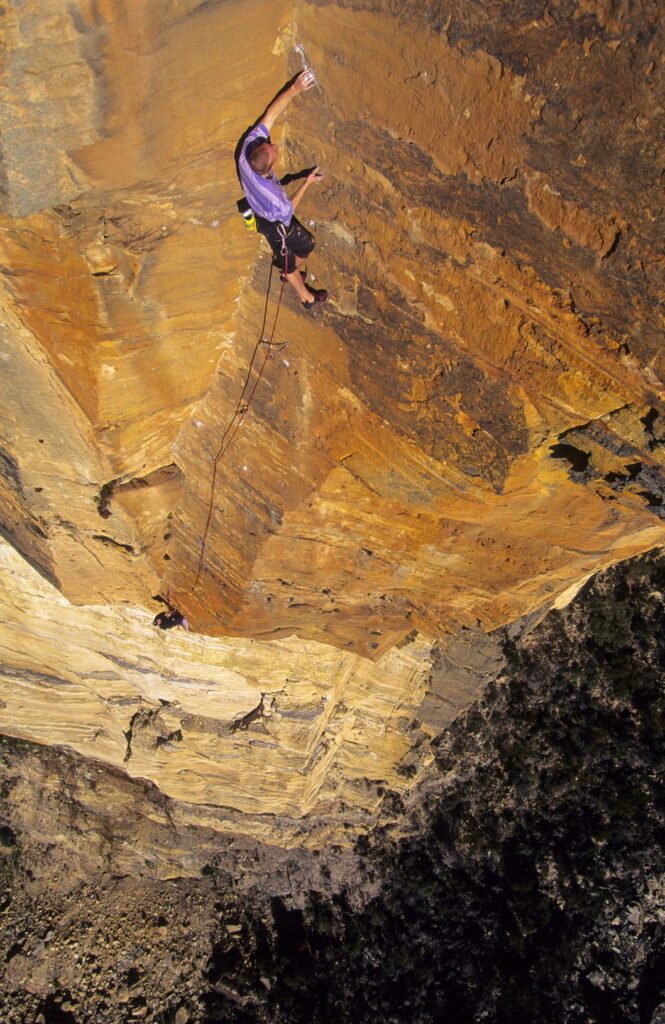
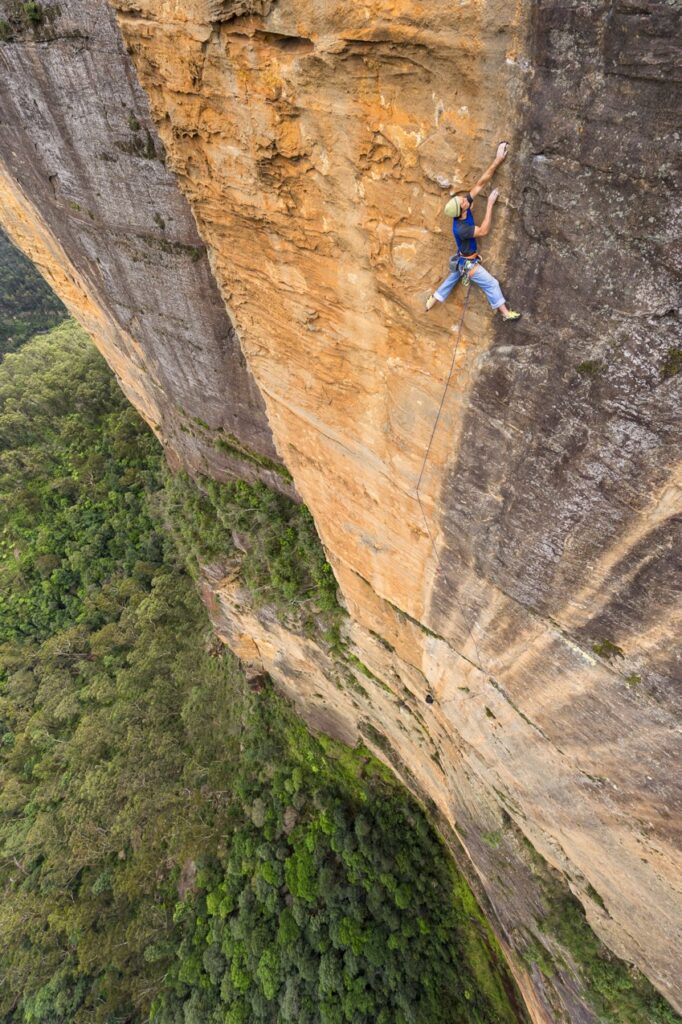
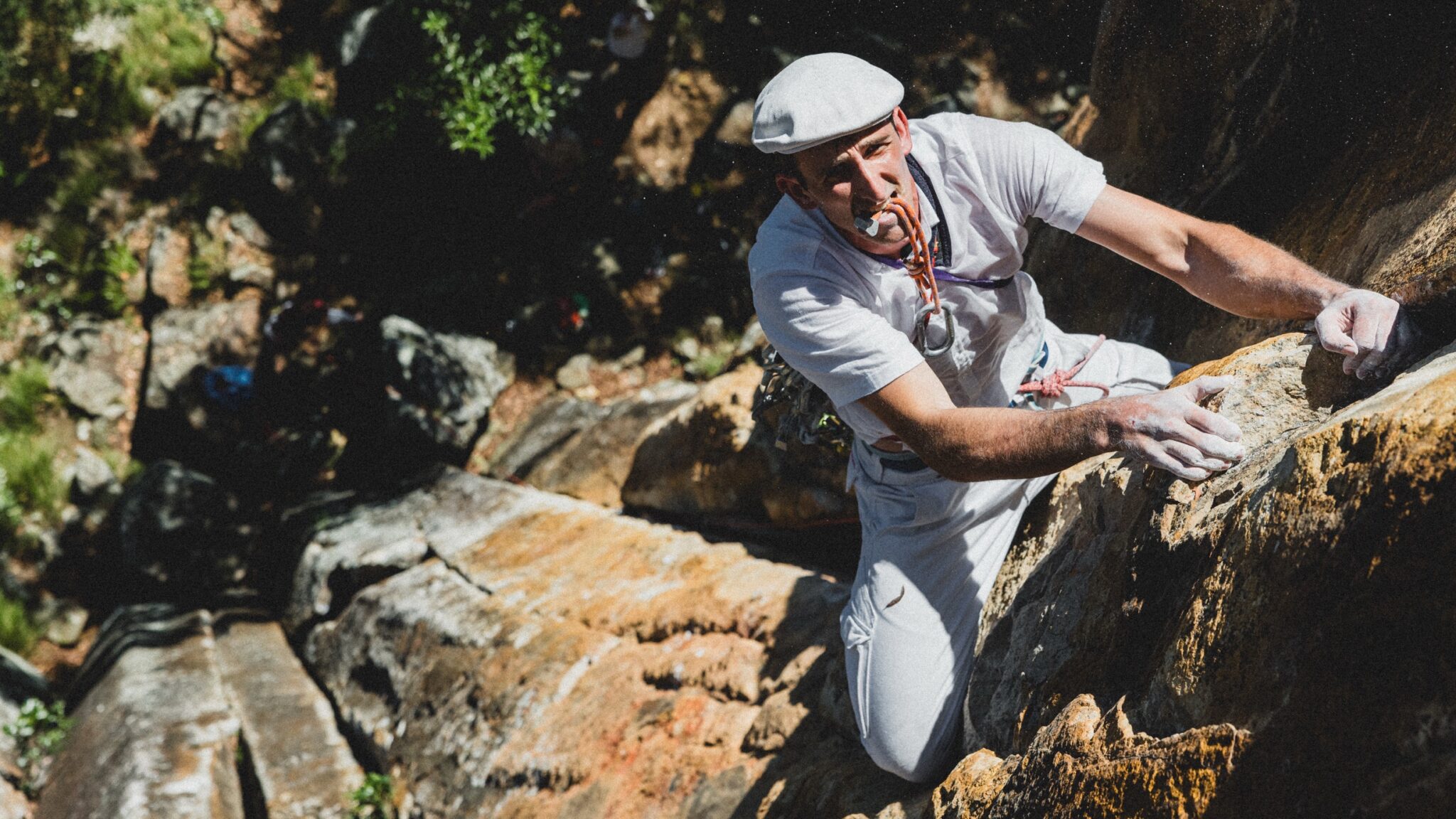
Left: Nick Sutter, Oranges Poranges (24), Hanging Rock, Blue Mountains, NSW, Australia. Right: Simon Carter used a revolutionary new climbing photography apparatus/technique to get this unique perspective. Vince Day on I Have a Dream (25). Pierces Pass, Blue Mountains, Australia.
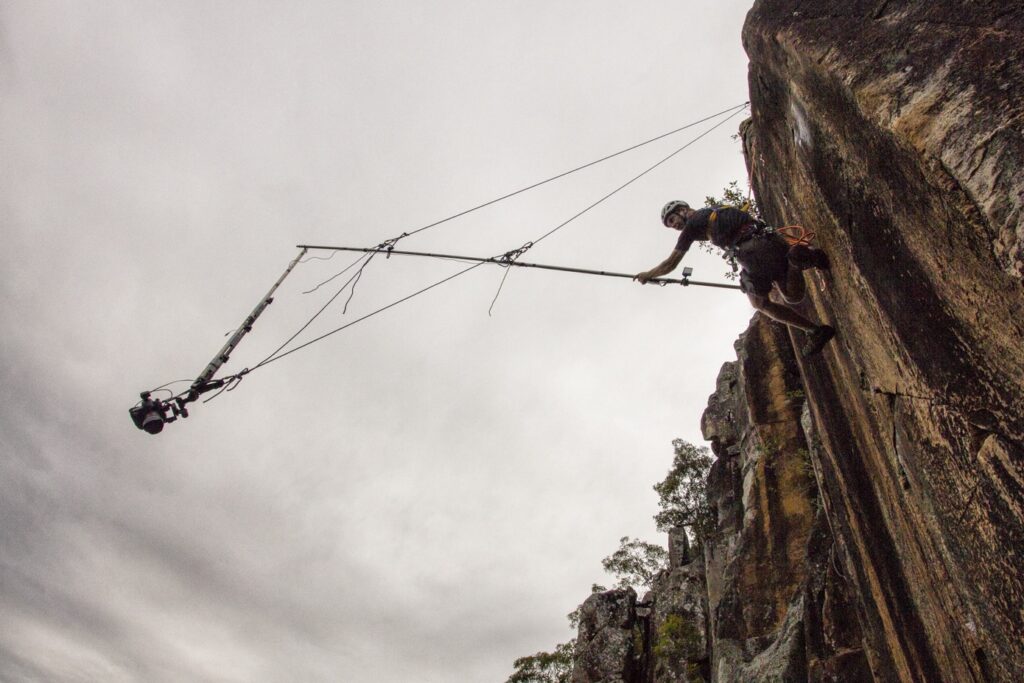
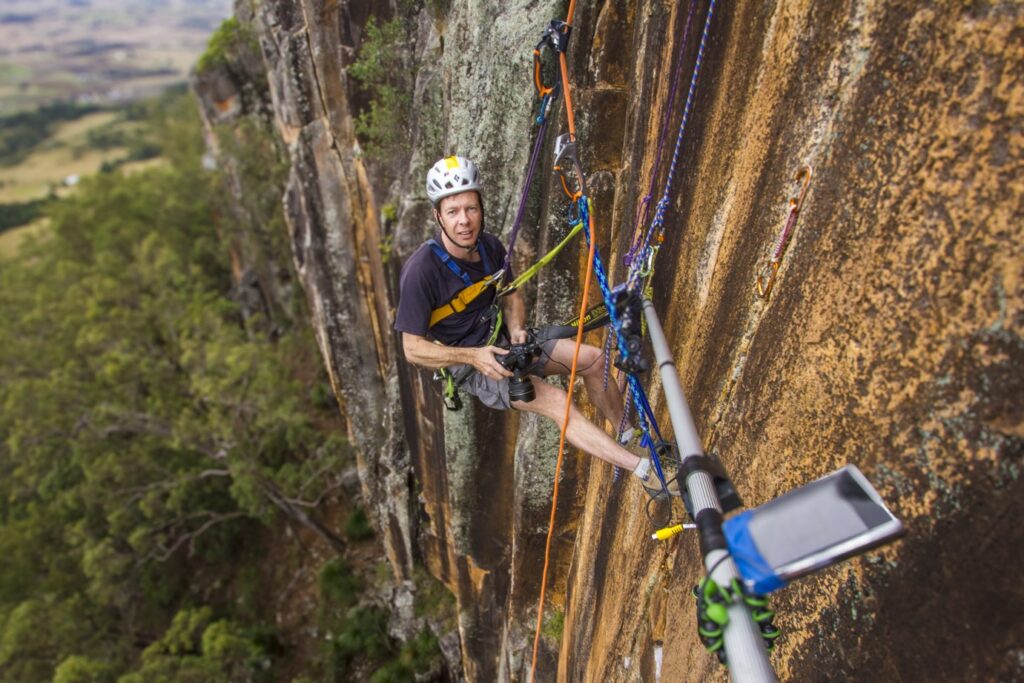
Left: Simon Carter using his “photo pole” apparartus to photograph rock climbing at Frog Buttress, Queensland, Australia. Right: Simon Carter with his photo pole thingy at Frog Buttress, Queensland. 2012. Image by John J O’Brien.
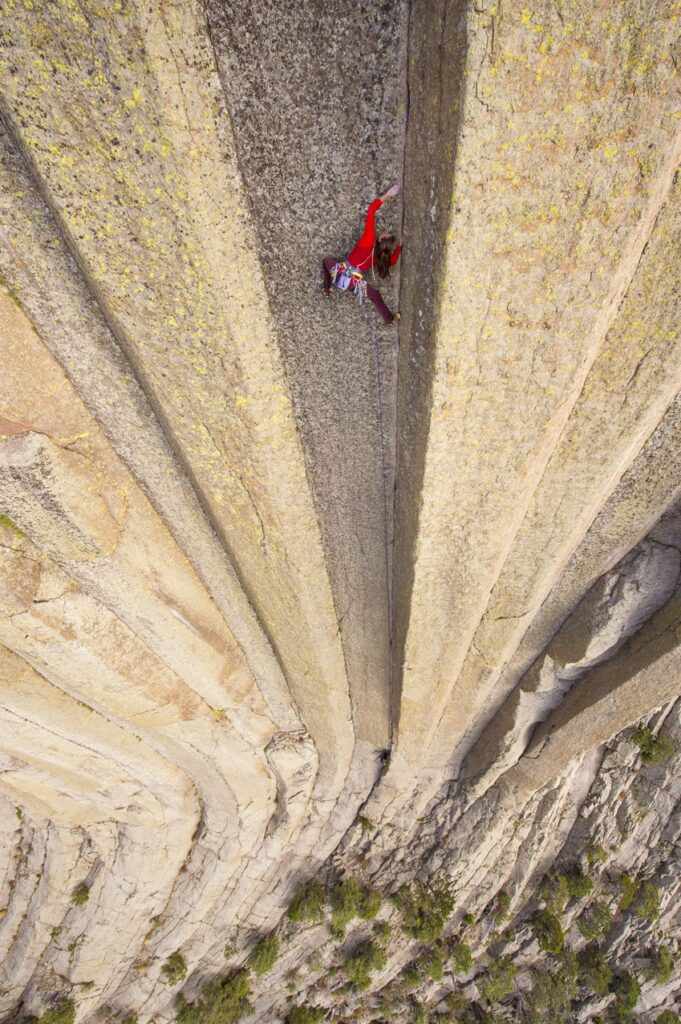
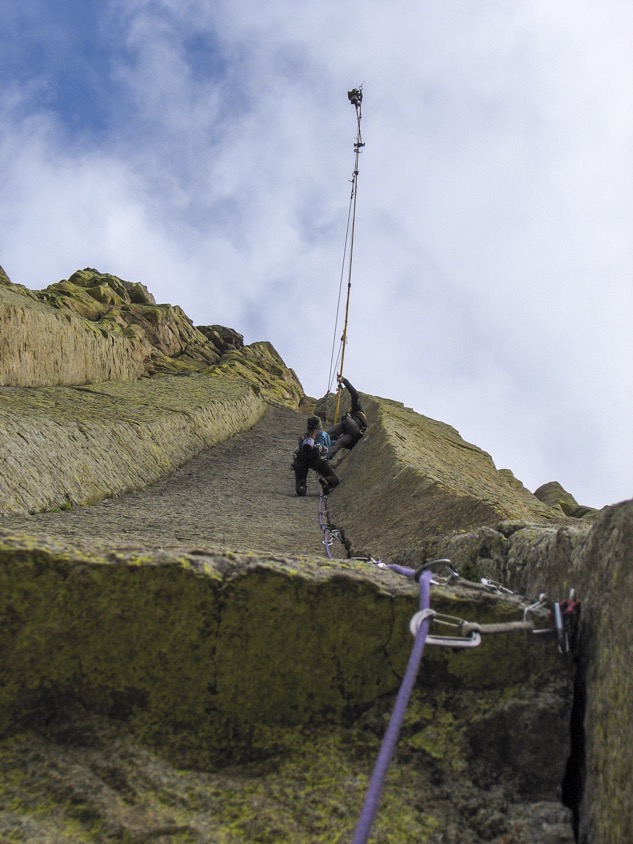
Left: Simon Carter rigged his Nikon D3S to a 8-metre pole and suspended it out from the cliff to get this perspective on Brittany Griffith climbing Mr Clean (5.11a), one of the immaculate lines on Devils Tower, Wyoming, USA.
Then DJI released a gimbal stabiliser that could be controlled wirelessly. And Simon got curious. It kind-of worked with his Nikon DSLR—not perfect, but promising. The gear was designed for video, not stills, so autofocus and burst mode were limited. But after plenty of trial and error, he figured out enough workarounds to make it viable.
The lightbulb moment came when he realised the gimbal didn’t need to be mounted on a pole. If he could rig a rope between two points, he could send the camera out remotely—way up high, out in space—while staying safely on the ground.
“I invested in some long lengths of 7mm cord and pulleys, rigged up a rope from my back deck to a tree in the backyard, and started figuring out how to securely rig the camera and gimbal,” Simon says.
And then came a minor catastrophe: “The gimbal can generate an incredible amount of torque when it isn’t happy… as I learnt when I watched in horror as the gimbal and my Nikon Z9 unscrewed from the rig and fell three meters… only to be saved, when the safety strap pulled it up inches above concrete. At least the safety strap worked!”
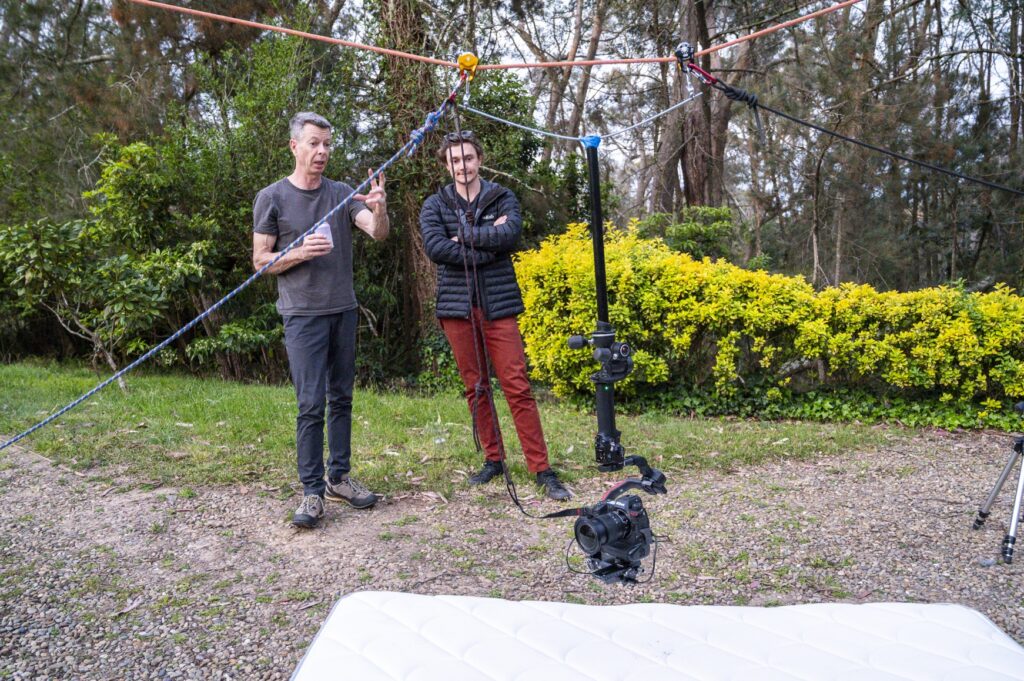

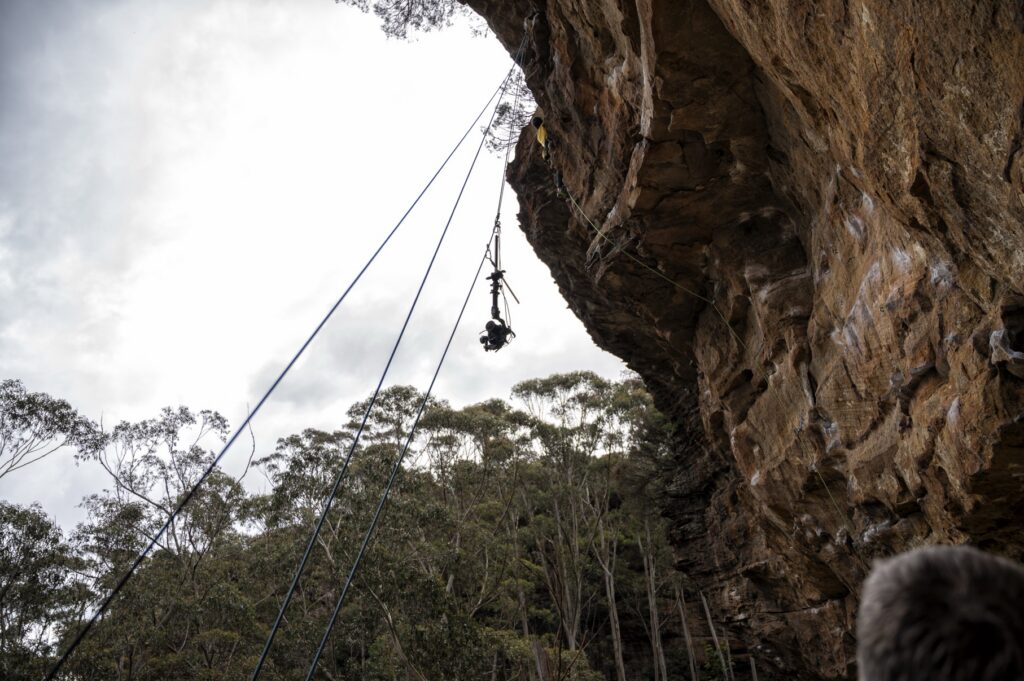
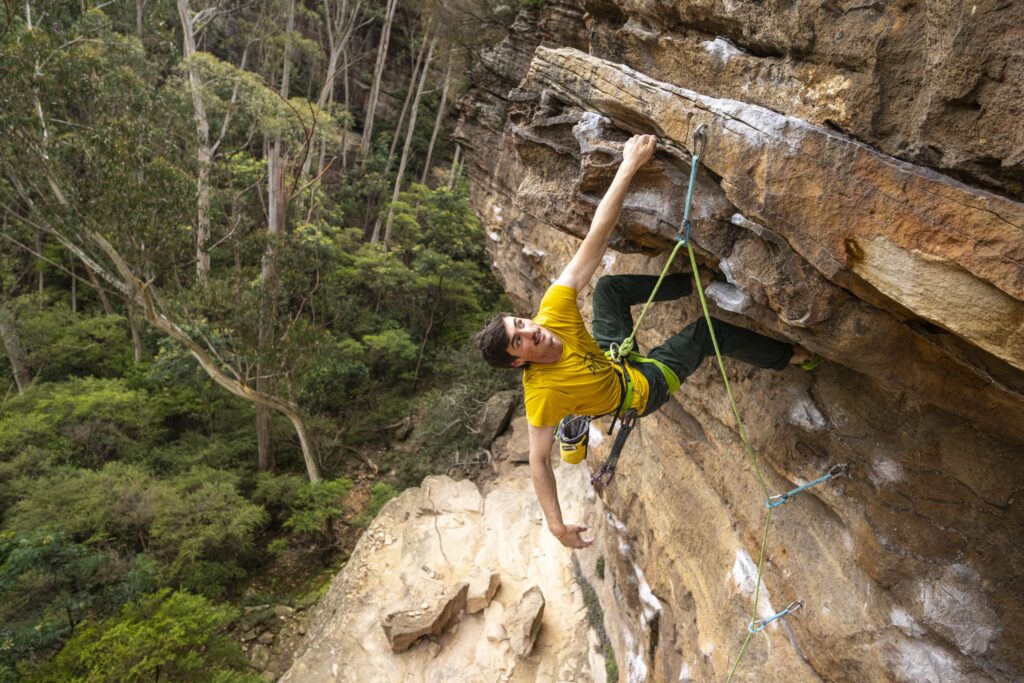
Eventually, with some workshop tinkering, he fabricated a secure system that worked. When it came to the first field test time, Simon described it as an “over-ambitious disaster.” The shoot was equal parts tech trial and slow-motion meltdown. “The light was incredible, the composition was mind-blowing… but I couldn’t get it to fire off one shot!”
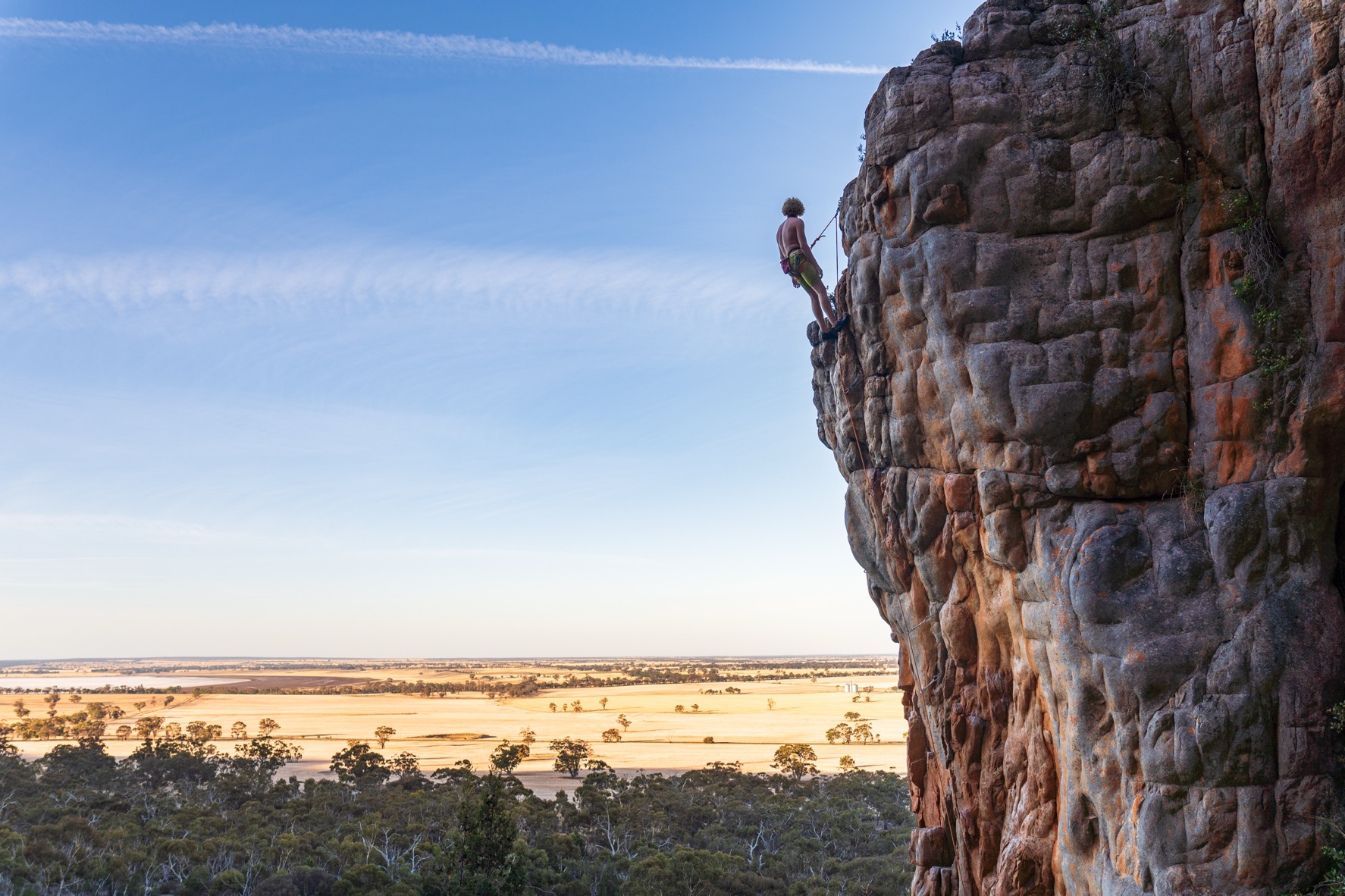
Simon’s second field test—now up on YouTube—takes place at Pierces Pass, where he trials a horizontal cliff-to-cliff rope line. What followed was a comedy of errors, complete with a few choice f-bombs and what Simon later described as “about nine things going wrong.” And yet, by some minor miracle, it all came together—delivering a result as good as he could’ve hoped for.
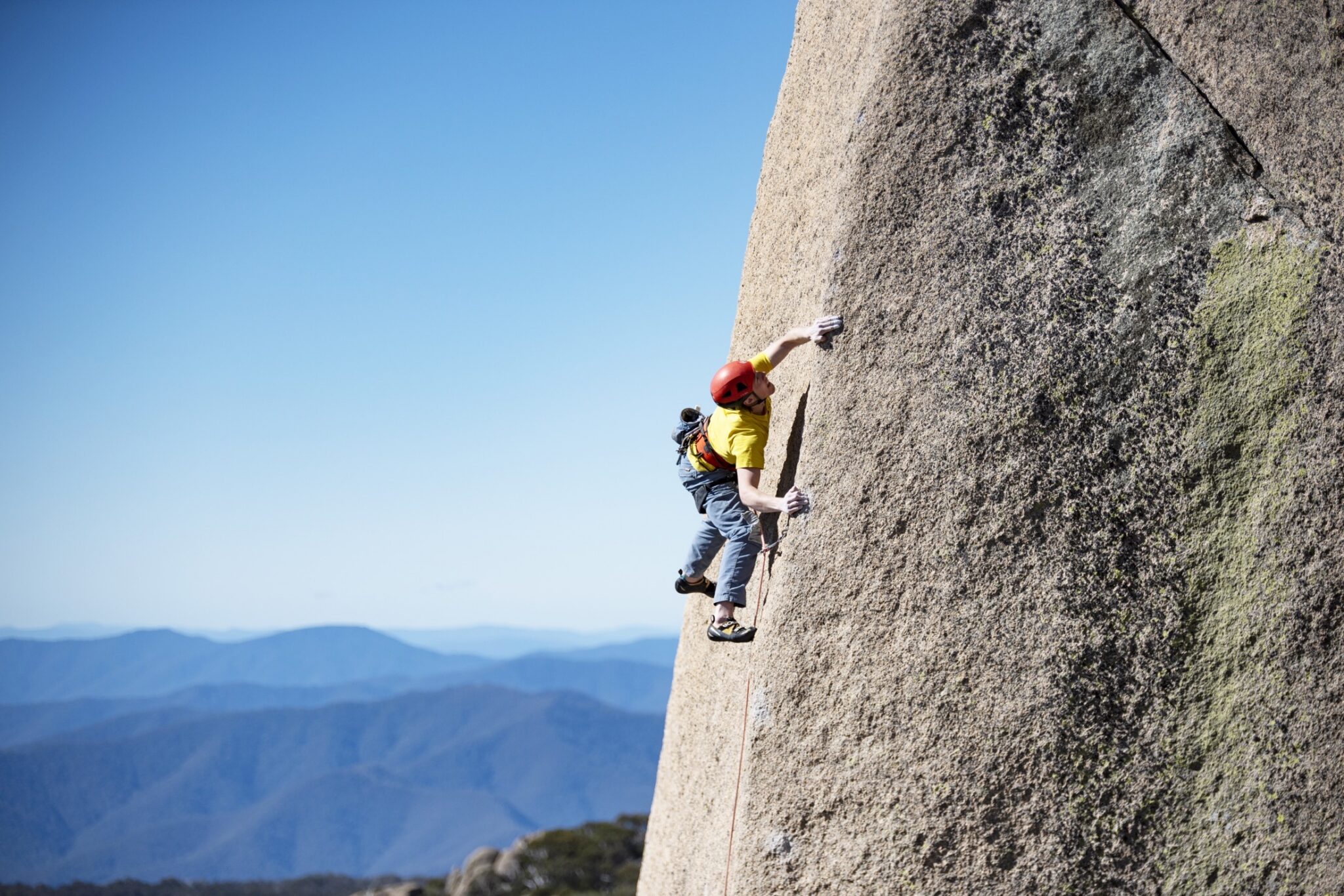
The next field test, (also on youtube) shot at Mt Piddington, was far smoother—proof that persistence pays off. This time, he used a cliff-top-to-ground pulley system to get the camera in position. Apart from some frantic screen-tapping in the DJI app, the shoot went off mostly without a hitch.
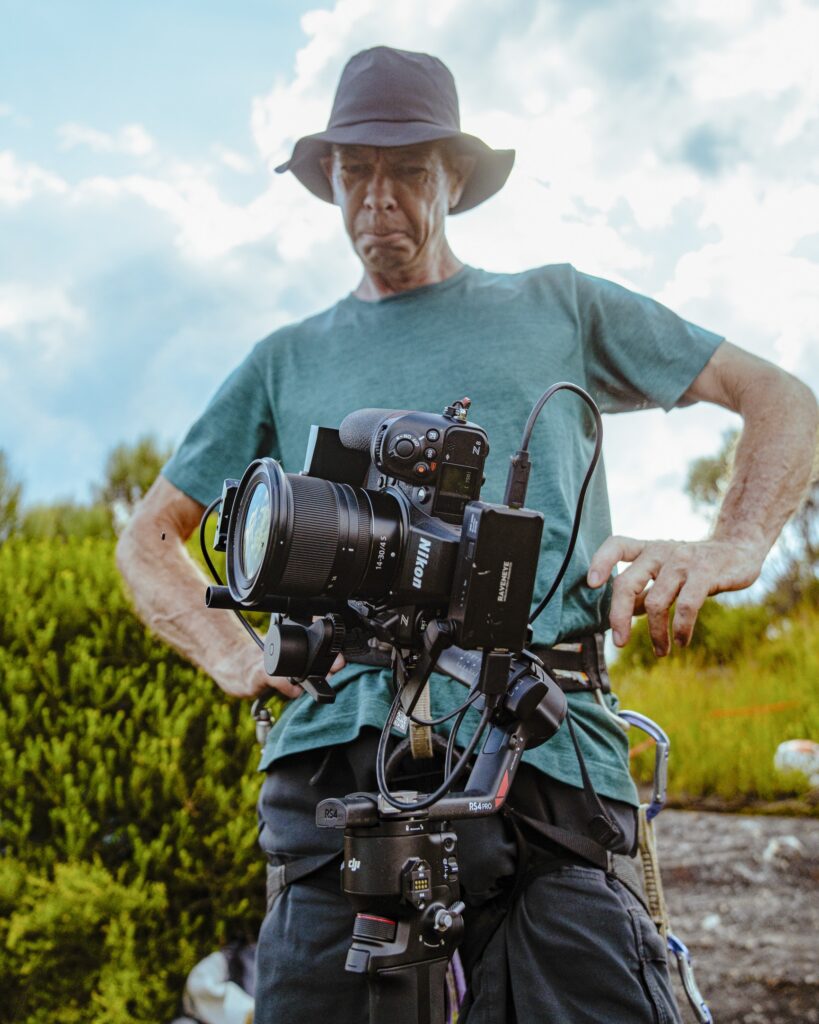
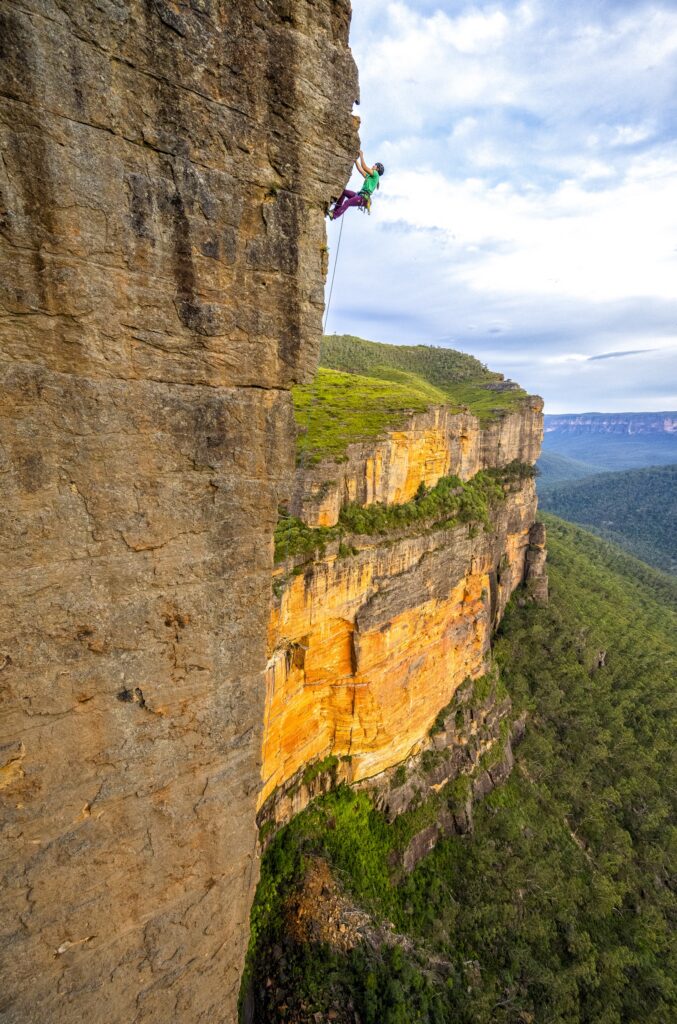
Left: Simon Carter setting up for a shoot on Disco Non-Stop Party. Image by Daygin Prescot. Right: Ange Malysheva on the climb Disco Non-Stop Party (grade 25), at Walls Lookdown, in the Grose Valley, Blue Mountains, NSW, Australia.
With this new setup, Simon’s not just solving old problems—he’s unlocking entirely new creative potential.
“I admit that I have been photographing climbing for a very long time. If I weren’t looking and playing with ways to do things differently, better, get new and really exciting angles on things… then I think I’d be getting pretty bored by now. So that’s reason enough for me,” he says.
”Bringing remote camera rigs into my climbing photography has made it more fun and interesting than it has been in years. My brain explodes at night thinking of the possibilities and shots that I want to try with this!”
And the results? Pretty damn awesome.
Check out Simon Carter No Filter on YouTube for the full videos.
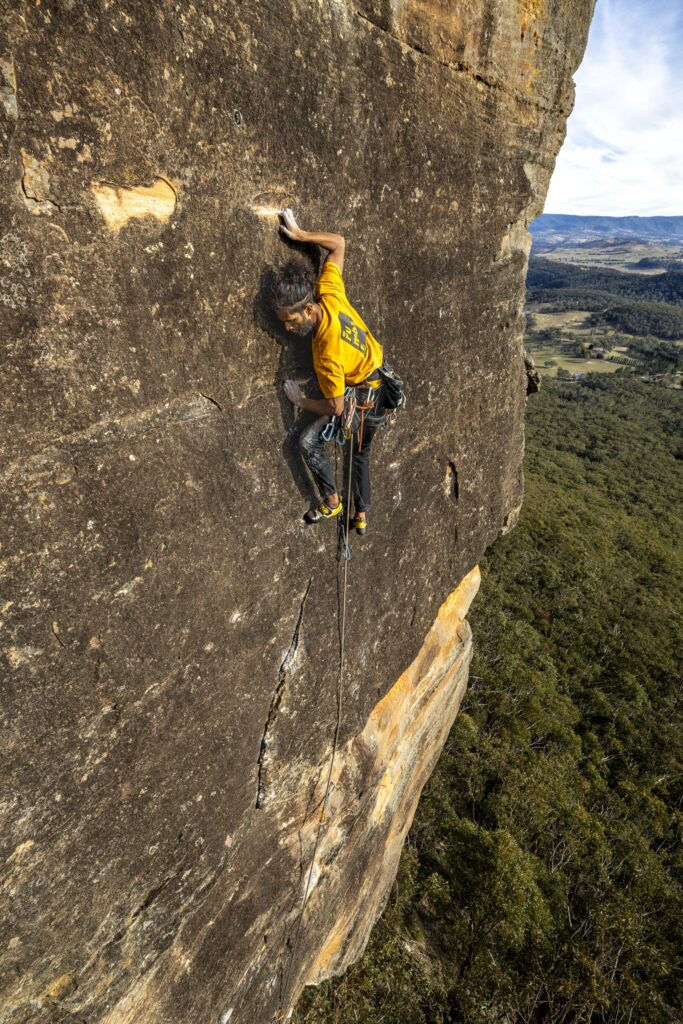
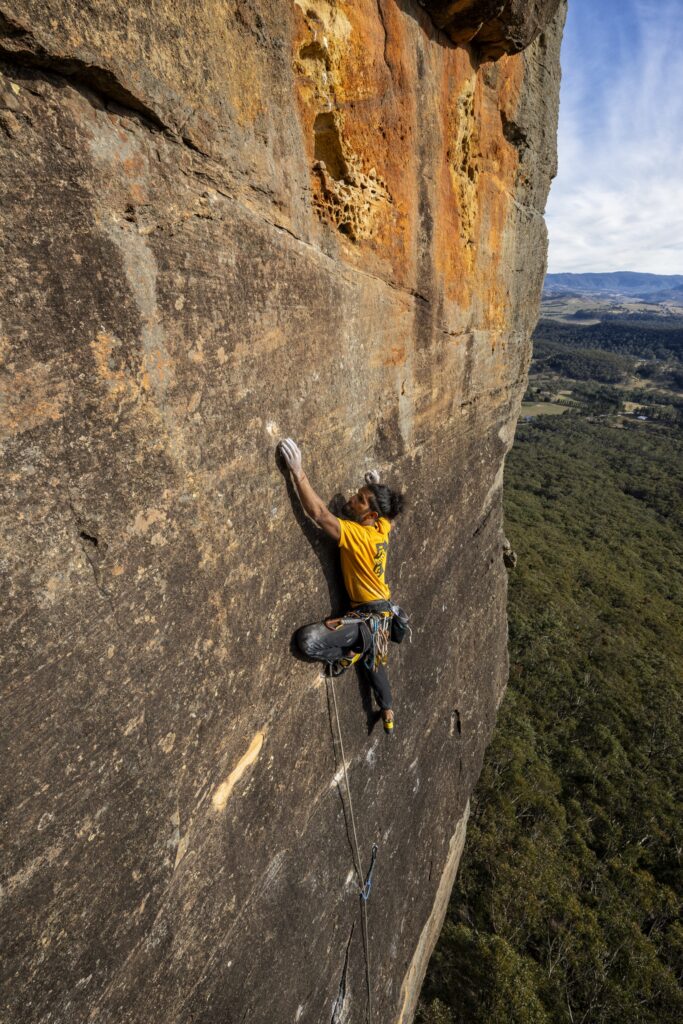
Both images: Azhar Ali, The Plunge (22), Mount Piddington, Blue Mountains, Australia.
Since the release of this article in issue 52, Simon has made progress in his remote camera journey. The results in this newest video released in September 2025.