Ice Climbing in Australia's Warmest Winter
The NSW Main Range is classic Aussie adventure–tough to access, unique, and great when the conditions align. But last year wasn’t exactly a banner year for snow. Still, July 2024 brought a solid snow dump, turning the resorts and backcountry into a spring-like playground. Peter, along with mates Gerard and Mike, decided conditions were good enough to skin from Guthega, build a shelter in the snow, and set up camp for a few days trying out alpine climbing routes.
Words by Peter Rowed, Gerard Kennedy and Mike Lehmann
Images by Peter Rowed and Mike Lehmann
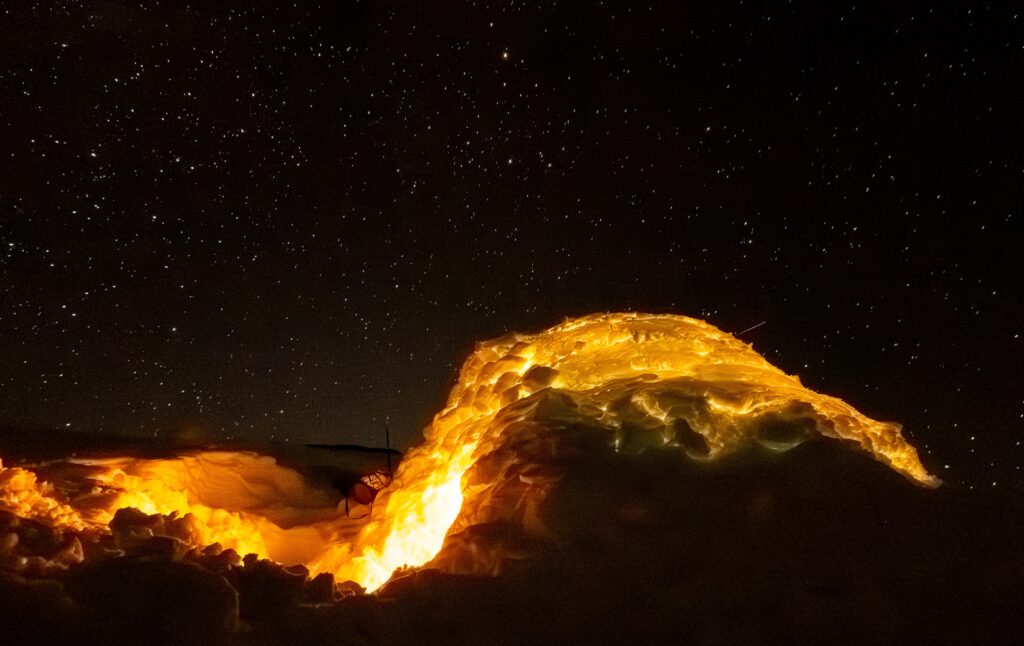
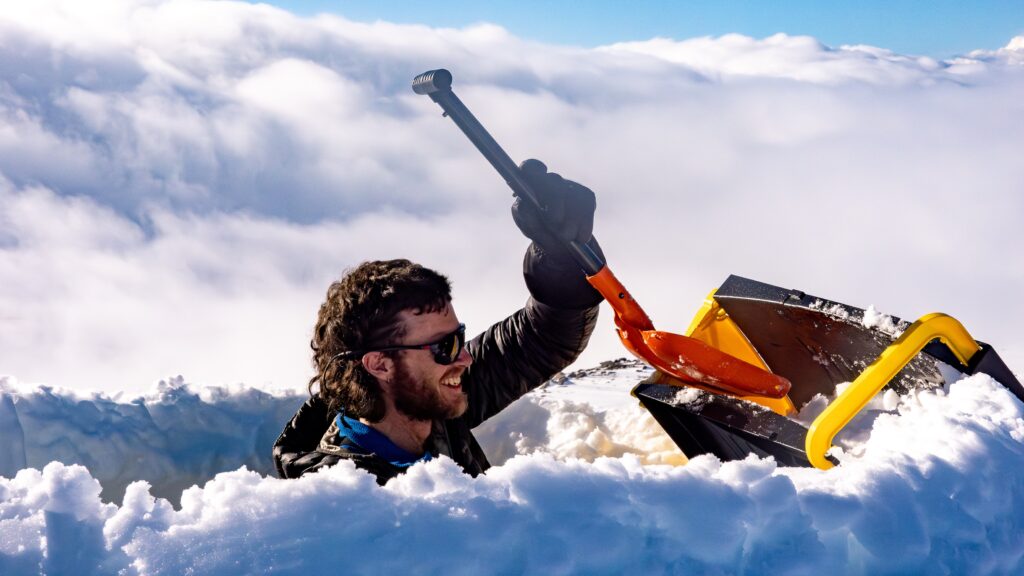
In early August, we set out to build an igloo for basecamp, inspired by a young crew who’d built a multi-room shelter the past two seasons. Armed with a “How To” guide, we assumed we’d have it done by nightfall. But we didn’t count on the challenge of building on a slope or the unusually warm conditions that slowed the snow block freezing. By 2am, our wall was barely waist-high, but we had shelter, a good whiskey, and stunning stargazing to keep us going.
By the next morning, we were back at it, and by the following weekend, we had a fully finished igloo. The inside glowed warmly with candlelight, and the insulation and sound-deadening qualities made it the best sleep I’d ever had in the alpine.
The next day, we skied over to Blue Lake for some ice climbing—finally, conditions were turning in our favour and the hard work was in the rearview.
Here’s how Mike recalls it:
While trad climbing offers the security of placing gear in solid rock cracks, ice climbing presents a unique challenge: the ice is ever-changing, ranging from soft and mushy to brittle and hollow. Unlike rock, where you can generally rely on your gear to hold, ice is far more unpredictable. Each move in ice climbing is a decision weighing risk and reward, and the constantly shifting conditions introduce an added layer of uncertainty.
Alpine climbing, in particular, is about striking a delicate balance between managing risk and accepting the unknown. I often think of risk like a bank account—each decision is a withdrawal, but you want to be careful not to overdraw. And when you think you’re in the clear, that’s when you need to be most concerned, because that’s when the bills, taxes, and fines are usually lurking around the corner.
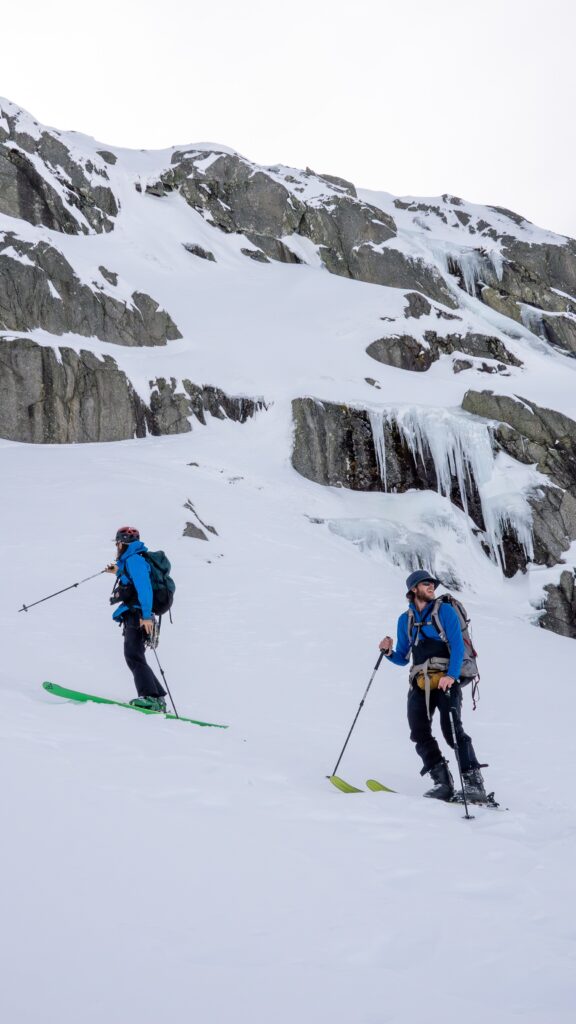
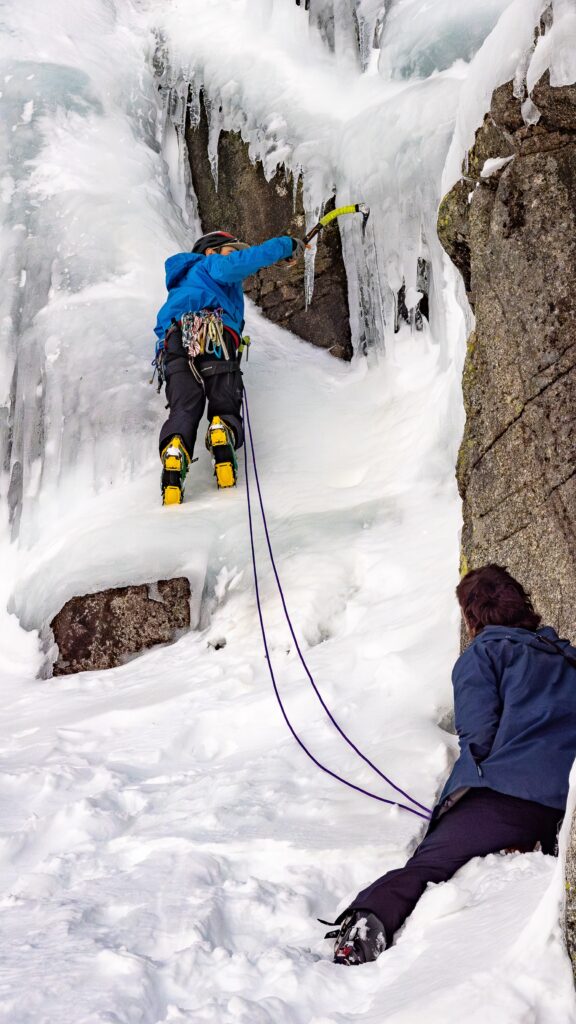
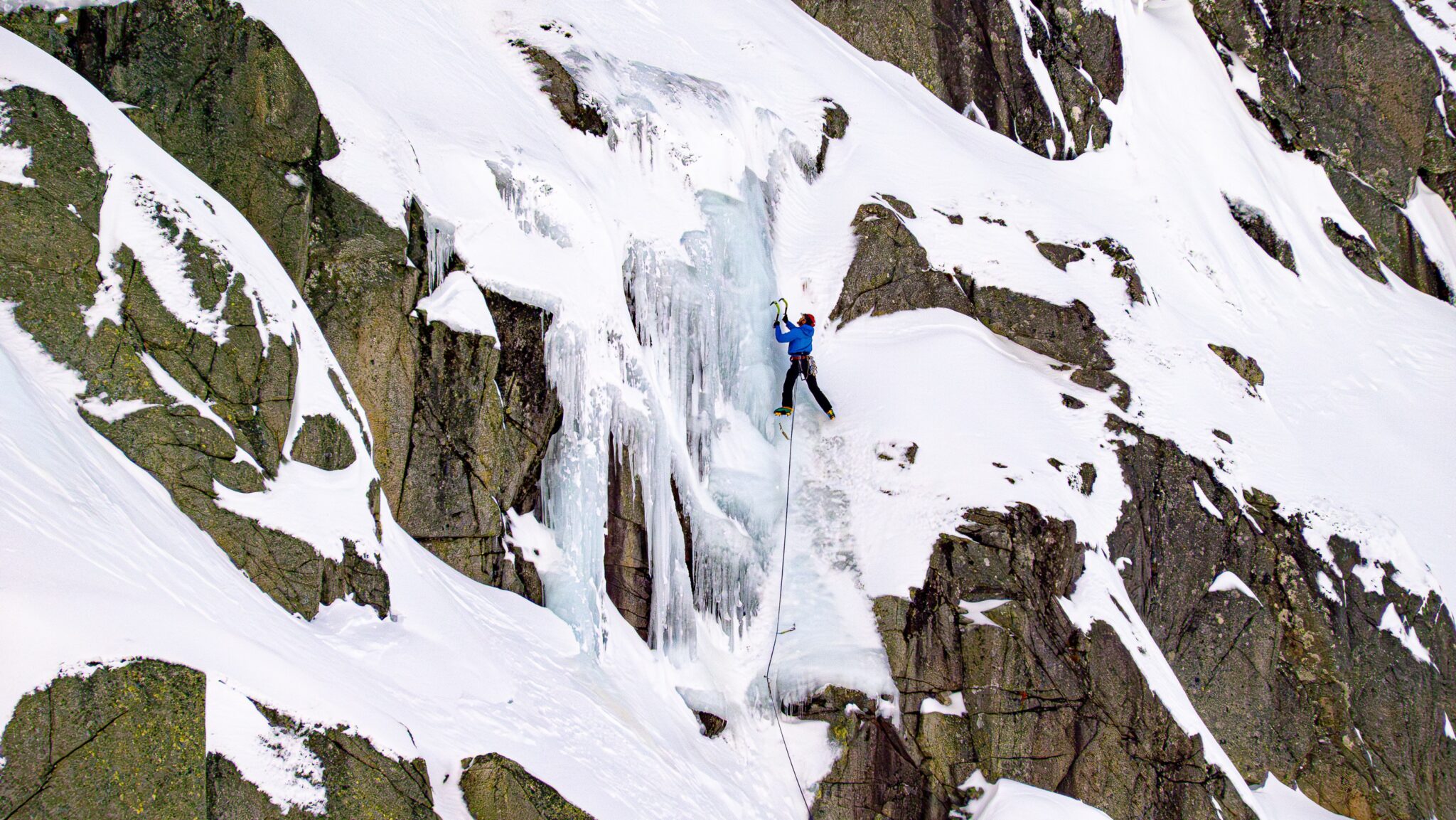
With scant options available, we weren’t spoilt for choice and didn’t waste much of the limited overcast daylight deciding what to climb. Our attention was immediately seized by a 15 metre granite slab with a solid volume of ice caked on top. We skied to the base of the climb to try and work out the best way up.
Tied in at the base of the route, I paused for a moment to assess what lay ahead. With axes in hand, crampons securely on my boots, and my harness loaded with ice screws, carabiners, and slings, I was fully geared up and ready to take on the climb.
I kicked my crampons into the ice and made my first move onto the route. Swinging my axe into the ice, I heard the unsettling “thunk” of hollow ice. I paused to assess the situation. A faint “trickle” caught my attention, and when I scratched a screw into the clear ice, I saw water running down the back of the column. I was trying to find thicker ice for better protection, but my confidence was quickly fading, and I decided to downclimb.
This season’s ice conditions were right on the edge of what I felt comfortable with. After descending, I took a second look and decided to try a promising ice runnel (a natural groove filled with ice) two metres to the right. This time, the ice was more solid, and the reassuring “thunk” of my axe and secure crampon placements gave me confidence to keep going. I found a couple of good ice screw placements for protection and pushed onward.
As I moved, I got into a rhythm, and soon I was at the top of the cascade. Unfortunately, the ice thinned again, and I saw a fracture line. Stopping for another assessment, I decided to traverse right onto some snow that looked more manageable. But when I stepped across, my crampons sunk into the soft snow without much hold, and I found myself scraping against some rough granite beneath. It became clear: I couldn’t go down now. I was committed. So, I carefully began digging out some of the loose snow to create a better stance.

In alpine climbing, it’s hard to claim you’ve done a route “safely”—there are always objective dangers. As I dug through the deepening snow, the protection I was relying on quickly became less effective. The snow was loose, and I had to work carefully, moving between my ice tools and crampons for stability. There’s a certain focus that sets in when you’re topping out a mixed route, especially when the conditions aren’t great. It’s a cocktail of tension and reluctant satisfaction as you get closer to the top. Whether that turns to immediate satisfaction or not really does depend on the top anchor options available, how much gear you’ve got left to build said anchor, and the sketchiness of the exit scramble, which always looks less intimidating from below.
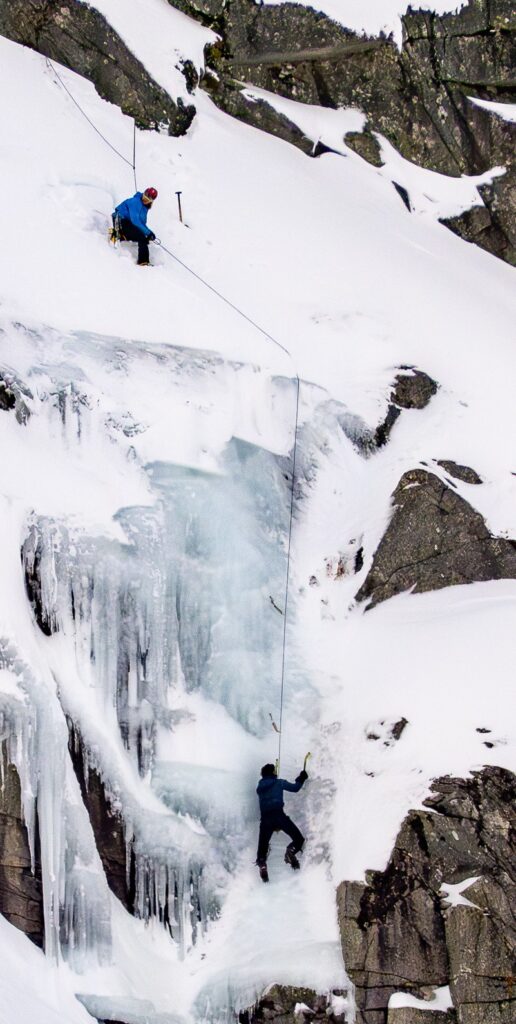
I topped out with enough gear left to improvise a top anchor and found a decent spot to do so. Using a couple of solid ice screws, a sling, and some extra carabiners, I created a makeshift belay ledge. While not ideal, it was enough to secure myself as I prepared to belay Gerard up.
The protection was marginal at best, so I yelled down to Gerard, “I’ve got some average gear in, backed up with a body belay—try not to fall!”
Not exactly confidence-inspiring words, but Gerard seemed determined and was ready to give it a shot.
Gerard’s side of the story:
What’s the worst that can happen, it’s just a top-rope, right? Although maybe that outlook requires an exception when it comes to Mike, it’s not the first time he’s made me nervous in these situations (think boulder wrap belays, core-shot ropes, etc.). Either way I was keen to give it a go, but I was certainly wishing I had remembered my helmet, and my harness…
Luckily Mike was generous enough to chuck his down. I swear I’m usually more reliable than this. I think I was just caught up in the sheer toil that lay ahead to get the igloo finished when I was packing for this trip.
“Three hours max,” Pete had assured me when we had started that project last weekend.
Anyway, I should have expected another Pete Rowed sandbag. Just like I should probably have remembered my harness. The point is no one is innocent here.
Despite these formidable odds I was able to complete my noble top-rope quest, only to discover that a mandatory solo traverse still awaited me. With Mike again leading the way I shuffled delicately across the steep snowpack. Each step sinking six to twelve inches into the snow before biting. If one of those steps didn’t bite I would have been over the cliff edge in a second, and that would have almost certainly ruined my day. Luckily we got away with another one, and soon after, we were reunited with Pete.
What next for alpinists in Australian?
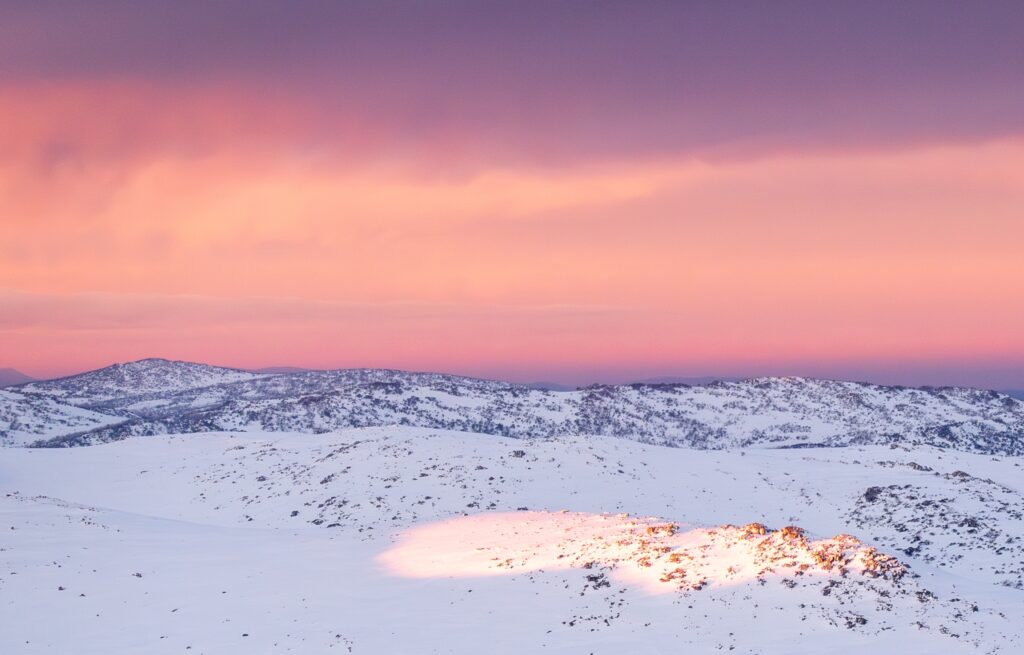
Back at the igloo, we witnessed another stunning sunset, shifting from orange to deep blue. The mood was high as we brainstormed future igloo-based adventures.
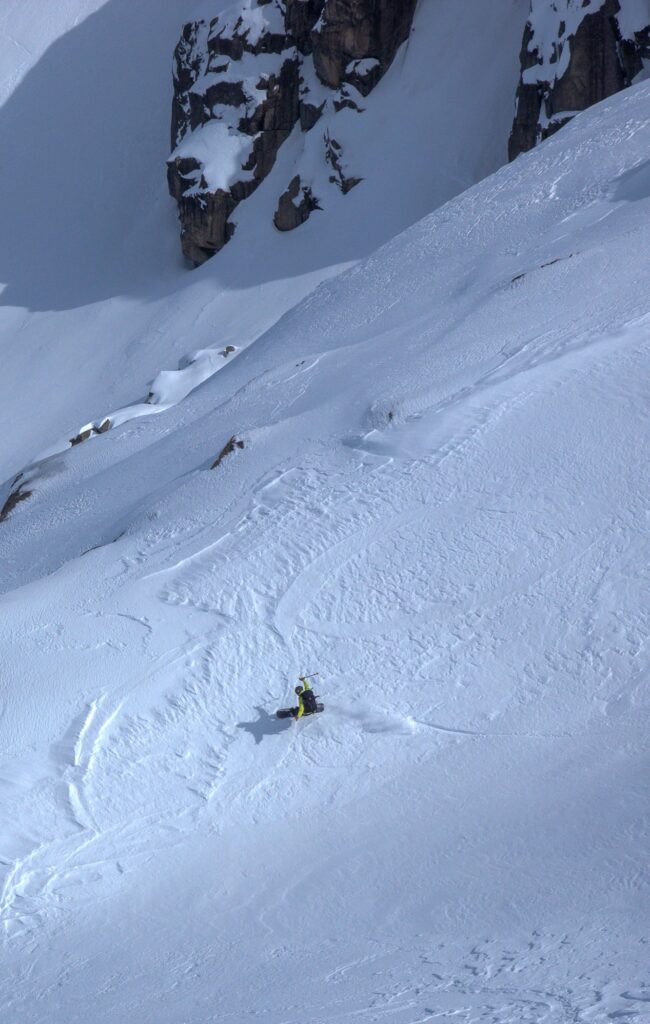
The next day was beautiful—clear, still, and warm enough to justify a Hawaiian shirt. We got in some skiing and snowboarding laps of the Mt Twynam east face gully before packing up with a collective keenness to get back to the igloo and the alpine as soon as possible. Sadly, that would never happen.
Two days later, while guiding clients, Mike found the igloo had melted into a pile of ice debris. The warm weather we experienced marked the start of a brutal August warm front, bringing torrential rain, high temperatures, and fierce winds, which turned resort ski runs into rivers and ended any hopes of backcountry missions.

2024 had the hottest August on record, with an average high of 10.0°C at Thredbo Village (~1300m), 3.3°C above the long-term average of 6.7°C. For context, 2023 had the hottest July and September on record as well. These numbers are a stark reminder of the ongoing downward trend in Australian snowpacks, especially in spring.
But all is not lost yet. According to the CSIRO’s State of the Climate reports, maximum season snow depth remains highly variable and strongly influenced by rare heavy snowfall days, with no observed trends in their frequency. So those heavy snowfalls that fire up the alpine, even in years like 2024, still deliver the goods. Snow and ice free years are sadly in the grey area between the foreground and horizon, but there is also still reason to hope for many more mountain adventures ahead.
Peter Rowed is a regular 9-to-5 desk jockey, chasing adventures whenever the weather and life allow.
Other alpine stories: