Finding balance: Connection, Hope, Identity, Meaning and Empowerment on rock
Wimmera-based doctor and climber Felix Ritson explores the nuanced relationship between climbing and mental health—the benefits, the risks and how to find balance.
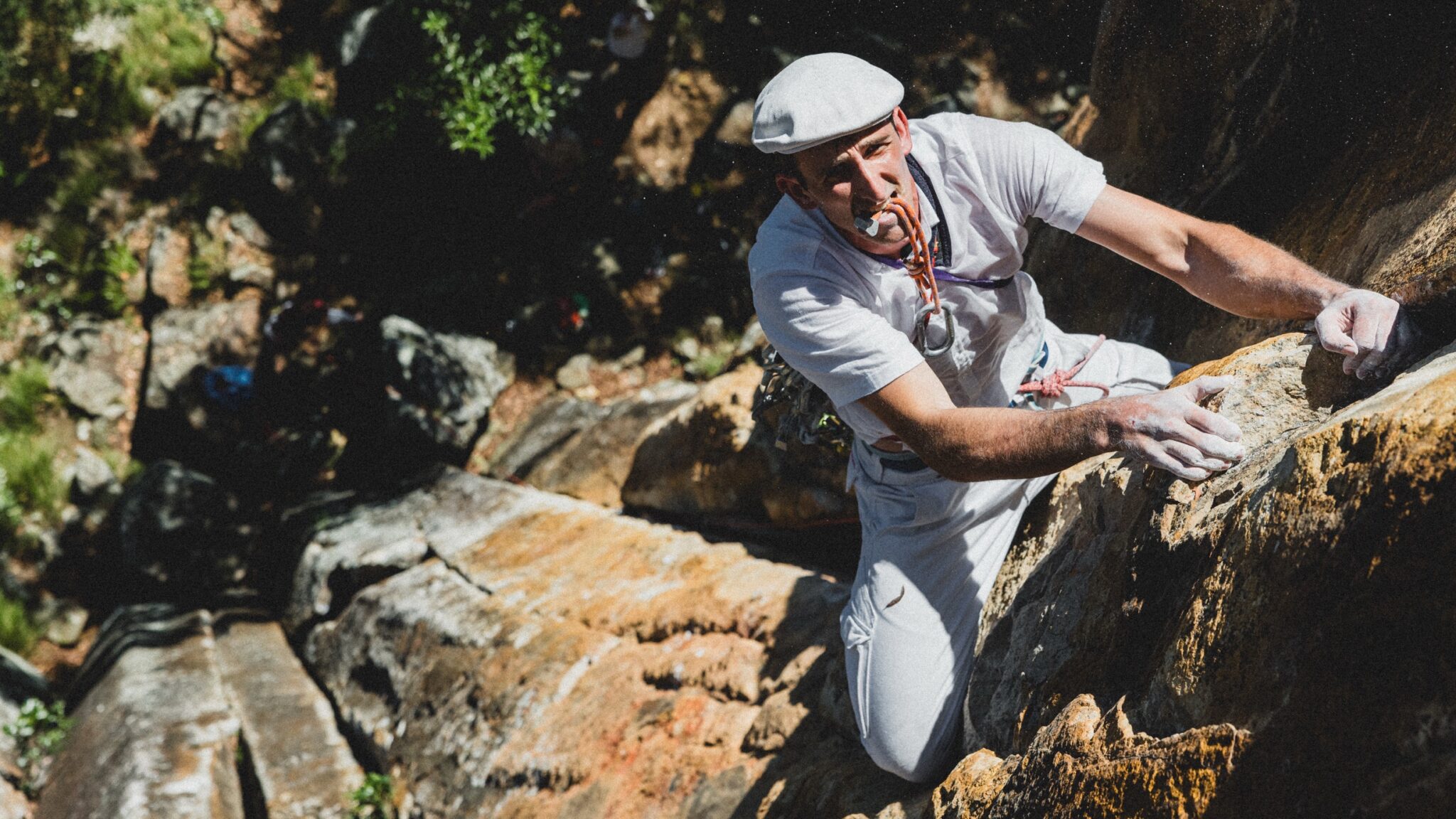
Words by Dr Felix Ritson Image by Claire Williams
Writing an article on the relationship between climbing and mental health presents a daunting task given the breadth and complexity of such a relationship. Furthermore, frankly discussing mental health in a public setting usually stirs disquiet and sparks controversy. Warranted by the word limit, I’ve spoken in pithy generalisations based on my biased opinions and understandings.
Aristotle concluded that a third of rhetoric stems from one’s character, hence I’ll need to briefly introduce myself to justify my perspectives. I’ve been climbing for 18 years, ever since I was taken on a school trip to Mt Arapiles. Over this time I’ve moved in and out of various forms of the sport and had the good luck to climb at various international locations. After completing my teenage dream of spending a year living at Mt Arapiles in 2022, I’ve settled in the Wimmera where I work as GP focusing on Mental Health and Addiction. I am privileged to provide counselling via this role to community members which include climbers and emergency service providers. Whilst applying a psychodynamic approach, my preferred theoretical underpinning for this is existential psychotherapy.
I’ve made use of a mental illness recovery framework to structure this article. CHIME stands for Connection, Hope, Identity, Meaning and Empowerment. Insufficiently, I’ll touch on some of the components of the relationship between our mental wellbeing and climbing. I imagine that most people reading this will have had their own journey with what is sometimes referred to as mental illness. I also suspect that many, if not most, of the readers will see climbing as an important part of their journey through the darker parts of life. The depth, importance and beauty of this relationship I have not captured, nor have I intended to. My hope is that this article will simply bring already well known phenomena to the front of our minds in order to promote healthy reflection and discussion.
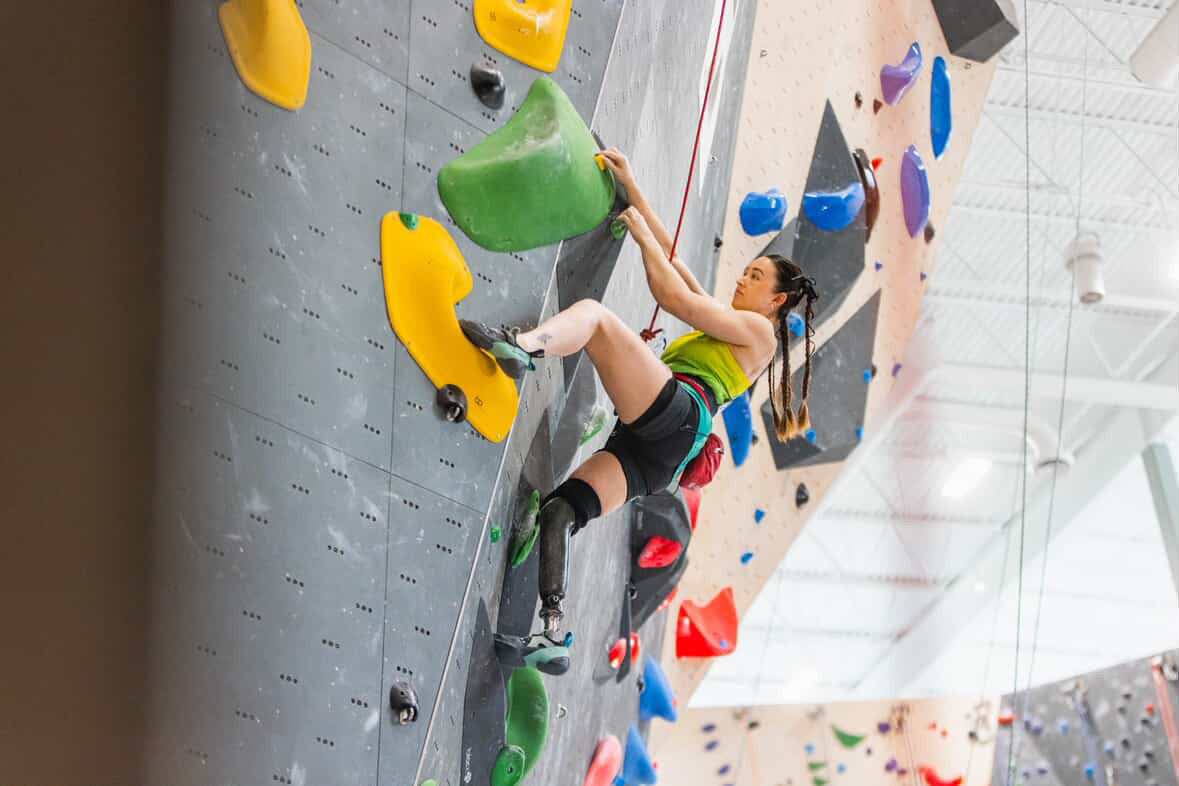
The experience of climbing brings people together in a unique way, just as any shared complex, challenging and dangerous journey does.
Connection
We live in an age of loneliness and disconnection. Whilst this might not be felt by young, healthy and socioeconomically mobile individuals, it certainly is by swathes of our society. Climbing provides broad and deep opportunities for connection to others, the self and nature. It is hard to imagine a better environment in which to meet new people than the in-essence adult playgrounds that are indoor climbing and bouldering gyms. Seemingly also, in every part of the world there exists accessible camping locations filled with climbers spending much of their time socialising.
The experience of climbing brings people together in a unique way, just as any shared complex, challenging and dangerous journey does. Willing oneself to move at height, requires decision making processes that reach into our psychological core. When done consciously, it takes a good deal of reflection to be able to willfully endure risk of significant harm for no tangible gain.
Climbing is often aptly compared to dancing and surfing. A dancer must develop a highly attuned awareness of their bodies position, tone and movement, creating an intimate relationship between their physical and psychological self. A surfer lives in, and dreams of, time spent in and engaging with entirely natural environments, and a love of oceans, coasts, land and the animals of them inevitably manifests. The power and grandeur of swells enforces a humbling respect for Mother Nature. Climbing brings these elements together via a sport that seems so natural to us descendants of apes.
Hope
Much of our planet is dying. As with most of history, those looking back upon us will beg with disbelief: How could you? Seemingly, an answer offered by many will be: How could we not? If the only life you have ever known includes air conditioning, a change of clothes each day, more than two pairs of shoes, a thick mattress and supermarket around the corner, then this is an understandable and hence forgivable response.
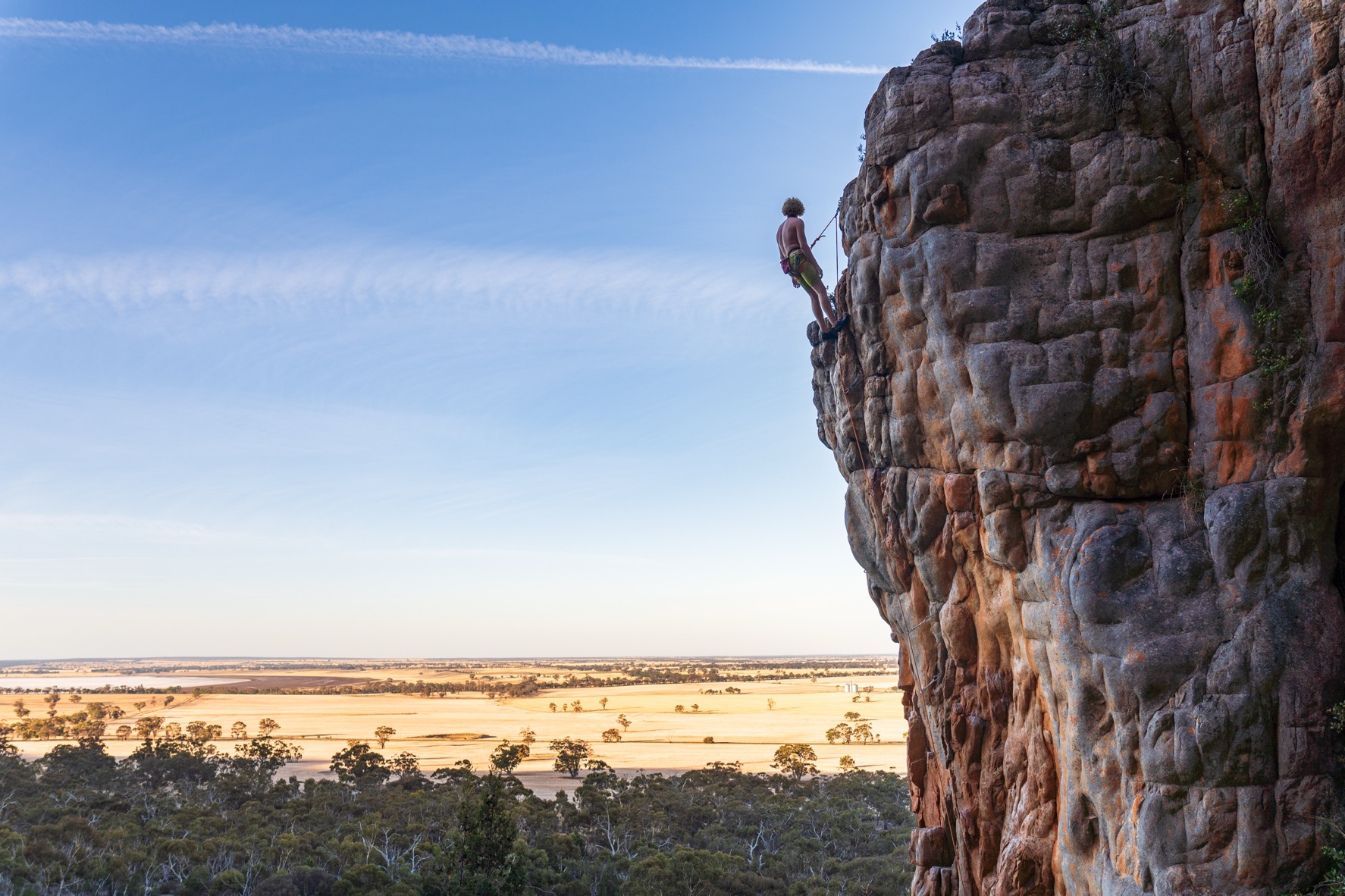
Climbing offers hope in the way it allows people to learn there are other ways to live. Being woken by the songs of birds. Taking only a single step to get from your bed into direct sunlight. Evenings spent around a campfire with friends and trustworthy strangers. Coming to be comfortable with your own body odour, and then that of others. Understanding the peace that arises when there are no screens to block out your sense of presence in the reality around you.
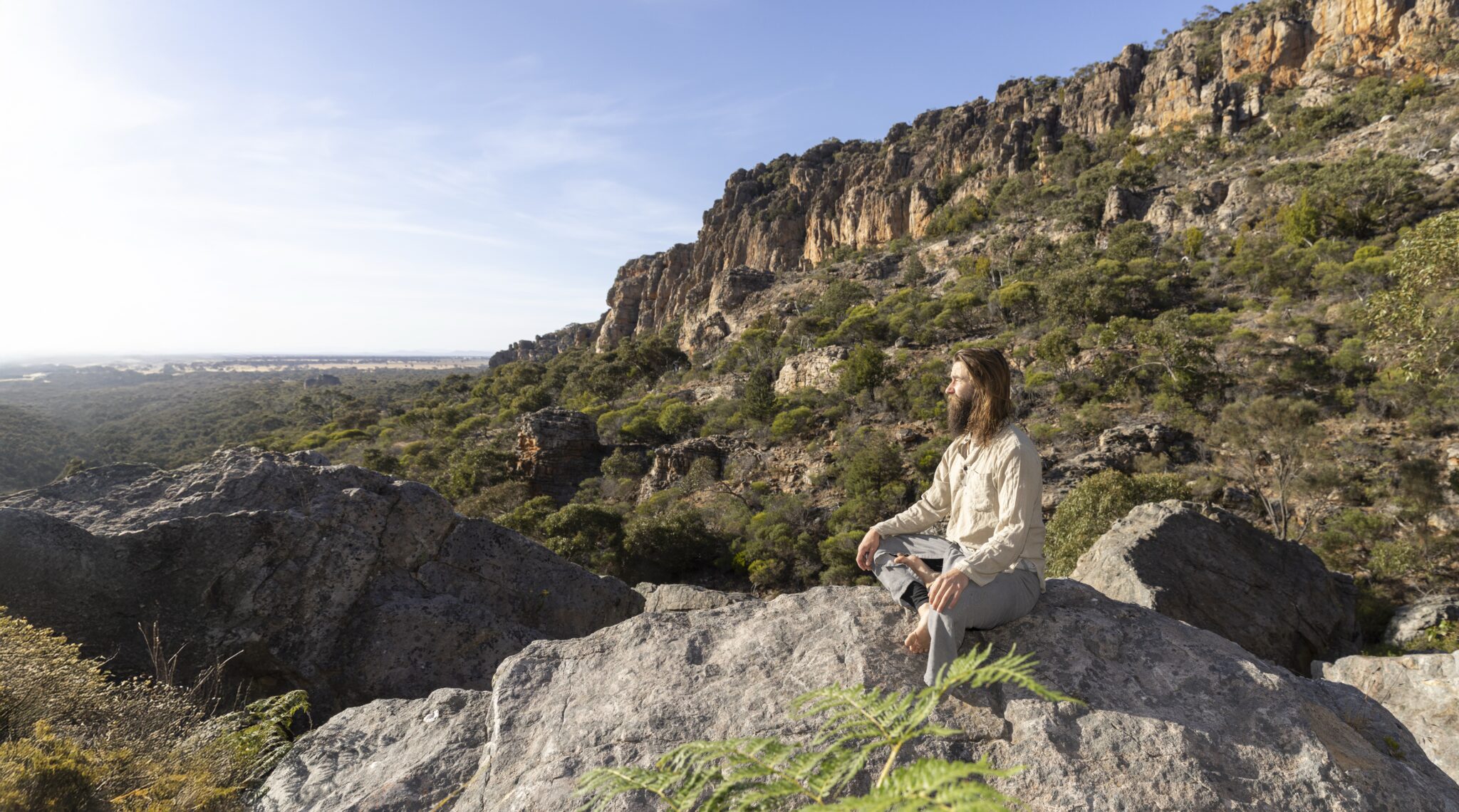
Climbing leads one to take retreats in nature, escaping from the rat race, excused by adventure. This enchanting existence acts as a healing balm for the soul. Slowing and connecting enough to provide the gumption required for the usual working week.
Though the pull of Robert Frost’s lovely, deep and dark woods can be for some too great; shirking the responsibilities of health for a self indulgent Diogenian lifestyle justified by a hobby. As a farmer in Natimuk pub once told me, in not so many words, the only thing he didn’t like about the dirtbags was their lack of contribution to the local society and economy. This said, the Wimmera community benefits and is very grateful for the service and economy provided by the climbers that move to the region. In every line of work in Horsham, especially health and education, you will find climbers making a significant impact.
Identity
I once asked an award winning General Practitioner with over 30 years of experience tirelessly servicing a community about their opinion on the current youth mental health epidemic. They responded that when they were young, though not without other issues, people had a clear sense of identity. You were either a punk, hippy, skinhead, etc. In generations past many people identified strongly with a religion, often in a way that seemingly outweighed the strength of their faith. Society now has progressed past many exclusionary and divisive social norms, yet despite the far reaching and clear benefits of this, some people are left without a sense of identity.
Climbing provides this for many. It is a badge held proudly and usually without an air of superiority. The collegiality that stems from this fosters the rapid growth of social networks and a resultant psychological security blanket. Identity, being a dynamic process, of course fluxes and moulds. Overattachment, whether it be to bouldering over leading, pushing grades over bumbling, purity over hangdogging or tricams over friends, will never persist unchallenged. The balancing nature of life painfully corrects when we, or the world, changes and we must face the loss of what we previously wrapped our sense of self around.
Meaning
In a world still pervasively infected by post-modernist nihilism, passion is a dirty word. Unsurprisingly, the birth of meta-modernism is epitomised by allowing meaning to occur despite uncertainty. I suspect the other pages of this magazine will well convey the brilliance that the passion for climbing generates, giving purpose and meaning to those that pursue it.
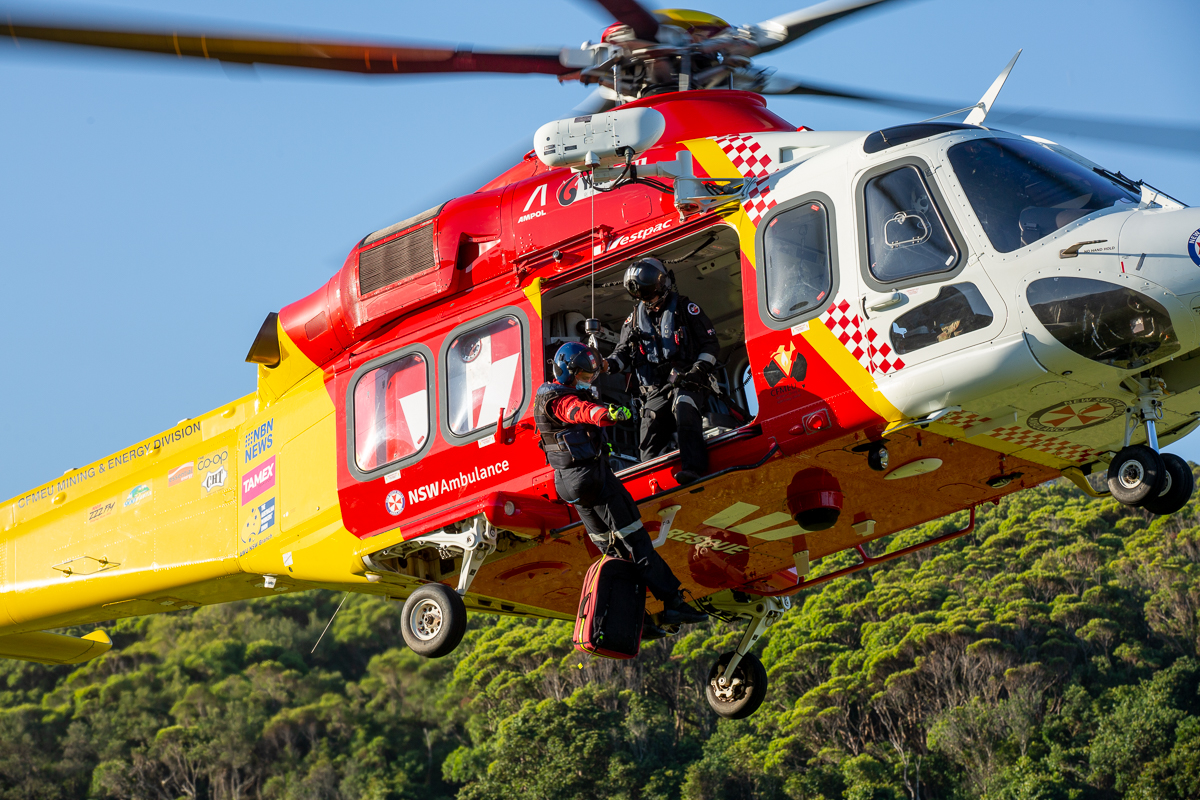
Of course though, the drive to climb can go too far and become unhealthy, at times mortally so. Chronic pain and disability from not appropriately resting after an injury. Pulling skirtings off of door frames from the impulsion to hang board on anything available. Insidious and slowly developing hormonal disruption from excessive exercise whilst maintaining a restrictive diet. Allowing one’s shoulders to gradually rotate internally causing tendon and nerve impingement. Taking too many risks and then suffering serious injury or dying. Admittedly I hold a bias stemming from having been witness to so much injury and death, but also from treating the post traumatic stress disorders that arise in emergency service professionals following attending climbing accidents.
I have friends who’ve completed their most “impressive” sends whilst suicidal. It sits uncomfortably with me the adoring attitude our community sometimes holds towards those that take excessively immature and selfish risks. It is easy to be bold when you don’t appropriately value your own life, or the lives of others. Fortunately there are usually those around that see the mental suffering underneath and are willing to catch their fall. Whilst not always sufficient, the climbing community can be incredibly supportive for those suffering prolonged and serious mental distress.
The courage obtained from climbing has profound effects on the trajectory of people’s lives. Even a singular experience of facing a seemingly insurmountable fear, and overcoming it, can revolutionise perspectives.
Empowerment
Some would describe anxiety as a state of fear, as such it might be fair to say that many people live in semi-constant fear. This becomes disempowering, worsening low self worth, inhibiting the undertaking of actions that would widen a window of tolerance. Anxiety goes hand in hand with depression, usually in a self-fulfilling spiral. The courage obtained from climbing has profound effects on the trajectory of people’s lives. Even a singular experience of facing a seemingly insurmountable fear, and overcoming it, can revolutionise perspectives. The growing evidence base for the psychotherapeutic benefits of climbing is testament to this.
But even here a balance must be struck to avoid suppressing healthy anxiety or developing dependency on the use of risk taking for emotional regulation. Molecularly speaking, adrenaline is structurally similar to dopamine, MDMA and methamphetamine—a fact that should give us further pause when considering the derogative label “Adrenaline Junkie”. Being placed in physical danger can assist people with putting their life into perspective, helping to not sweat the small stuff.
However repeated exposure to traumatic circumstances can also develop a disconnectedness from life, avoidant of engaging with the menial but important duties of being human. Repeatedly risking your life is a cheap way to pacify unpleasant emotions related to more mortal matters.
Finding the balance
A pet dislike of mine is when people use the lazy quip “it’s complicated” to avoid explaining or understanding a topic. Yes, things are complex, but I feel it is not complexity that gets in the way. With patience, tolerance to emotionally painful truths, and open-mindedness to new perspectives, humans can and have achieved incredible feats of understanding and change.
My life would not be the same without climbing, the benefits of which I fundamentally attribute to my climbing mentors. I sincerely hope that the activity can be taken up by as many people as possible, and from what I see at gyms, crags and in the media, this is exactly what is happening. However it is important that the ethos and approach required for the sport to be done well, are passed on to those new to it. With any human endeavour, balance is key for its application to be healthy and the outcome beneficial.
As the world faces new challenges, we are adapting, spurred on by an appropriate pain response. In a time when much of humanity is in need of connection, hope, identity, meaning and empowerment, perhaps climbing can help deliver this for us.
BIO
Felix Ritson works as a General Practitioner with interests in Mental Health, Addiction Medicine, Clinical Education and Spiritual Health. The proximity of Dyurrite/Mt Arapiles and Grampians brought him to the Wimmera where he now lives. He enjoys the rural lifestyle with its ease, access to natural environments and rich community.