Meet Coach Moriah
Meet Coach Moriah, the force behind a new wave of confident, capable climbers.
With heart, grit, and a fresh perspective, she’s changing the way Australia trains.
(This story originally featured in Vertical Life #51)
Interview and images by Claire Williams
Moriah Broadbent-Hogan—better known simply as Coach Moriah—is a familiar face in climbing gyms across Melbourne, helping young guns crush competitions and getting more climbers psyched and confident on the wall.
Claire Williams chats to her about how she fell in love with climbing… and then fell in love with helping others fall in love with climbing.
Let’s start at the beginning. How did you get into climbing?
I started climbing when I was 19, while I was studying at Melbourne Uni in 2013. I used to walk past Hard Rock in the city every time I came home from school, and eventually, I decided to check it out. From there, I basically became that regular who never leaves.
I’d rock up at midday when the gym opened and heckle the staff to belay me if it was quiet. I couldn’t get enough of climbing. I planned all my uni timetables so I had this massive break in the middle of the day, just so I could climb from 12pm to 3pm when all my favourite staff were working.
After doing my induction at Hard Rock, things escalated pretty quickly. Within three months I’d done my lead course at the gym and my trad course outdoors.
What was it like in your early days of trad climbing?
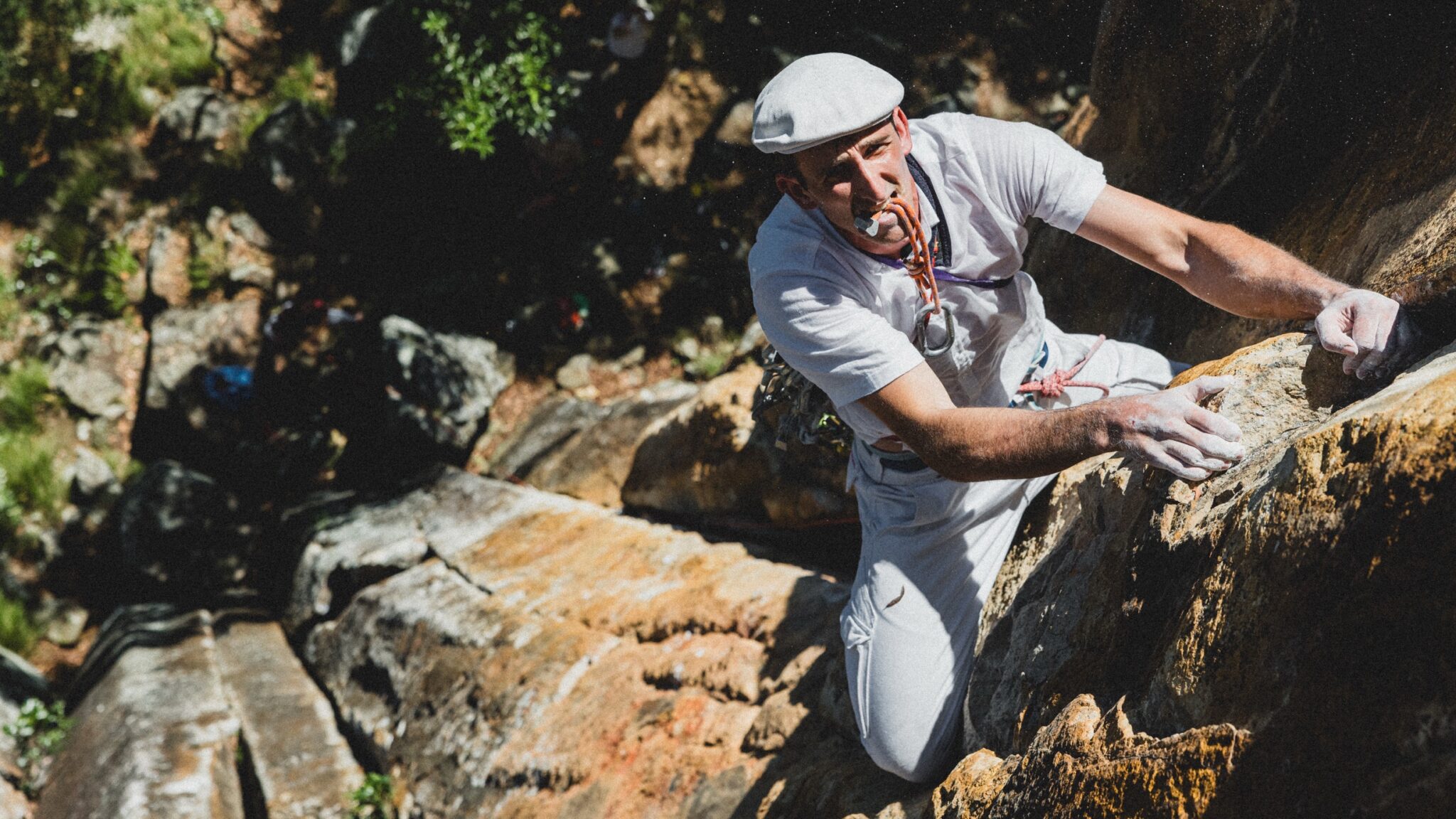
I started climbing outdoors at Arapiles / Dyurrite after joining the Melbourne Uni Mountaineering Club and doing a trad course with Aaron from Melbourne Climbing School. I was broke back then—saving up for one cam or quickdraw at a time, even splitting a 50m rope with a friend. I would calculate how many cams my paycheck would buy. I remember one paycheck I calculated to be two and a half cams, so I borrowed $50 bucks to round it up to three cams.
In the beginning, I only had six cheap sport draws and twelve nuts, the rope drag was the crux most days. I slowly built my rack piece by piece, often planning my climbs based on the gear I had.
For the first seven years, Arapiles was my whole world. I loved the adventure, the independence, and the simplicity of showing up to a blank bit of rock and being able to climb it ground up.
I’d rock up at midday when the gym opened and heckle the staff to belay me if it was quiet.
How did your coaching career begin?
I was studying chemical engineering at Melbourne Uni when I started working at a new climbing gym in Pascoe Vale. That’s where I discovered coaching—and it just clicked. I had been a youth athlete myself in another sport and coaching felt natural to me, I quickly fell in love with it.
I’d be chatting with clients and mention that I was studying engineering, and they’d be like, “Oh, I forget you’re doing something else—you’re so good at this, I can’t imagine you doing anything else.” I was very torn between the two passions. I had worked so hard towards becoming an engineer, but thoughts of being a climbing coach instead crept in more and more over the years.
Eventually, I realised that coaching was what I really wanted. Engineering didn’t align with the lifestyle I wanted, which was climbing on rock as much as possible. I wanted to climb more, be around climbers, spend more time outdoors, and engineering was going to take me away from that. I decided that if I was going to be a coach I wanted to do it properly, be a professional in the field. So I studied a Bachelor of Sport Science, majoring in elite athletes. I haven’t really thought about engineering since.
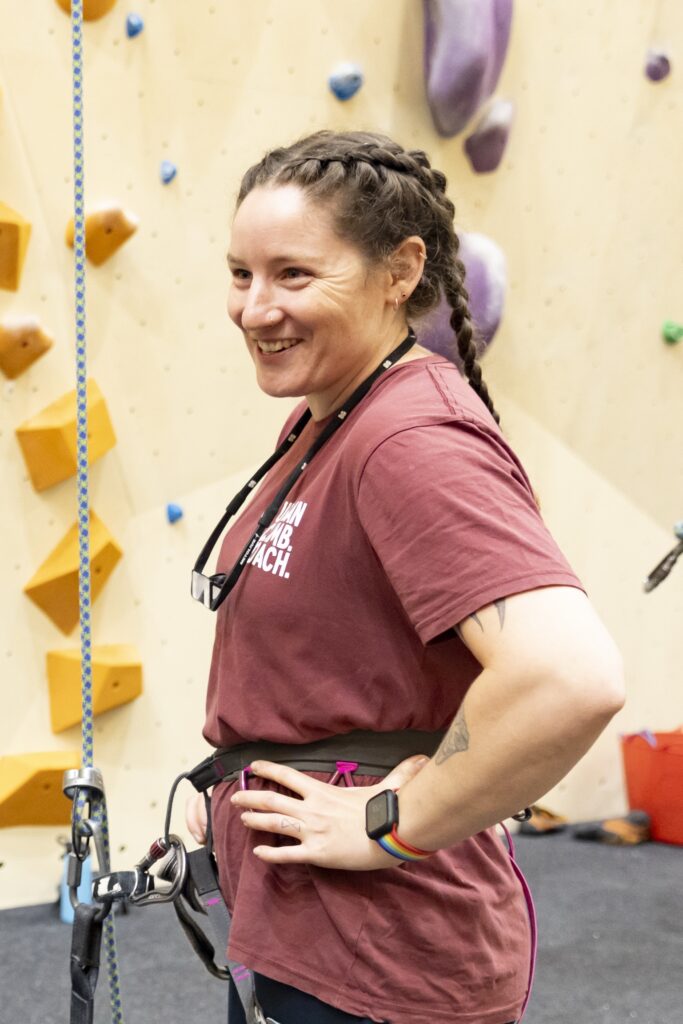
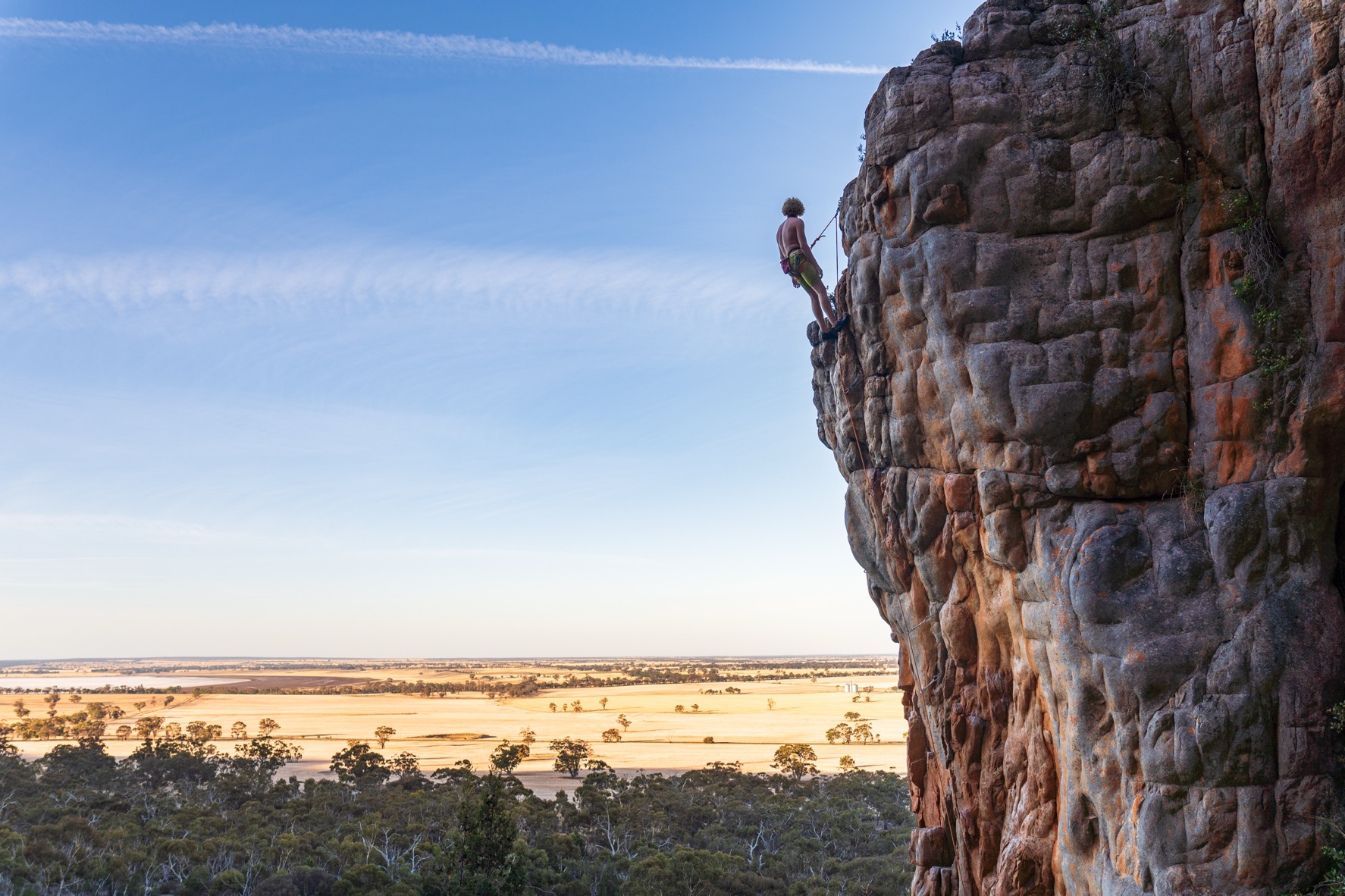
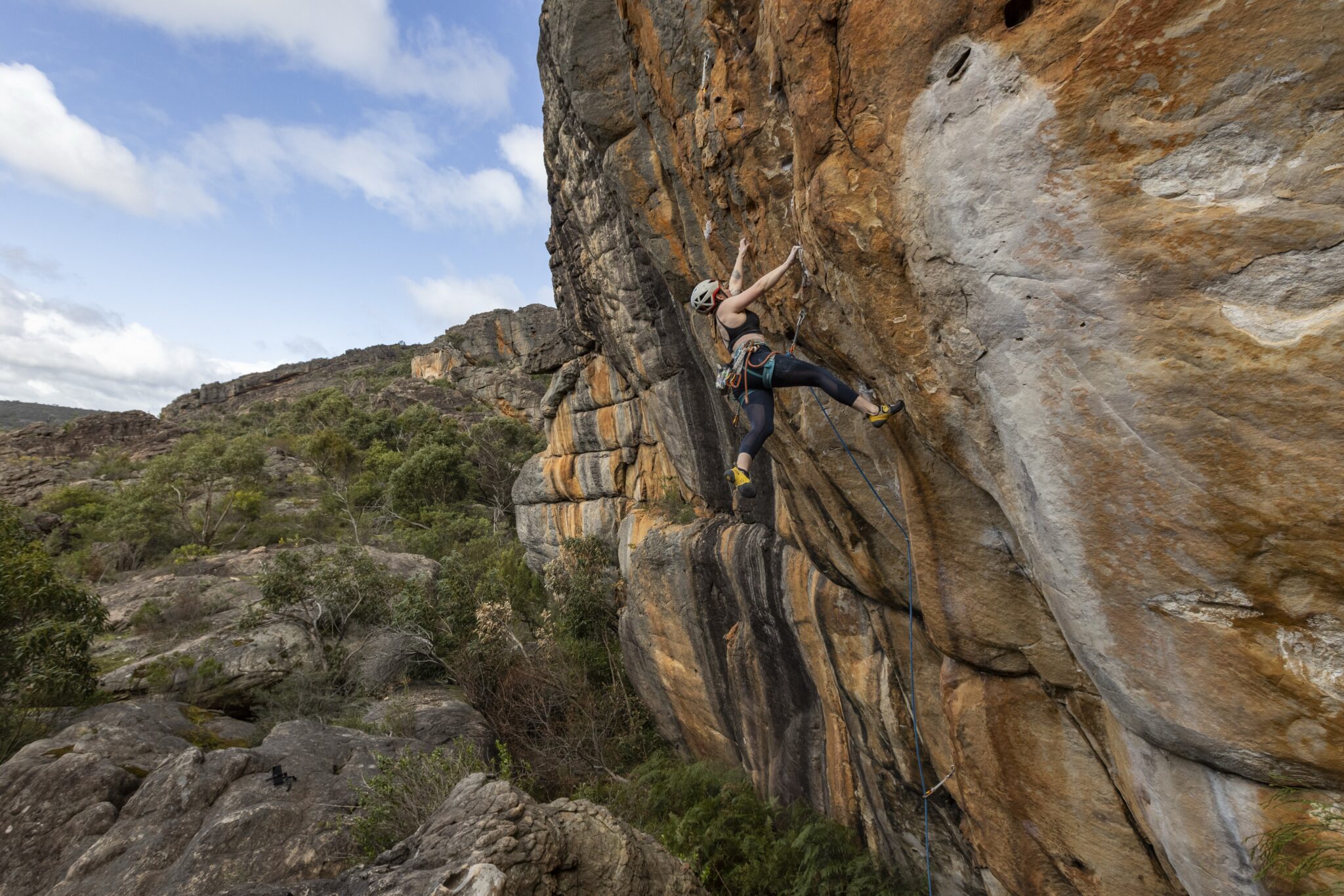
Left: Coach Moriah on De La Soul (26) Van Dieman’s Land, Grampians, Vic Right: Coach Moriah on the job
Has coaching changed your perspective on climbing?
One hundred percent! I took my science background and just applied it directly to sport science. I’ve been a full-on climbing nerd ever since.
It’s so cool to be in a role where you’re constantly growing and evolving. I basically use myself as a guinea pig for everything I learn—I’m right there alongside my athletes, doing the same sessions, trying the same things. I train like an athlete so I know what it actually feels like to be in their shoes. It helps me relate to them better and make sure the format I’m giving them actually makes sense in the real world, not just on paper. I really enjoy fine tuning details of each training session. It’s all in the details.
What’s been the most rewarding part of your coaching journey so far?
Officially launching my business Coach Moriah and moving into one-on-one work with climbers has been the most fulfilling part of my journey. There’s something really special about being there for the whole process. At the start, we aren’t even sure our goals are possible and along the way we are often riddled with self doubt. As their coach I’m there to direct where their hard work should go, but I also get the joy of watching them achieve things that once upon a time felt impossible.
Helping people repair their relationship with climbing is also rewarding. To see someone go from feeling burnt out or disconnected, to actually loving the sport again and feeling proud of themselves—that’s everything. Because at the end of the day, coaching isn’t just about teaching someone how to climb. It’s about being their support system, their cheerleader. It’s about building them up so they can believe in themselves again. I’m there to give them the skills to continue to improve but also build a strong and healthy relationship with climbing.
As their coach I’m there to direct where their hard work should go, but I also get the joy of watching them achieve things that once upon a time felt impossible.
What’s been the biggest challenge?
There aren’t degrees in climbing coaching so I had to piece together different qualifications and courses. I have done about 11 different climbing education courses combined with my bachelors degree on top of 10 years of coaching experience.
I still find people believe what grade I climb defines my merit as a coach. You can be a great climber and a poor teacher. I’m a coach, not a pro climber, and that distinction matters. Of course, being a climber supports my skills in coaching but being a coach and being a climber are two different things.
Do you have strategies you use when teaching to help with the fear of falling?
Yeah, definitely. I usually focus on two main things: how to not be scared of falling, and how to not even think about falling. They’re separate skills, and I teach them differently. I’ve actually done a lot of research into both—especially pulling ideas from other sports like gymnastics where fear management is a huge part of training. There’s also a ton of great work from sports psychologists around how we process fear and how to reframe it, and I’ve adapted a lot of that into my coaching.

What are some common mistakes?
One of the biggest ones I see is not training all three tiers of climbing—mental, technical, and physical. A lot of climbers tend to just focus on the one they enjoy the most, whether that’s training in the gym, dialling in technique, or working on mindset. But climbing’s such a well-rounded sport, and if you’re only developing one area, you’re leaving a lot of potential on the table.
On your socials you talk about the Grampians as your home away from home. When did the switch from Arapiles happen?
During COVID, I got really bored—and really strong. I was training a lot, and around that time I also started dating my now-husband. He was super into sport climbing and spent most of his time on Taipan Wall in the Grampians. I think I’m kind of addicted to things that feel just out of reach, and I immediately fell in love with those steep, powerful routes.
The first project I jumped on in the Grampians was Gotham City (23)—long, overhanging, and capped off with a big, punchy move right at the end. That style was totally new for me, and I was hooked. It was exciting, challenging, and exactly what I needed. I was ready to try something different, and now I genuinely love the whole process of projecting hard sport routes.
When you finally send something that once felt impossible, after fully committing to the process… it’s honestly the coolest feeling in the world.
Have you got any personal climbing goals at the moment?
I’m addicted to trying things that are too hard for me. There’s just something I love about getting on a route that feels completely out of reach—where I’m power screaming through every move, battling draw for draw, and then training like crazy to bring that climb into the realm of possibility. I’m obsessed with that process—taking it one step at a time and watching those tiny bits of progress add up. When you finally send something that once felt impossible, after fully committing to the process… it’s honestly the coolest feeling in the world.
Gotham City was the first one like that for me. I reckon I fell off the last move at least 30 times. I was getting on it before I was ready to send, but that’s part of what made it so rewarding. The challenge wasn’t just physical—it was emotional, mental, all of it.
Body Count (24) was another one. That thing is burly. I tried it many years ago and just thought, “Oh my god, this is insane.” It’s so steep, and the runout is terrifying. The crux for me was this big, powerful move, and if I missed the hold, I was taking a massive whip—like, close to 10 metres. And, fun fact: I missed that crux hold a lot. It’s this overhanging corner that already feels pretty intimidating, and I’d fight through the whole crux sequence with nowhere to clip, needing to hit this victory jug at the end—but I kept missing it. So I’d fall. Again and again.
After the crux, there’s still a bit of a runout to the top, but it’s easier terrain, so I had to really dial in my mental strategies there. The route pushed me to be focused and strengthen my head game. If I wasn’t improving my head game, I wasn’t sending.
And then when I finally did it, I just walked up it. I was completely in flow state, not even thinking about the runout. I was just stoked to be there. It ended up being one of the most fun, satisfying days I’ve ever had on rock.
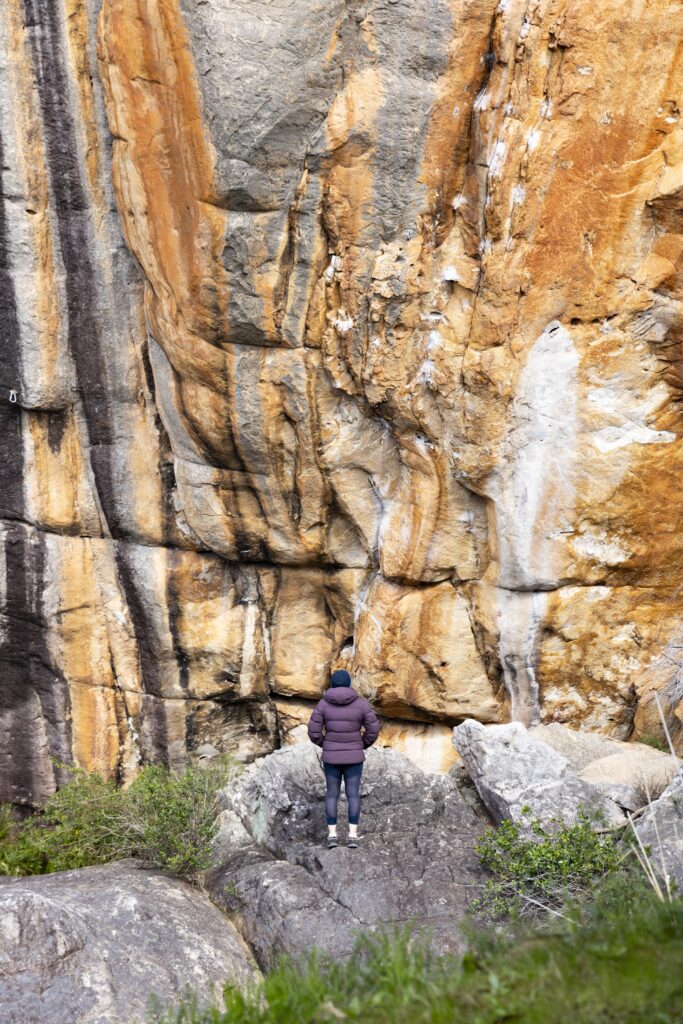
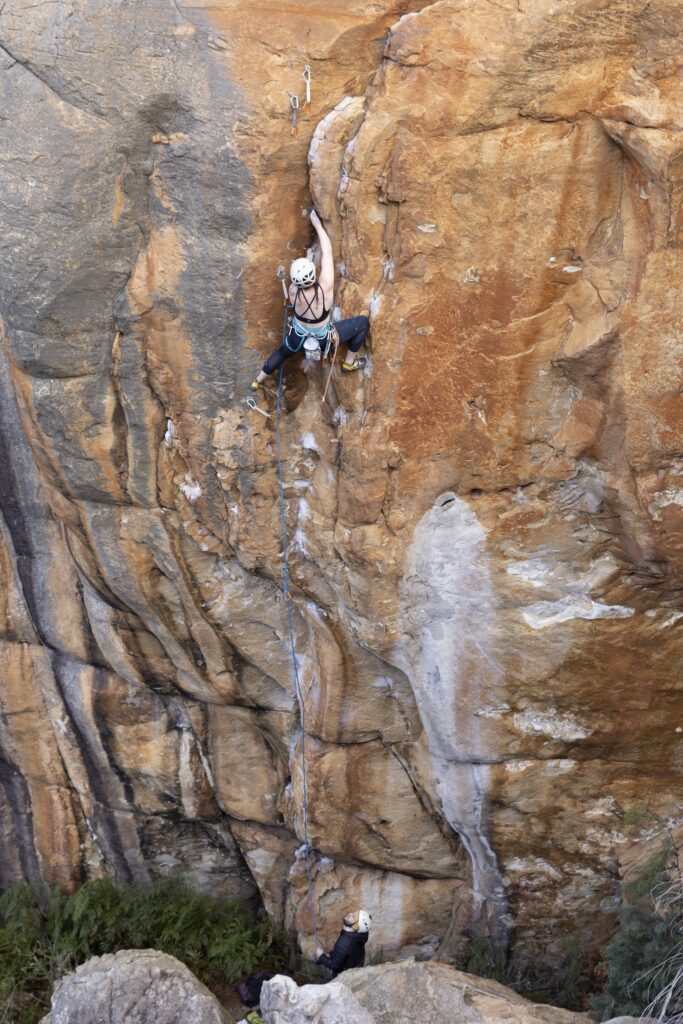
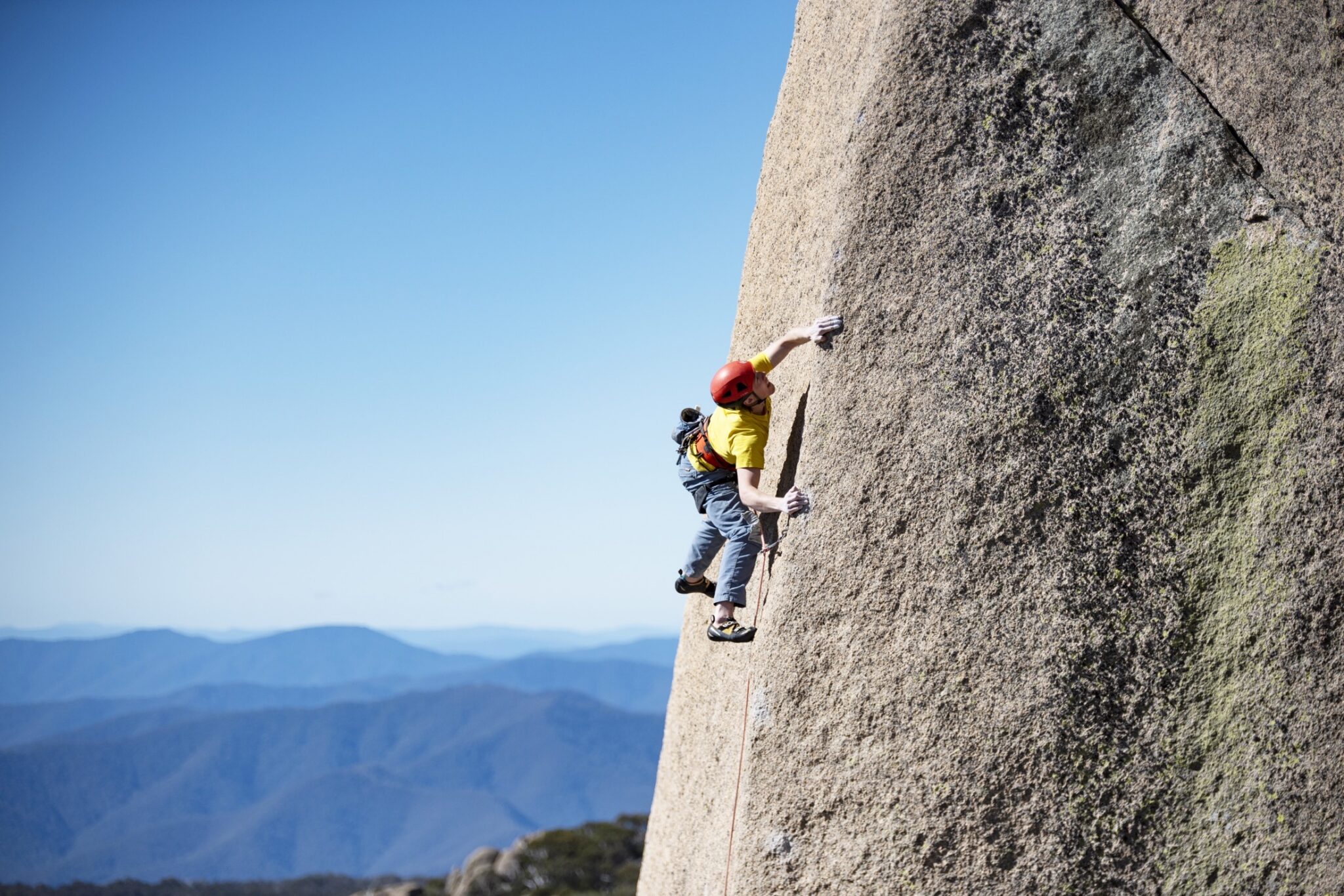
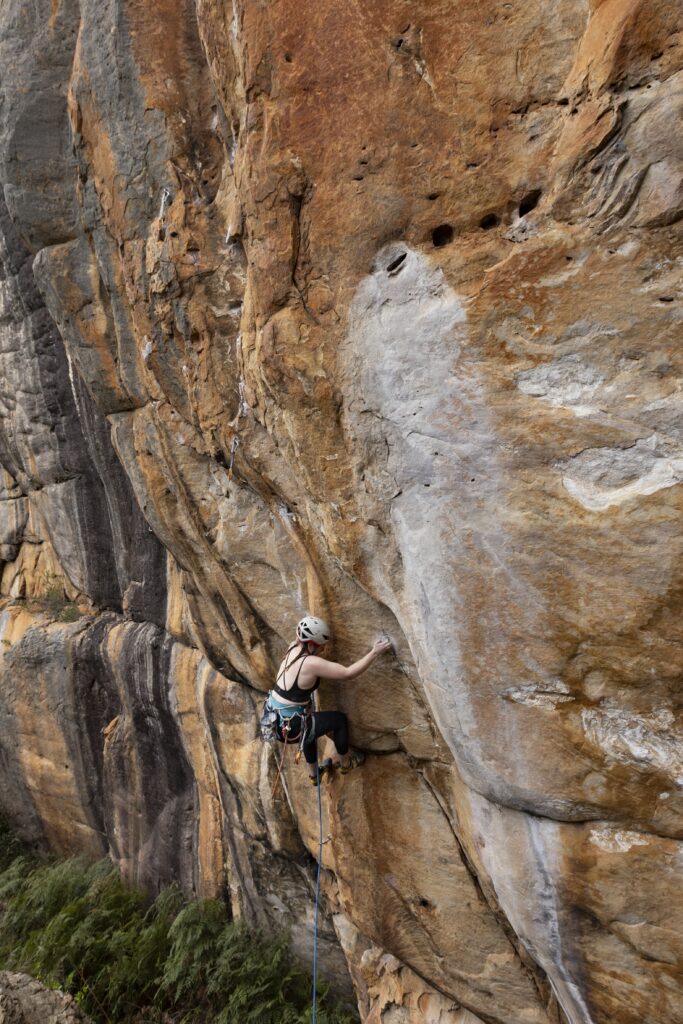
Left: Coach Moriah looking up at her project. Right: Coach Moriah with Belayer Dean Bailey on De La Soul (26) Van Dieman’s Land, Grampians
You’ve been part of the Victorian climbing scene for 12 years—what do you think makes it so special?
I’ve definitely got a soft spot for all the gyms I’ve worked at in Melbourne—there are just so many good memories tied to those places. But Safer Cliffs Victoria really stands out for me. That organisation means a lot, because honestly, I wouldn’t have had half the amazing days I’ve had on rock if it weren’t for the people out there bolting those routes or putting up the first ascents.
What they do is so important. It’s a volunteer-run group that makes sure bolts are safe across the Grampians and all over Victoria. They’re out there replacing old hardware, maintaining anchors, and basically making sure climbers stay safe. They’re the reason people aren’t getting hurt—and I have so much respect for the work they do behind the scenes to keep our climbing areas safe and accessible.
Give her a follow on Insta @coach.moriah