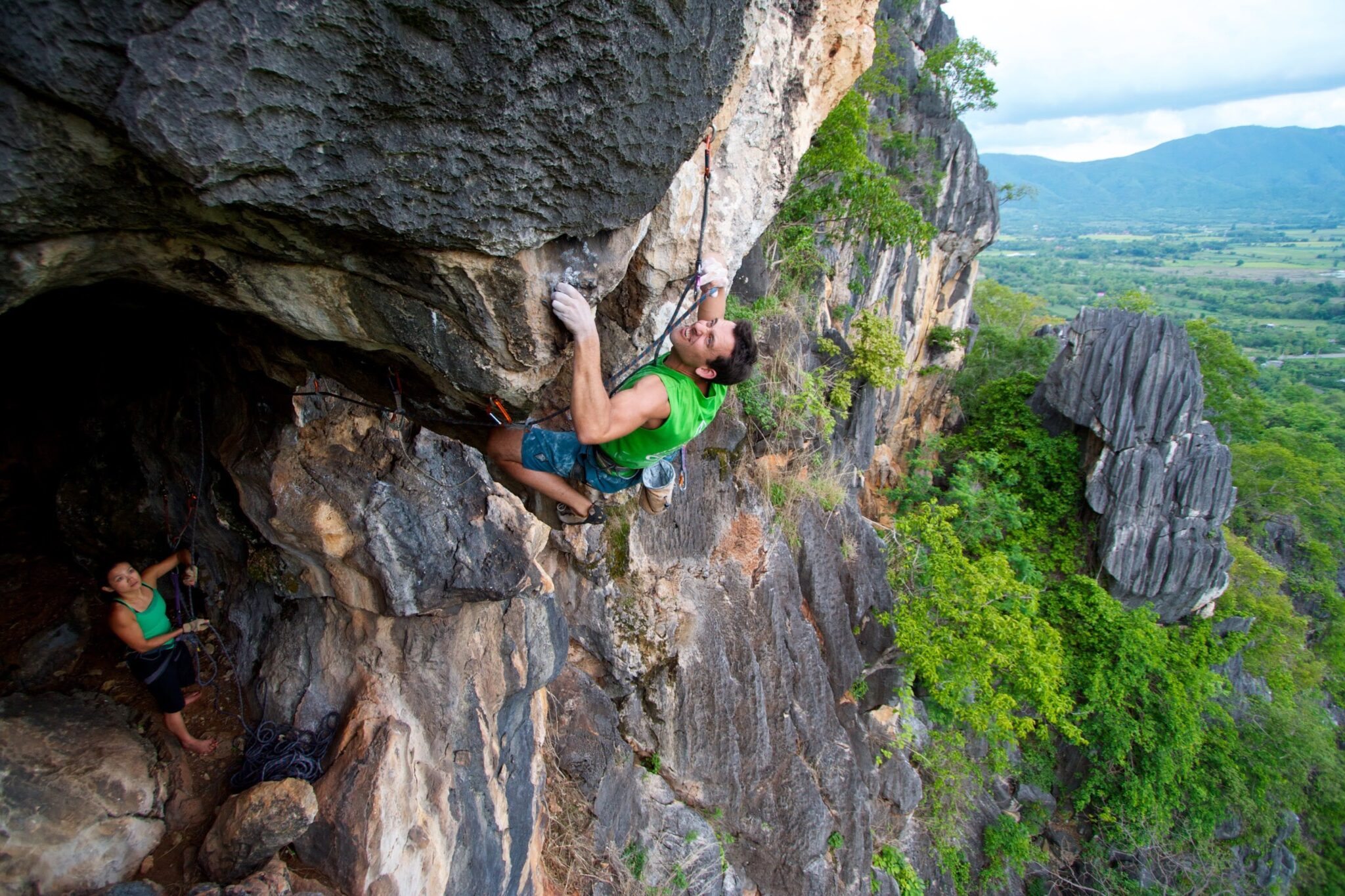
Climbing in Chiang Mai, Thailand
Aussie Vincent Chen has been living in Asia for two years—he brings us the beta on what he has declared to be the finest crag in the region.
Taming the Crazy Horse: Climbing Chiang Mai’s Wildest Crag
Words & images by Vincent Chen
Published in VL52, Spring 2025
In Northern Thailand, Chiang Mai has long been crowned the country’s cultural capital. Digital nomads claim it for the chill vibe, solid Wi-Fi, and unbeatable cost of living. Hippie types drift through on their way to Pai, a mountain sanctuary turned rave pit. The region is famous for elephant sanctuaries, surprisingly sticky waterfalls (with rock so grippy you can climb up them), and a cuisine that never stops making me salivate over my next meal. But for you, dear climber, Chiang Mai should be known as something else entirely: the most convenient and balanced climbing destination in Asia.
Enter Crazy Horse Buttress. Not to be confused with the strip club in Adelaide, this crag gets its name from a horse-head-shaped rock jutting out of a 500-metre limestone mountain. And if you think Chiang Mai’s Sunday Walking Street night market has variety, Crazy Horse puts it to shame. We’re talking, everything from chunky tufas (those weird stalactite-looking things), to sharp crimps, pumpy overhangs, and slick slabs. It’s all limestone, made from ancient sea creatures that got crushed into rock and now make for the best holds around. About 20 crags wrap around the buttress, and if that’s not enough, two huge caves offer airy climbing and even multi-pitch routes you can rappel into and climb out of.
The place was first bolted in 1998 by local Thai legend Kraisak Boonthip (Pi Tom). The effort was followed by Francis Haden (UK) and Josh Morris (US) (cofounder of Chiang Mai Rock Climbing Adventures) with all development since then by Progression Crew (formerly CMRCA).
Since then, Crazy Horse has grown into an adrenaline junkie’s playground with close to 300 routes—single-pitch sport climbs, short multi-pitches, and cave climbs that’ll make your inner dirtbag grin. Go check it out before the classics get polished to glass.
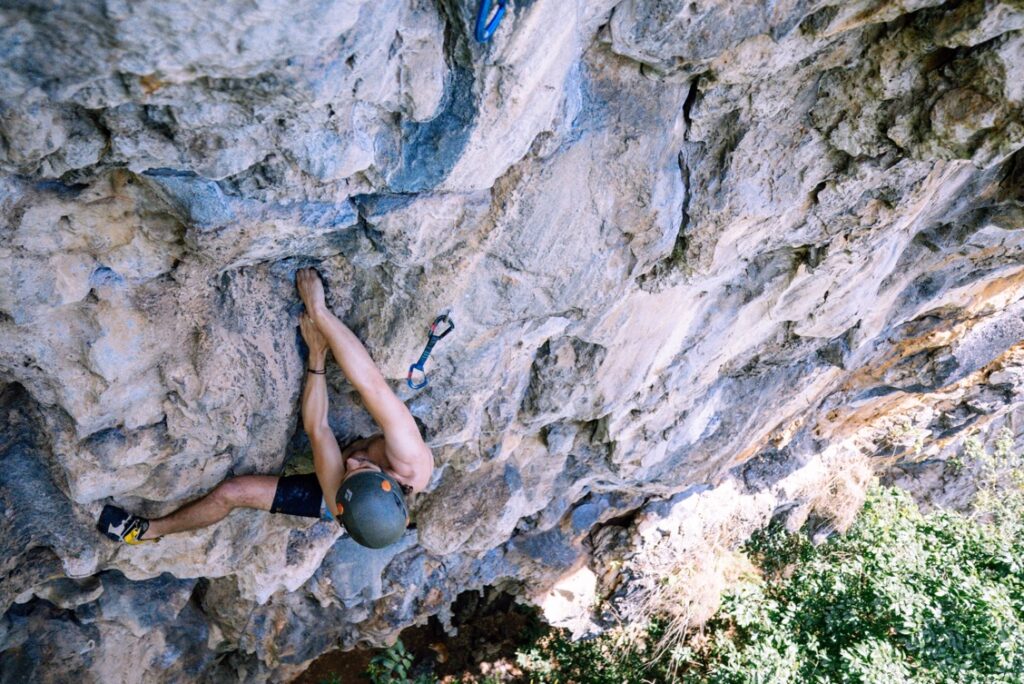
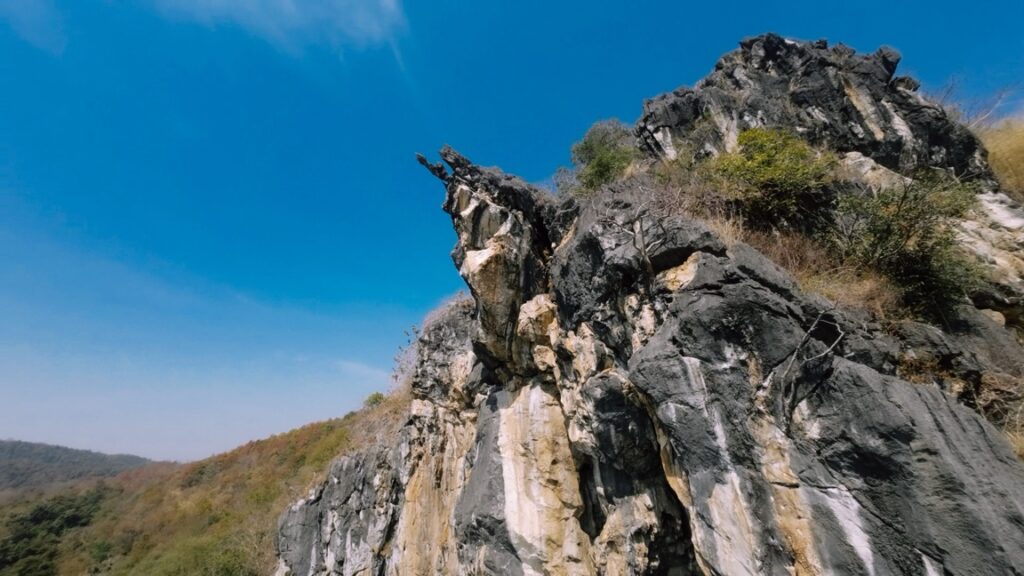
Left: Ben Hardman on Bratup Jai/ Impresses 6B+ (20) Heart Wall Right: Crazy Horse Head
Getting There
From Chiang Mai’s Old City, Crazy Horse Buttress is about a 45-minute to 1-hour drive. There’s no public transport, and convincing a Grab driver to make the round trip is tough (Uber’s not a thing here—download Grab or Bolt instead).
Most climbers rent a scooter or hire a red truck, aka “songthaew” (AU$70/day). If you’re new to scooting, don’t stress—the drive’s a scenic cruise down a single highway ending in the sleepy rural district of Mae On. Chuck “Crazy Horse Buttress” into Google Maps, don’t miss the turnoff, and you’re golden.
If you want to stay close to the crag, Jira Homestay is super comfy. Dirtbags with more time on their hands should check out Akirah Garden, where your eccentric Turkish host, Suha, can shuttle you to the crag in five minutes.
I always stock up on snacks from local shops along the way so I don’t need to leave the crag for lunch. That said, if you’re passing by the highway turnoff, it’s worth making a detour—the best croissants in Southeast Asia are waiting at Skugga Farm. This quirky spot is part bakery, part car museum, and part coffee-and-chocolate-fuelled dream. It’s worth a visit in its own right.
Unlike most Aussie crags, Crazy Horse actually has a proper carpark toilet. The approach is super chill too—anywhere from 30 seconds to 15 minutes tops, even to the furthest wall.
The Rock and Routes
If you’re new to climbing in Asia, the limestone here will blow your mind. It’s got those swirly, otherworldly features—sometimes smooth like glass, sometimes sharp enough to slice you open like a candy cane shiv. I’ve got terrible footwork, so my legs are usually bleeding by the end of the day.
There’s a mix of pocketed, overhung pump-fests and delicate slabs with obvious rubber streaks where people have skated off. Be warned—limestone is brittle, so rockfalls happen. That being said, routes at Crazy Horse are super well-trafficked and regularly maintained. Don’t try to trad climb here—a cam would likely explode out of those irregular flaring cracks. The bolting is well thought out. Expect rap rings, stainless steel permas, and generous bolts on beginner-friendly routes. Plenty of low anchors too, perfect for learning how to clean routes.
Notable Crags
• Crazy Horse Buttress – The main wall and a great place to start. It’s the first crag from the carpark, and the routes are conveniently graded left to right from 5b/17 to 8a+/30. Look up to see Crazy Horse’s chin above you—you can stand atop its head with a 3-pitch push via Headhunters (7a+/24).
• The Furnace – Known for its striking overhangs and consistent shade, this spot is a magnet for intermediate to advanced climbers. Some of the best 6a+/19 routes are here.
• Tamarind Village – Beginner-friendly but never boring. Well-bolted climbs from 5a/16 to 6b/21, including a long beginner chimney and the tricky but iconic Happy Birthday (6b/21). A great area for kids and supervision. Watch out during Nov–Feb when local school groups swarm the place. For those learning multi-pitch, Makham Wan (5c+/18) is a comfy, well-bolted introduction.
• Heart Wall – A bit of a walk, but worth it. Expect overhangs, pockets, and powerful moves. Plenty of classics in the 6c/21 to 7a+/24 range.
• Vision Wall – Technical, bouldery slab climbing. A puzzle of beta and footwork that’ll leave you swearing in the heat if you climb off-season.
• Air Con Wall – Positioned downwind from a cave opening, this wall gets a constant breeze literal air conditioning for the hot season (March–May).
• Anxiety State Crisis Cave – A unique crag inside a millions-of-years-old cave. A shallow, walkable cavern opens into an airy cathedral. Beginners can practice in shaded comfort year-round. Bold souls can try the multi-pitch traverses across the cave roof or walk to the top and enter through the skylight with a dramatic 50m rappel.
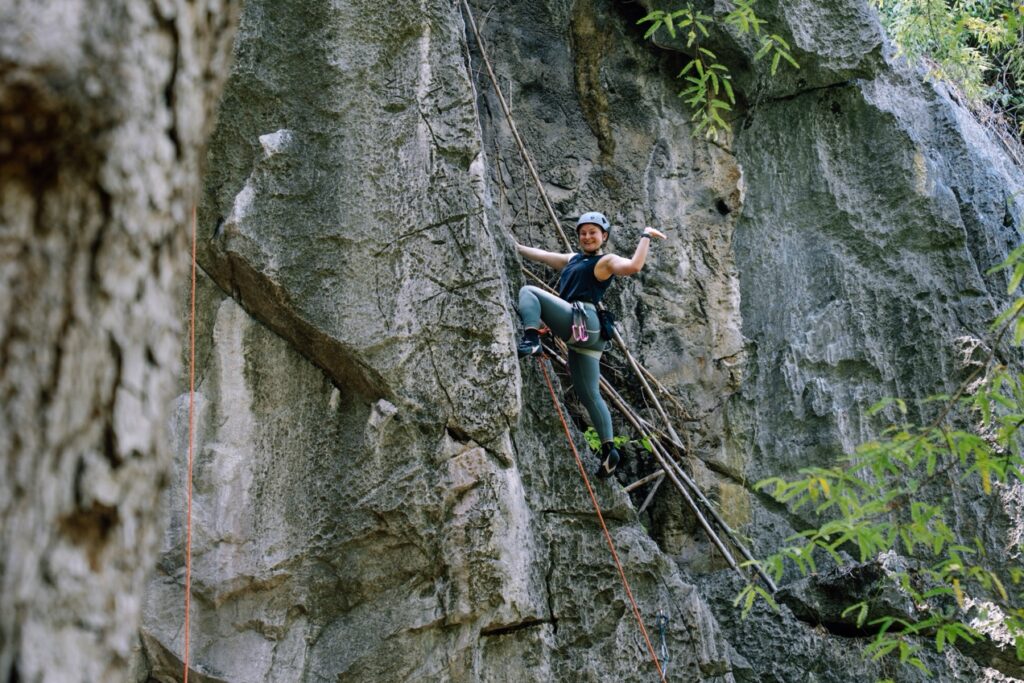
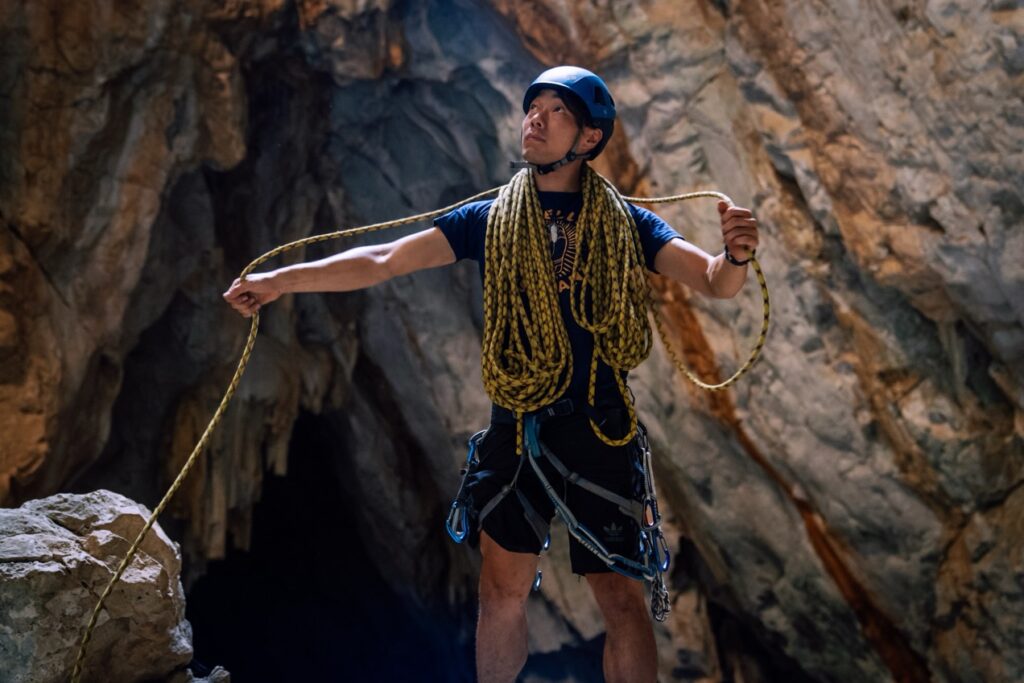
Left: Alex Giblin on Samurai 5B (17), Tamarind Village Right: Vincent Chen inside Anxiety State Crisis Cave
Cave Multi-Pitches
If there’s one thing you must try at Crazy Horse, it’s the cave multis. Sure, caves are dusty, dark, and humid—but they’re also cool, sheltered from the elements, and epic as hell. There are two bolted caves: Windy Cave and Anxiety State Crisis Cave. Both are shallow, walkable, and dead-end about 50m in. Easy to navigate, but bring a headlamp just in case you linger past sundown. During the day, beams of light pour through openings in the cave roof, lighting it up like a cathedral.
• Trojan Horse – 55m, 6a+/19, beginner-friendly, located in Windy Cave. Ends with a wild rappel into the Main Area (check for bees before descending).
• Anxiety State Crisis – 42m, 7a/23. The scariest route I’ve ever tried. Even my local guide swears never to climb it again. If you’ve got hexes for nuts, start your adventure by scrambling and rappelling to a hanging belay on a limestone column. Traverse the roof, stepping across stalactites with a 50m drop beneath you. Then a pumpy but easier climb brings you into the sunlight, feeling alive (and mildly traumatized). These routes are for experienced pairs only. A light belayer might strand their leader mid-route if a fall happens in a tricky spot. Know how to ascend a rope or “boink” if needed—or Progression will need to send a rescue team.
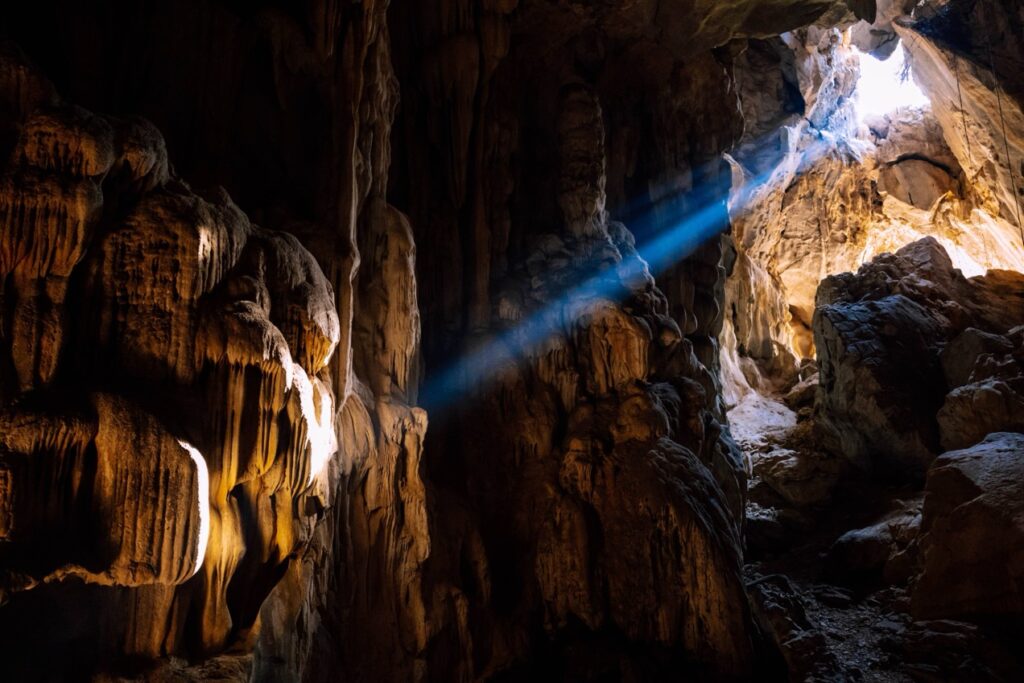
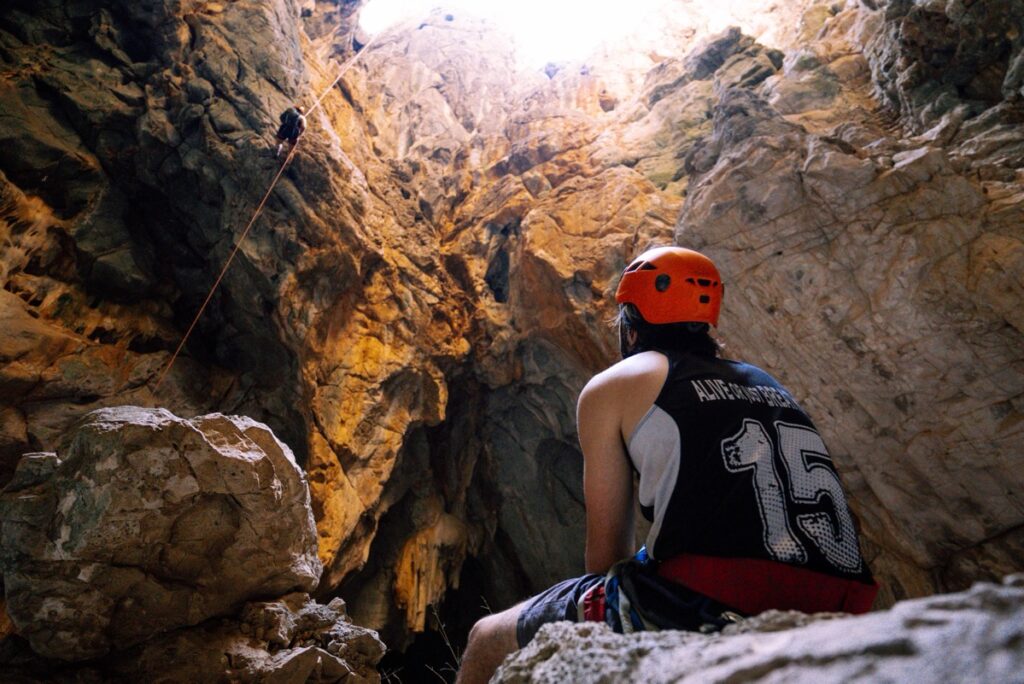
Left: Inside Anxiety State Crisis Cave Right: 55m Rappel into the Anxiety State Crisis Cave
Ethics and Access
Crazy Horse stands out not just for its routes but for its unwavering commitment to sustainability and local involvement. The original developers have emphasised environmental stewardship, including leave-no-trace principles, biodegradable toilet facilities, and regular rebolting with stainless steel hardware. Each year, the crag is inspected, tracks cleared and walls cleaned with leaf blowers. I have personally experienced this by being part of a team that removed thousands of bamboo branches to clear the cave floor. You’re welcome.
Not enough emphasis is given to the locals that are the stewards to this crag. Loong Naan, a Progression Red truck driver, has been working to bring climbers to the crag for around 20 years. In the hours waiting for his climber clients to return from the crag he proactively decided to build structures to make the area more comfortable. Using just a plough, a machete and his own coarse hands Loong Naan has built belay steps, trails, gazebos and shelters fuelled by nothing other than an enthusiasm for the area.
Some crag etiquette that climbers are encouraged to follow:
• Stick to marked trails to reduce erosion.
• While there are trash cans, it’s best to carry out your food
• Use toilets provided at the crag entrance and not the side of the crag.
• Avoid loud music, excessively yelling “rope” or drone usage, out of respect for locals and fellow climbers.
In 2018, Crazy Horse faced a temporary closure due to land disputes and travelling climbers regularly ask if the crag is open. Well, it’s complicated and the full reasons for the closure were too convoluted to remember. Boiled down, the reason the crag is “closed” is due to government corruption rather than the sensitive access issues we are used to in Australia. Despite a big “Do not climb” sign out the front of the crag and mixed information online people climb there everyday, no law enforcement has asked people to leave and tour groups run regular trips there. No one will be offended or arrested or your safety endangered more than normal for climbing there. If anyone wanted to hear the play by play, Progression founder Josh would be happy to abide.
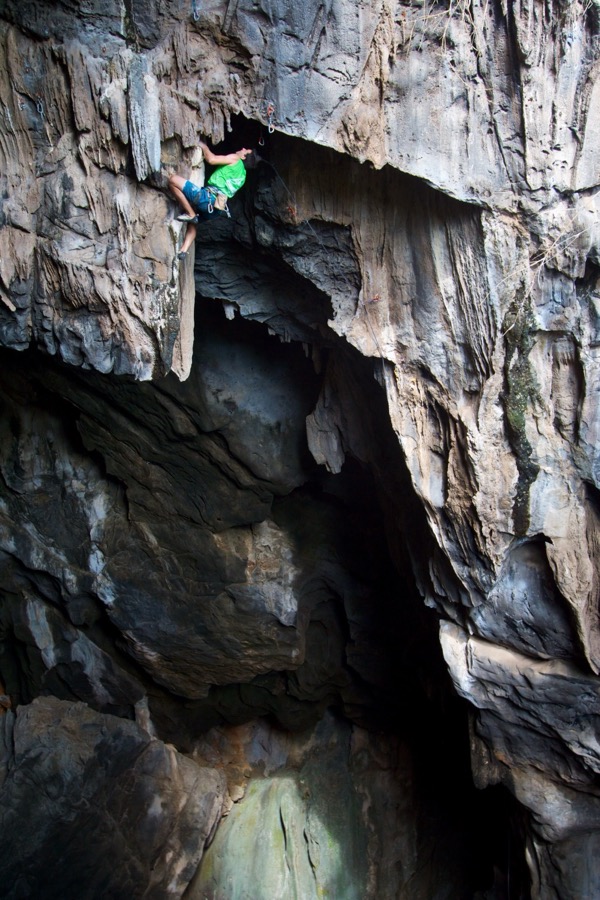
Francis Haden on Space Man, 7a+ (5.12a)
When to Climb
Seasonality is very important when climbing in Chiang Mai, however there’s enough variety in crag types that you can climb all year round and it’s up to the individual about how comfortable you can be climbing with the heat, rain, smoke and bugs. The best seasons for climbing at Crazy Horse are from November to February, when the weather is cool and dry. Temperatures can dip in the evenings so bring a jacket for the drive.
The smokey season (which changes every year but is generally around Feb-May) can be brutal, with daytime temperatures soaring over 35°C. The local farmers take advantage of the dry air to burn their crops. The smog gets trapped in between the mountains giving the city a perpetual haze.
Unfortunately, the air quality here becomes the worst in the world some days. There is always a lot of chatter about the smokey season, although much of it is inaccurate as the duration and severity changes every year. Let’s just say that while I don’t mind climbing during the smokey season, at the end of the day I do feel like I smoked three cigarettes (but it’s not too bad). Also, the drive back from the crag is beautiful because the setting sun turns blood red through the haze.
The rainy season (June to October) brings daily predictable rain, usually in the late afternoons. Overhung crags and the caves stay climbable in light rain. The rain improves the air quality and also turns the whole area to a lush green. Predictable and climbable with planning.
Wildlife
When you first arrive, a host of crag dogs await to greet you—don’t be shy because they won’t be. Give them a pat and some kibble and you’ll have furry belay buddies for the day. Giant asian honey bees form large sail shaped nests at the top of climbs in cooler weather. They are not to be messed with. When you see their crowded bodies shimmer in unison like a Mexican wave, lower down immediately. People have been stung hundreds of times before.
Wasps form nests in sheltered cracks. Their drone-like presence can be distinctively heard in the rainy season (June to October). Spraying them with bug spray can eliminate this problem. The bats are not dangerous but do hide out in pockets. A friend of mine was using a hold and managed to plant a chalky thumbprint on a bat’s forehead. Monkeys can be seen periodically. Do not feed them or they might start getting braver and steal your quick-draws. Sweat bees create long waxy tubes as nests on the side of the crag. They are slower and likely to land on your leg to drink your sweat. They are harmless, so try not to freak out. Mosquitos will be the biggest offenders on this list. Bring lots of coils (and take them home), citronella spray or dose yourself with lots of deet. The locals make small fires to repel the bloodsuckers.
Gear and Guidebooks
You’ll need a standard sport climbing rack: a 60–70m rope, 12–15 quickdraws and helmets are recommended. An 80m rope will mean you can link up some climbs on the main wall. For those without gear, gyms in Chiang Mai (such as Progression Vertical) offer rentals, AMGA certified guides and courses to up your skills.
The most up to date guide book has turned digital with the Crag Finder App. Download guides for all of Northern Thailand there with easy, beautiful topos and a clearer design then the crag website. You can track your progress and save routes for later.
The Community Vibe
Chiang Mai’s climbing population is steadily growing. There are three gyms you could strike up a conversation at: Progression Vertical (ropes and boulder), Alpine Outpost (boulder) and Main Wall (ropes and boulder). Also the Facebook and WhatsApp groups are very active during the high season, shoot your shot there and you’ll have a climbing buddy for the week.
While the climbing is top-notch, the community’s efforts toward inclusivity, education, and sustainable tourism elevate the experience. Locals and expats often run courses in rebolting, wilderness first aid, and Thai cultural exchange—blending vertical challenge with personal growth.
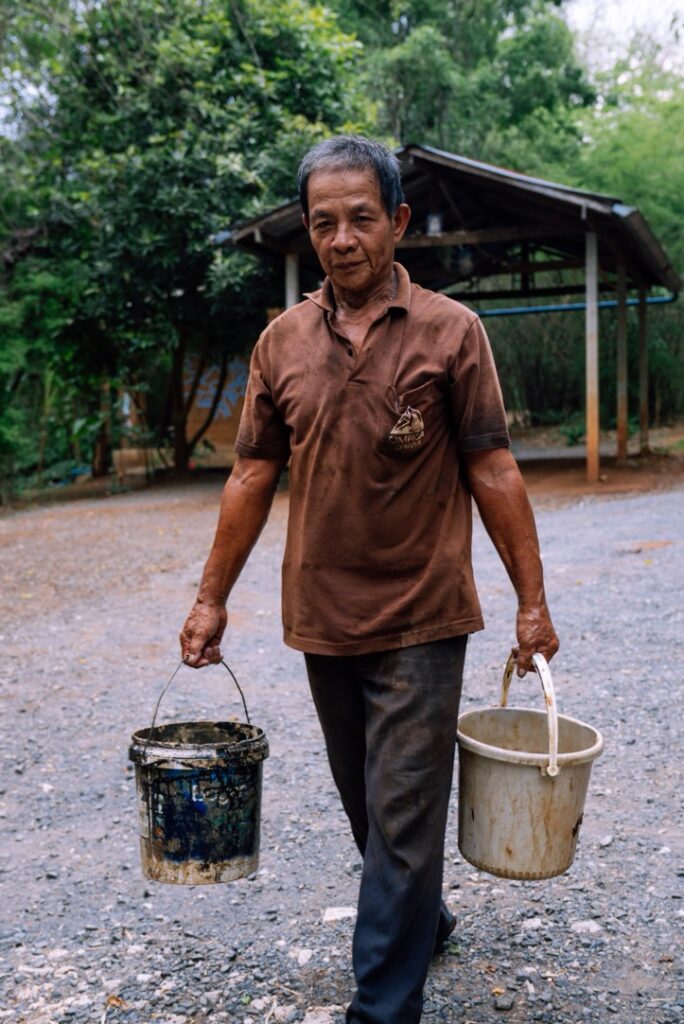
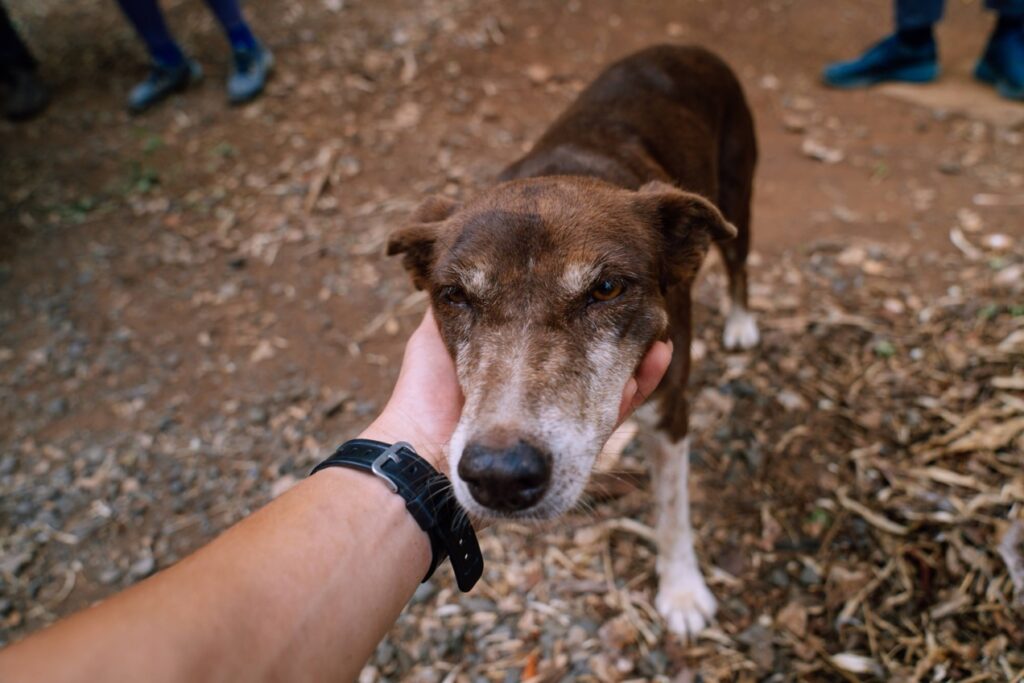
Left: Loong Naan Right: Local crag dog
Final Thoughts
I’ve lived in South East Asia for two years now and while there are no shortage of stunning climbing areas to visit, I find Chiang Mai and Crazy Horse to be the most balanced destination for a long-term travelling climber… Better functioning than Tonsai, tastier food then Ao Nang, more variety then Koh Tao, more internet access then Green Climbers, Laos, more developed than Vang Vieng, more convenient than Long Dong, Taiwan, better night life then Malaysia, less bureaucratic difficultly then Yang Shuo, China.
Maybe I’m biased, but Chiang Mai works. You can climb hard, live cheap, eat well, and be part of a climbing community that gives back. It’s safe, soulful, and refreshingly low on sleaze. Plus in an era where many crags are overrun or under-maintained, Crazy Horse stands out as an example of what ethical development, local partnership, and passion can create. It’s a place where adventure and intention meet—and where every ascent feels like a tribute to the land itself.
Breakout box
Rest Days and Nearby Attractions
Chiang Mai is a city that’s easy to fall in love with. On rest days, climbers can explore:
• Hot Springs: San Kamphaeng Hot Springs, 10 min from the crag is a kind of kitsch theme park where you can soak sore muscles especially if you’re a hard boiled egg enthusiast. Just go and tell me that’s not an accurate description.
• Muay Thai Gyms: Get a full-body workout or simply watch a fight.
• Temples and Night Markets: Doi Suthep, Warorot Market, and Sunday Walking Street offer cultural insights
• Cafés and Coworking Spaces: Perfect for remote workers combining climbing with productivity.
BIO
Vincent Chen is an Aussie filmmaker currently shooting climbing in Chiang Mai and on the high seas with Sea Shepherd Global. He likes to use his camera as the weapon to fight for sustainability issues and bring beautiful vistas to your eyeballs.