In June 2024, climber Glenn Tempest submitted a formal proposal to Parks Victoria requesting a reconsideration of the climbing and bushwalking boundary at Bundaleer, in the Grampians National Park.
The boundary in question had been established without consultation with either the climbing or bushwalking communities. Tempest’s proposal was narrow in scope: a relocation of the Temporary Protection Zone boundary approximately 16 metres south and six metres left of the climbing route Blimp, with the aim of including the historically significant climb within the permitted access area while maintaining protection of the recognised cultural heritage site beneath Manic Depressive (25, 2 star).
The Bundaleer Proposed Boundary Relocation document was developed over approximately three months, incorporating input from climbers and bushwalkers, and supported by Climbing Victoria. The proposal argues that the adjusted boundary would protect cultural heritage values while improving safety, clarity, and compliance.
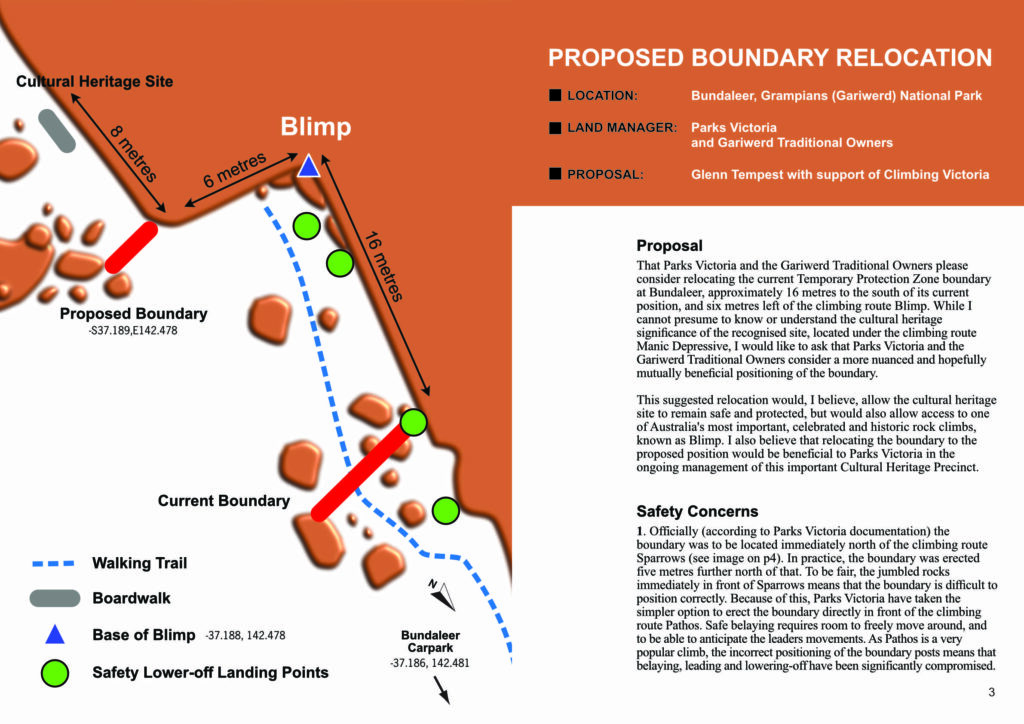
Page 1 of Glenn Tempest’s proposal to Parks Victoria.
Safety, Access and Design
Tempest’s proposal outlines a number of practical concerns with the current boundary placement.
Although Parks Victoria documentation indicates the boundary should sit immediately north of the route Sparrows (24, 2 star), it has been installed several metres further north, closer to Pathos (21, 3 star). This has created restricted space at the base of popular climbs, affecting safe belaying, movement, and lowering-off.
High-traffic routes such as Blankety Blank (20, 2 star / direct 24, 1 star) and Pathos regularly attract groups of climbers, including children. The combination of the boundary, a fallen tree, and the convergence of bushwalkers at the end of the track has resulted in congestion in a confined area.
There is also confusion around access to routes such as Reneeobskolosk (20) and Infidel (14). While these climbs are technically outside the closure, their safety lower-offs land within the restricted zone, creating uncertainty and potential risk for climbers attempting to comply with regulations.
Beyond safety, the current boundary cuts across one of the widest sections of the walking track, requiring a long and visually intrusive barrier that contrasts with the natural character of Bundaleer.
A Proposed Alternative
The proposed relocation positions the boundary at a natural choke point near the prominent corner of Blimp (20, 3 star)—a defining geological feature of the cliff line.
According to the proposal, this would:
• Create a clearer and more logical boundary using natural features
• Reduce the physical length and visual impact of the barrier
• Provide adequate space for safe belaying and lowering-off
• Eliminate confusion around route access and compliance
• Improve the experience for bushwalkers by creating a natural endpoint with views and interpretive potential
The relocation would also reopen access to several climbs, including Touchstone Pictures (28, 3 star), while restoring access to Blimp, a route described as one of Australia’s most historically significant climbs.
Tempest argues that the current boundary’s proximity to Blimp may also undermine compliance, particularly for visiting climbers unaware of local sensitivities. A more considered boundary placement, he suggests, would improve long-term adherence to restrictions.
A Process That Stalled
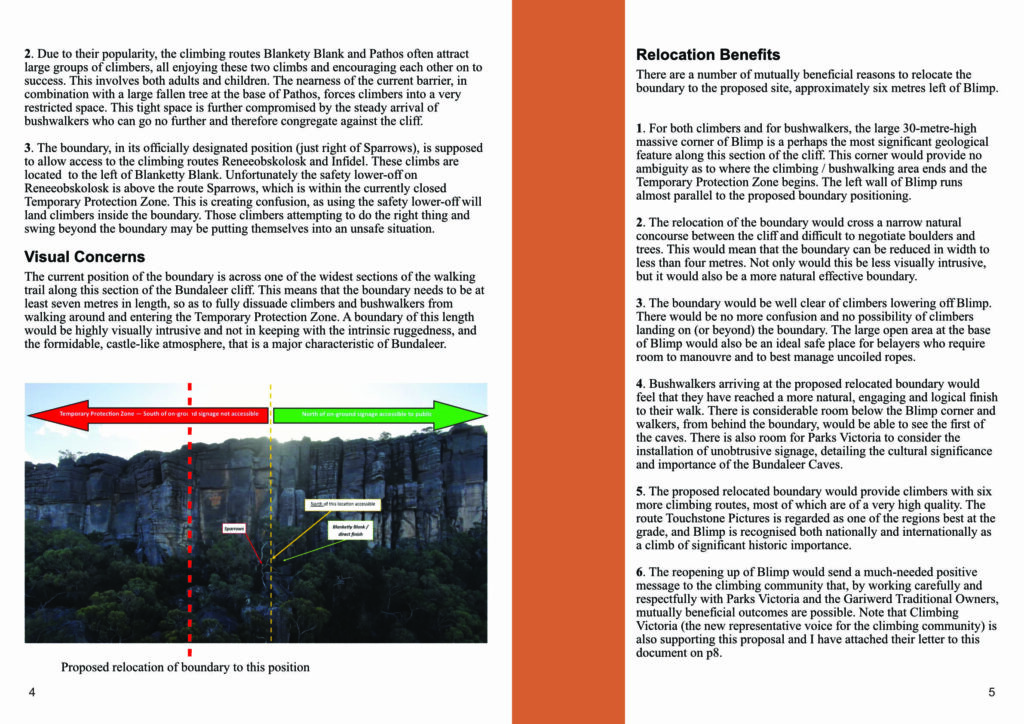
Page 2 of Glenn Tempest’s proposal to Parks Victoria.
The proposal was initially submitted to Parks Victoria Regional Director Jason Borg, with a response later provided by acting Regional Director Dale Antonysen. Tempest maintains the proposal was not taken seriously and was later informed by contacts within Parks Victoria that Traditional Owners had likely not been given the opportunity to review or comment on it.
In July 2025, Michael Smith, District Manager (South West), expressed interest in revisiting the proposal. No further action followed.
In October 2025, Tempest escalated the proposal to newly appointed, Parks Victoria CEO Lee Miezis, following public statements suggesting a shift in how access restrictions might be managed. In a previous 2025 interview with Vertical Life, Miezis stated:
“Blanket bans don’t work, especially when they’re done to people and not with people.”
However, blanket bans across the Grampians National Park remain in place, and the Bundaleer proposal stands as a clear example raised by the climbing community of decisions being made without meaningful consultation.
The response—delivered in November 2025 by Clare Purcell, Southwest Regional Director, remained consistent with earlier replies, and no changes were made to the Bundaleer boundary.
Tempest followed up in December 2025, requesting confirmation that the proposal had been directly discussed with Traditional Owners. He noted that previous Parks Victoria representatives had avoided engaging them on the issue. At the time of writing, no response has been received.
Consultation and Precedent
The proposal also references earlier collaboration at Bundaleer. In 2008, climbers worked with Parks Victoria and the Gariwerd Traditional Owners to install a timber walkway and stool to help protect the site—an initiative regarded at the time as a positive step in cultural heritage management and cooperative engagement.
Tempest notes that Bundaleer has already undergone a detailed cultural heritage survey, suggesting that the proposed boundary adjustment could be considered without the need for further extensive assessment.
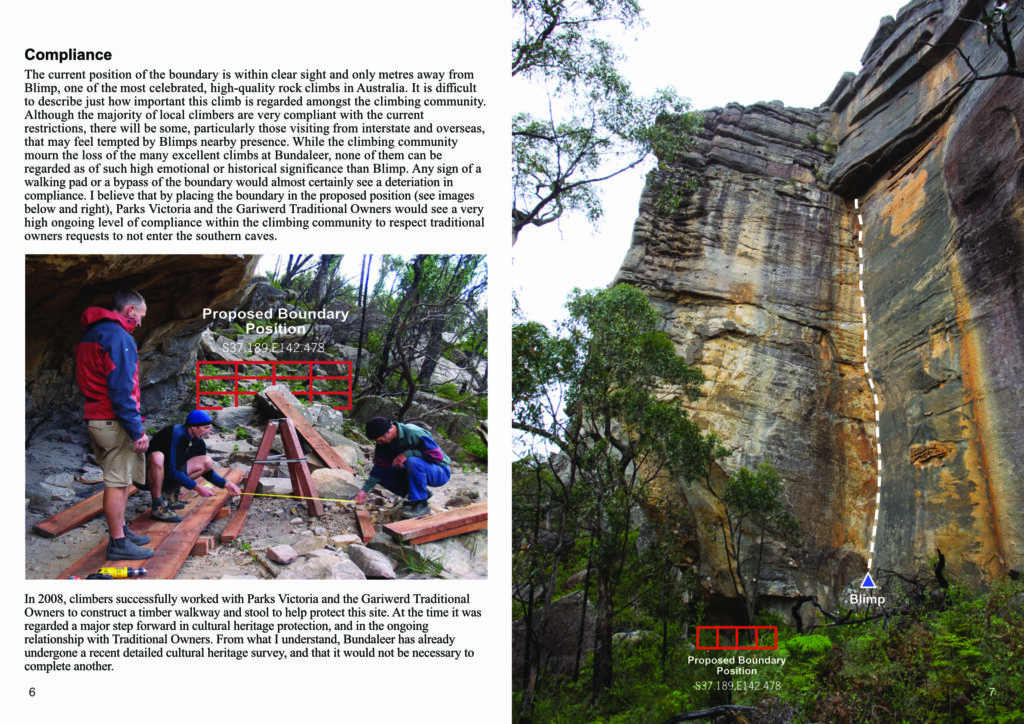
Page 3 of Glenn Tempest’s proposal to Parks Victoria.
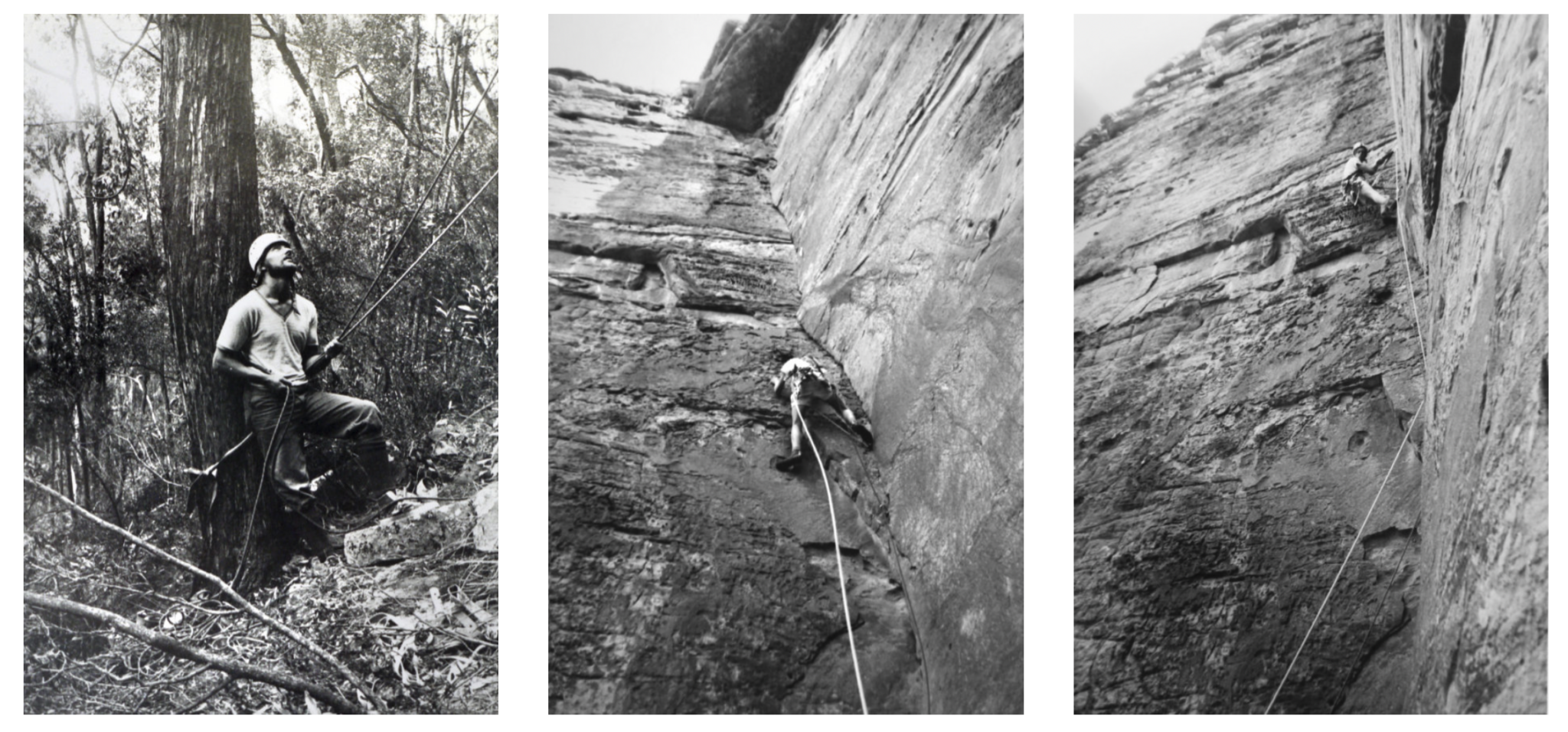
The Bundaleer proposal does not seek widespread change. It asks for the inclusion of a small area and to include a particular climb—one of historical significance—within an adjusted boundary. The climb in question, Blimp, first ascended in January 1969 at Bundaleer in the Grampians, was regarded as the greatest unsolved climbing problem in Victoria, having resisted multiple attempts by leading climbers of the time, including John Ewbank. Named by pioneering climber Peter Jackson, its eventual ascent by Bruno Zielke marked a major breakthrough in difficulty and commitment, earning recognition as a “world class” climb and establishing it as a landmark in Australian climbing history.
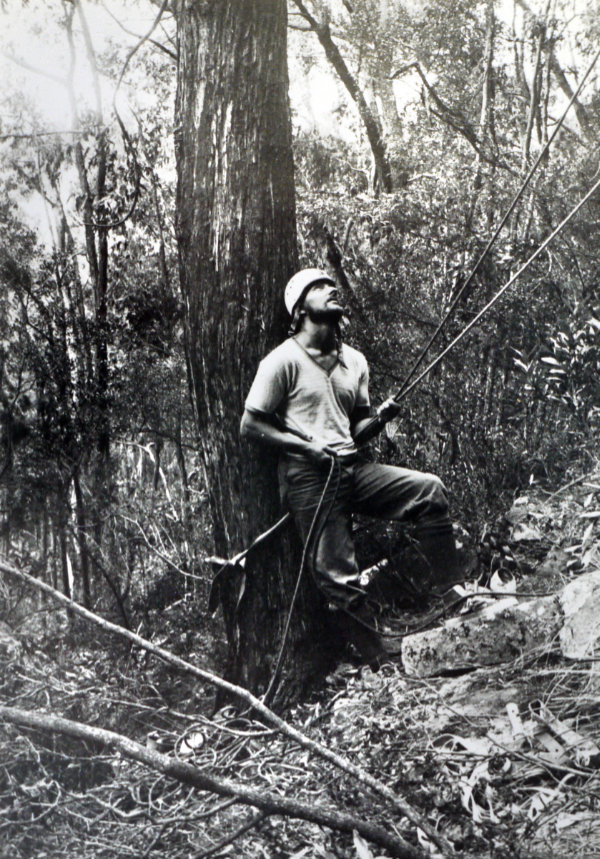
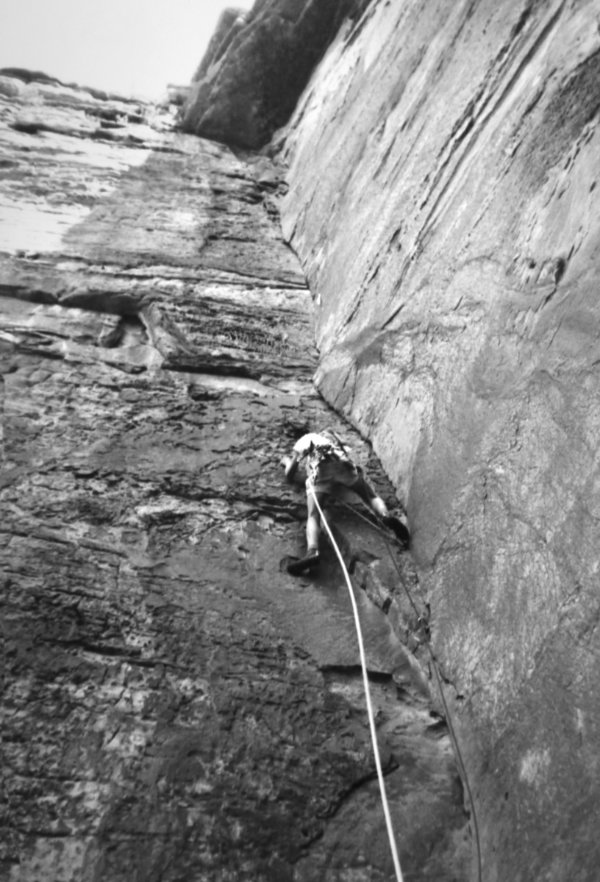
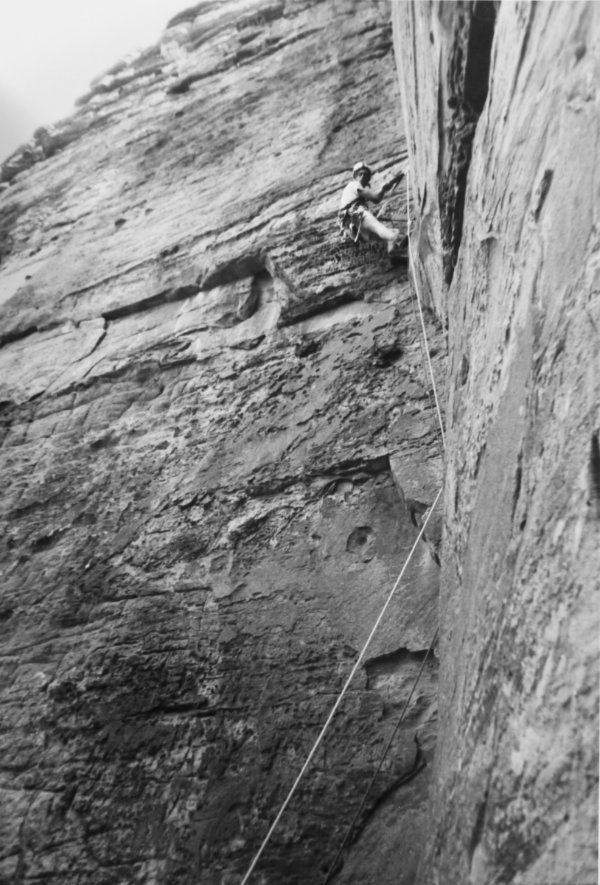
Left: Bruno belaying Chris Dewhirst. Image from the Zielke Collection. Centre: Chris Dewhirst attempting Blimp. Image by Bruno Zielke. Right: Chris Dewhirst attempting Blimp. Image by Bruno Zielke. – Images collected from Glenntempest.com
Nearly two years after the amendment request was first submitted, it remains unresolved.
Links related to this article:
Formal Proposal to Parks Victoria
2025 Vertical Life Interview with Parks Victoria CEO – Lee Miezis
Enjoying this content?
Stay updated on our latest stories by subscribing to Vertical Life Magazine.