Arapiles Climbing Museum
More than just a room full of old gear, the Arapiles Museum is where dirtbag dreams, DIY brilliance, and climbing history collide. From junkyard treasures to Everest summits, this quirky little museum punches well above its weight—just like the climbers it honours.
Words & Images By Claire Williams
Published in Vertical Life Spring 2025 – issue 52
Beyond the Crux: Preserving Australia’s Climbing Legacy
Tucked in the quirky little town of Natimuk—just a quick approach from the mighty Mount Arapiles—is a museum that’s as bold and scrappy as the climbers it celebrates. The Arapiles Climbing Museum isn’t just the only dedicated climbing museum in Australia (yes, it’s the only one)—it’s also one of a rare handful worldwide. Small in size, big in stories, and absolutely bursting with character, it’s a treasure trove of bold ascents, DIY engineering, and wild-eyed visionaries.
The museum officially opened in 2019 during the Natimuk Fridge Festival, on a day that was wetter than a soaked chalkbag. But the rain couldn’t dampen the vibes. The ribbon was cut by none other than local legend Louise Shepherd—climber, writer, and environmental advocate—whose deep connection to the region set the tone for what the museum is really about: people, passion, and the pulsing heart of Australian climbing.

Inside the museum
The original idea? It all started when Glenn and Karen Tempest wanted to shove a few dusty relics into their café’s dilapidated garage. Enter the Arapiles Historical Society, who said, “Hold my piton,” and offered up a space to make it shine. Fast-forward a few years and a whole lot of community elbow grease, and the result is something far more impressive than a converted garage full of carabiners.
Inside, you’ll find a glorious mash-up of climbing’s past—equal parts gallery, gear shed, and gritty time machine. There’s the hand-forged, the high-altitude, the hilarious, and the heroic. Highlights? Try Brigitte Muir’s Everest kit (yep, the first Aussie woman up Everest), and John Ewbank’s no-nonsense, ethics-first philosophy. His take on retrobolting? “Like winning the Tour de France on a Triumph 650 motorbike.” Oof.
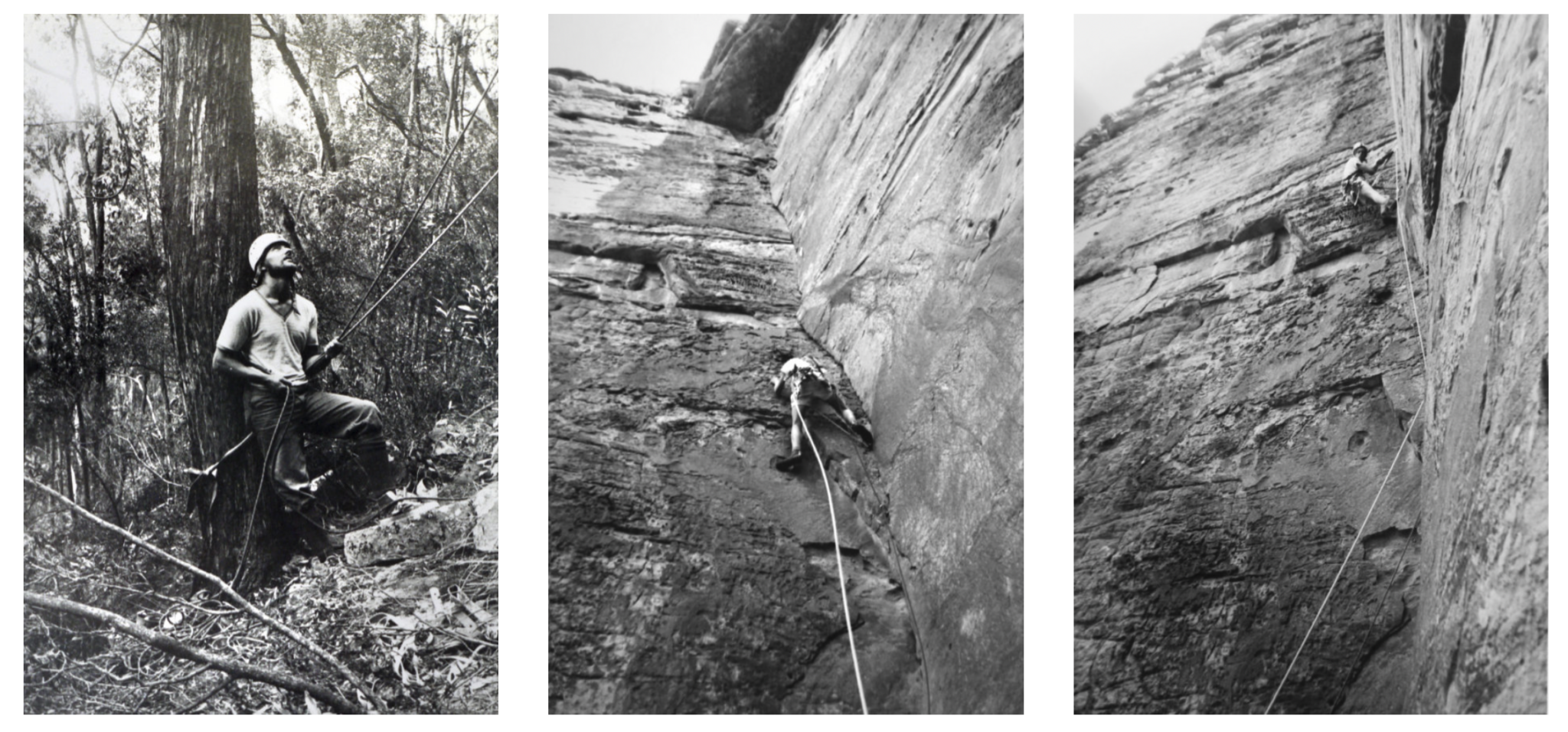
Photography by Geoff Schirmer, a pioneer of Australian climbing photography, offers a raw glimpse into the 1970s scene at Mount Arapiles—gritty, bold, and fearless.
When speaking with Natimuk local and Arapiles guidebook co-author Glenn Tempest, he highlighted a particularly significant piece—early climbing images by George Rose. “The value and historical relevance of these images cannot be overstated,” says Glenn. “These are some of the earliest roped climbing images in the world and shows that the Grampians was an established climbing destination back in 1909.”

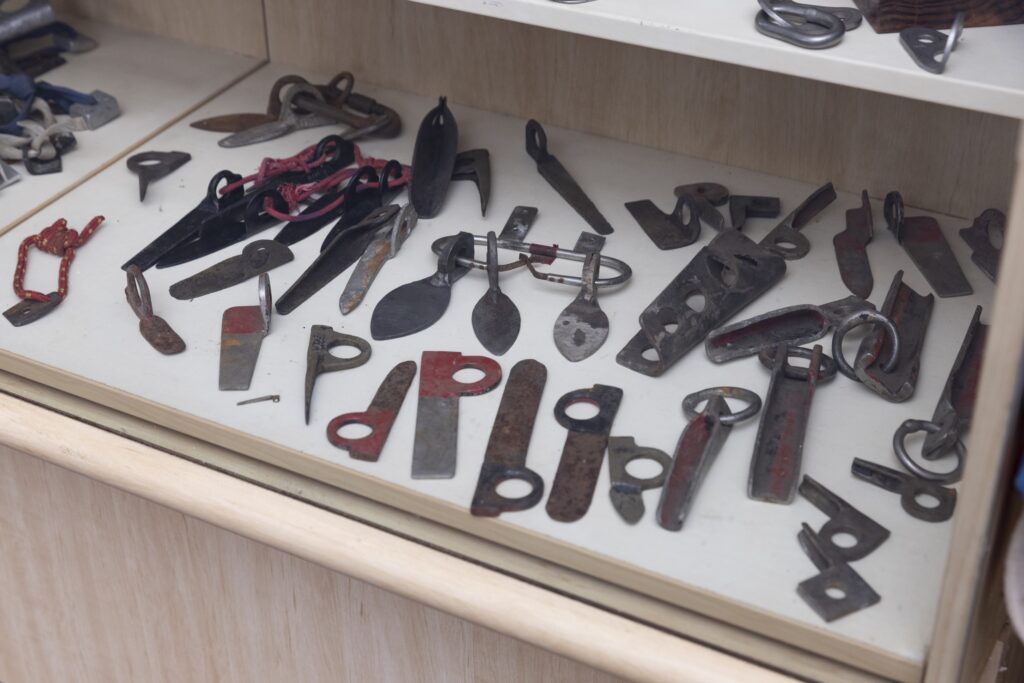
Old School Hex
The museum doesn’t shy away from the truly hair-raising. One standout exhibit showcases Geoff Little’s bold ascent of Clouded Queen—Australia’s first M9 aided route. Attempted three times in winter, each retreat left gear frozen in place until, by the final effort, they had 11 ropes down there. The first ascent involved an astonishing 20 consecutive bathooks straight off the belay (yes—twenty). By the time he clipped the 16th, Geoff recalls, he was “looking at certain death” if he came off.
Let’s not forget the oddballs and icons. You’ll find “Hot Henry” Barber’s battered trad rack and Andy Pollitt’s gear—loaded with retro style. Mark Moorhead’s equipment is there too, a tangible echo of his visionary lines like Cobwebs, and his fearless energy in the golden age of Aussie climbing.
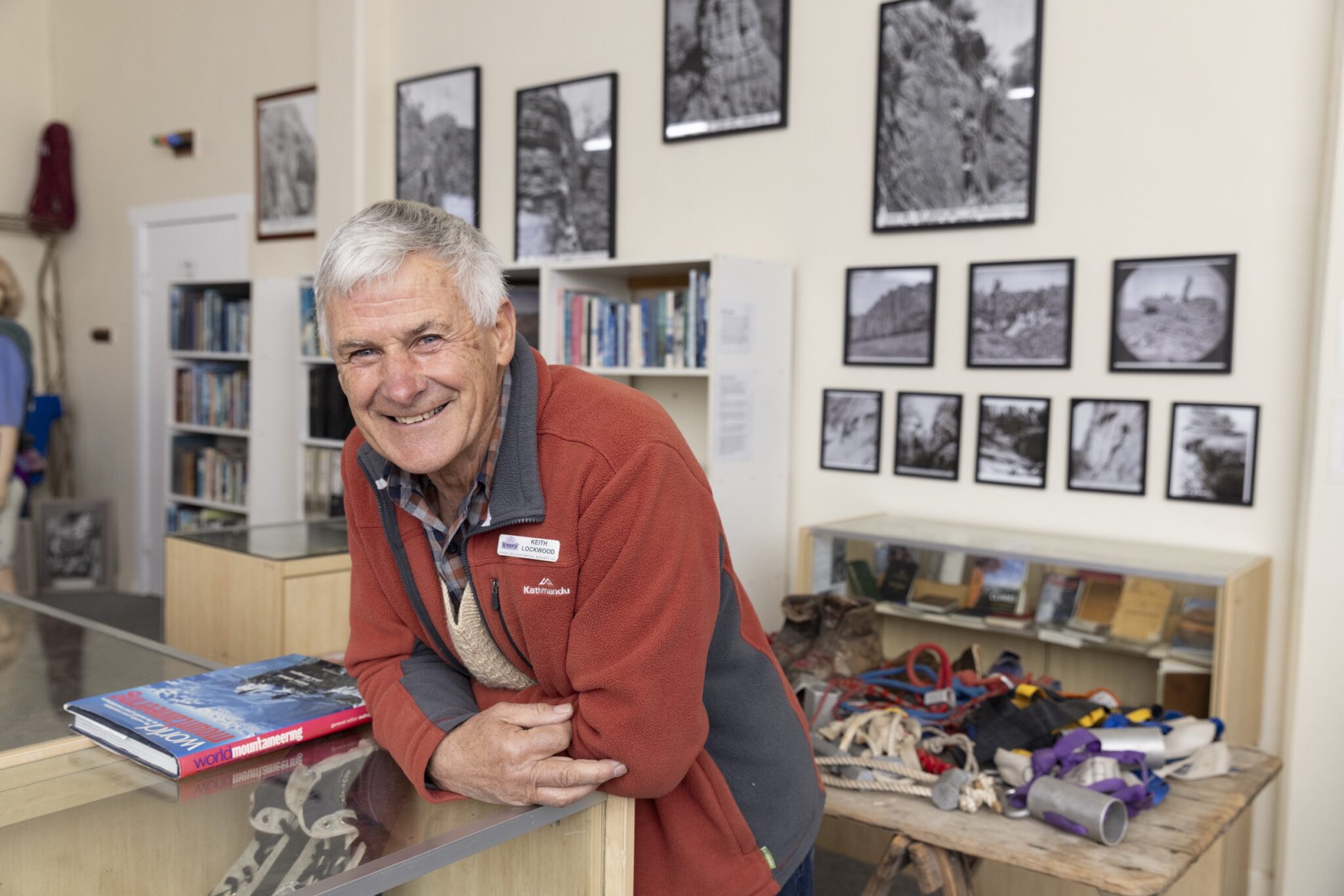
If you think climbers are resourceful, a quick tour through the museum will prove it beyond doubt. There’s the original RP workshop—those tiny but crucial brass nuts invented by Roland Pauligk—as well as a forge he constructed from an old washing machine tub. When I asked Keith ”Noddy” Lockwood if it was hard work transporting the RP workshop to the museum he assured me it had been “dead easy…because Geoff Little did it all”. Geoff drove down to Mordialloc, dissembled it all and reassembled it within the museum.
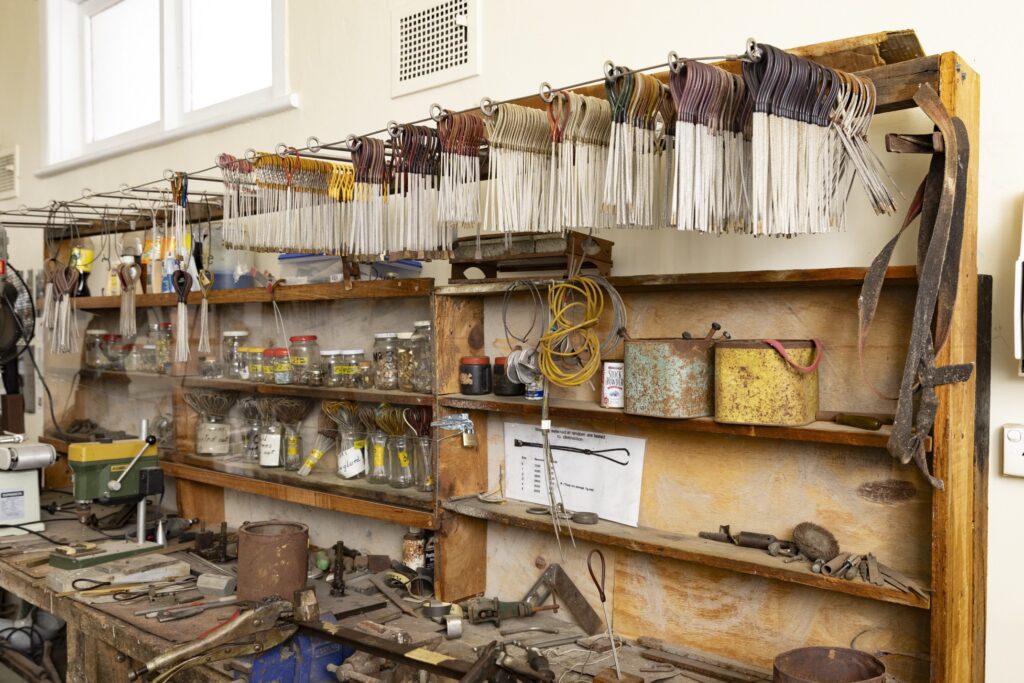
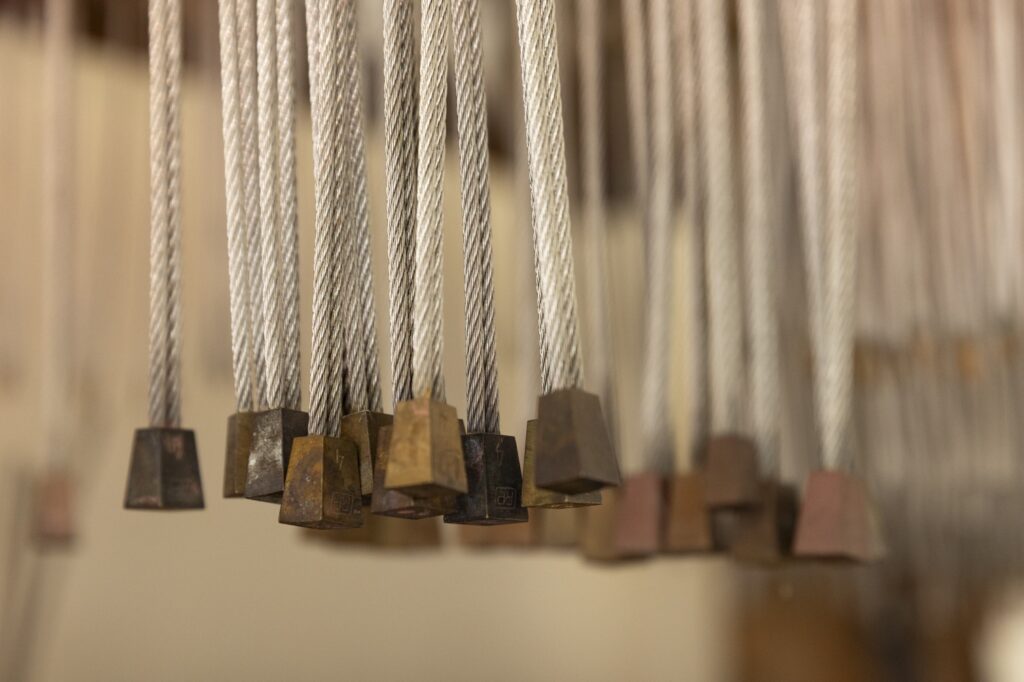
Roland Pauligk (RP) Original Workshop
Speaking of Noddy, he famously scoured the Natimuk rubbish tip, dismantling rusty farm machinery to harvest nuts for climbing protection. “There were no gear shops in Australia,” he recalls. “We had to order rope and carabiners from Scotland, but most of our protection was just slings—or slings with nuts.”
The nuts, of course, came from the tip. “We’d file the threads out by hand, so they wouldn’t cut the rope. And because we only had a few feet of cord, we’d thread three or four nuts onto each sling,” he says.
Each sling had to serve a purpose—one for the belay at the base of the pitch, another at the top, and maybe one or two more for protection along the route. “We were fairly sparing with what we used,” Noddy explains. “The advantage of having different-sized nuts on a single sling was that you had a choice—if one didn’t fit in a crack, the next one might. But the downside was losing half your rack by leaving it behind on a runner.”

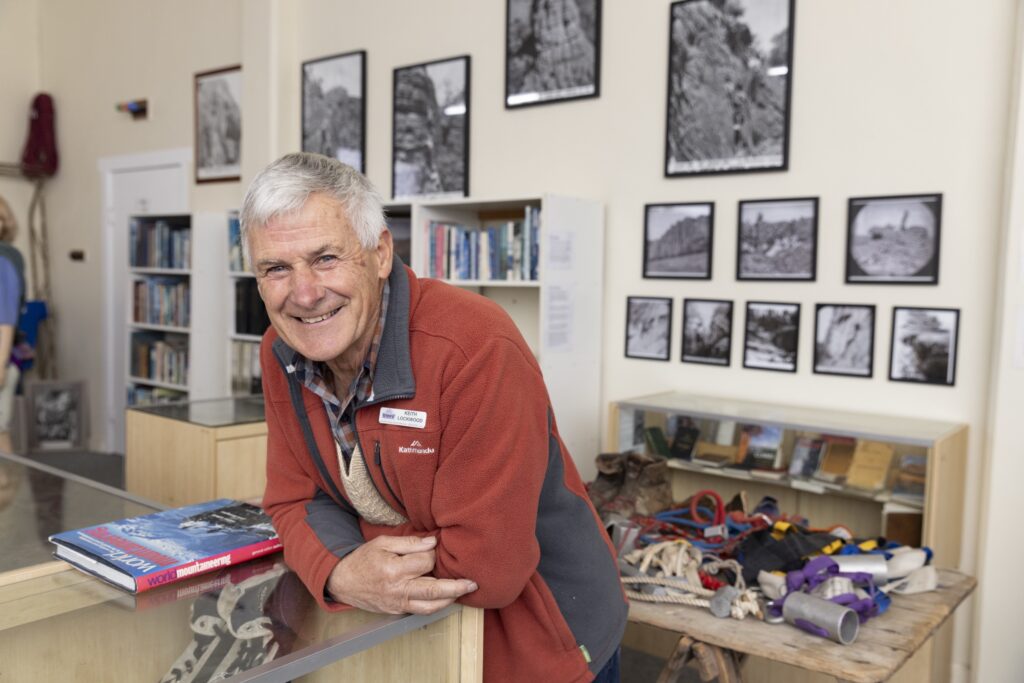
Left: Noddy’s Original Trad Rack Right: Keith “Noddy” Lockwood
Visitors can marvel at the hand-crafted camming devices (“friends”) made by Malcolm Matheson, better known as HB, whose engineering genius helped Aussie climbers protect cracks before mass-produced gear was widely available.
And just to prove that it’s not all stuck in the past, the museum will now feature a sleek interactive display—full of photos, stories, and climber profiles to scroll through when your forearms need a rest.
As Noddy puts it, “The Arapiles Museum isn’t just a storage room of old gear—it’s an out-and-proud declaration of a rich and extensive climbing culture.”
In a world where climbing is rapidly evolving with indoor gyms and Olympic medals, this humble space in Natimuk proudly preserves the roots: the hand-made, the hand-me-down, and the hard-worn.
So whether you’ve onsighted a classic, bailed off your project, or just wandered Natimuk wondering what the fuss is about, do yourself a favour—swing by. Because while gear can be graded and stories catalogued, the soul of climbing? It’s right here, in this dusty, daring little museum.
Located at 57 Main Street Natimuk, the museum is open Sunday afternoons, 2 – 4pm.
Other articles that may interest you:
Historical Photo Gallery from Arapiles Climbing Museum in Natimuk