Review: Alex Honnold climbs Taipei 101
Alex Honnold doesn’t usually climb with an audience, let alone one inside the wall. Claire Williams reflects on the spectacle, the discomfort, and the sheer madness of free soloing Taipei 101.
All images Credited to Netflix.
Alex Honnold’s skyscraper climb in Taipei felt strange right from the start—and not just because of the height.
Normally, when Honnold free solos, it’s a quiet affair. No live broadcast. No cheering crowds. No strangers opening office blinds mid-crux. It’s usually just Alex, the rock, and a very small crew trying not to breathe too loudly.
The Taipei 101 ascent was… not that.
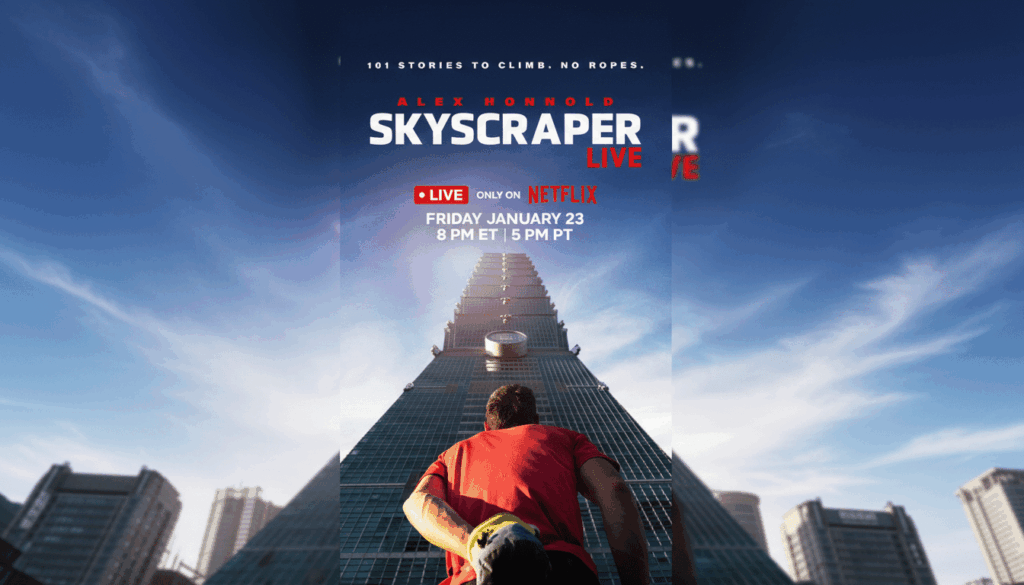
This time, Honnold climbed the outside of Taipei 101 in Taiwan—a 508-metre tower, 101 floors plus the spire, and the eleventh tallest building in the world. The climb was staged as a live Netflix event, complete with commentary, multiple camera angles, and an audience both below and inside the building. Because nothing says “relaxed free solo” like being waved at through tinted glass.
I didn’t watch it live. I was still at Arapiles at the time, and I knew watching Alex Honnold climb a skyscraper in real time would have me locked in a full-body cringe for ninety straight minutes. Some things are better consumed once you already know the ending.
Unlike his usual free solo ascents on natural rock, this climb was entirely engineered. Every hold, feature, and sequence was purpose-built: slabs, steel dragons, bamboo boxes, overhangs, and finally the spire. The route was broken into neat stages, each designed to test a different combination of balance, endurance, and mental composure—while live streamed to fans across the world.
What made it particularly confronting wasn’t just the exposure, but the environment. This wasn’t a remote cliff or big wall—it was a functioning office tower. People worked, waved, filmed, and adjusted blinds as Honnold climbed past. It felt wildly at odds with the quiet, controlled way he normally approaches free soloing.
The full Taipei 101 climb is available to watch on Netflix and if you don’t want any spoilers, I suggest you give it a watch before continuing to read this article.
Stage One: Slabs
The climb begins with a slabby lower section—high steps, balancey movement, and nowhere to hide. The first real crux arrives early at Ruyi, a large cloud like motif on the side of the building. At around four minutes in, Alex completes the first Ruyi using a heel hook combined with a delicate balance move sets the tone immediately.
From there, Honnold moves upward on large pinches and smears in a corner before transitioning into another Ruyi overhang. The surface looks smooth, polished, and aggressively un-rock-like. The exposure is amplified by the presence of people inside the building.
It’s one thing to have an audience watching from the ground. It’s another to have people inside the building waving, opening blinds, and taking photos as you climb past them. Personally, I found this deeply unsettling. One unexpected noise or sudden movement from inside would be more than enough to ruin anyone’s rhythm.
Stage one is wrapped up in under twenty minutes.
Stage Two: Bamboo Boxes
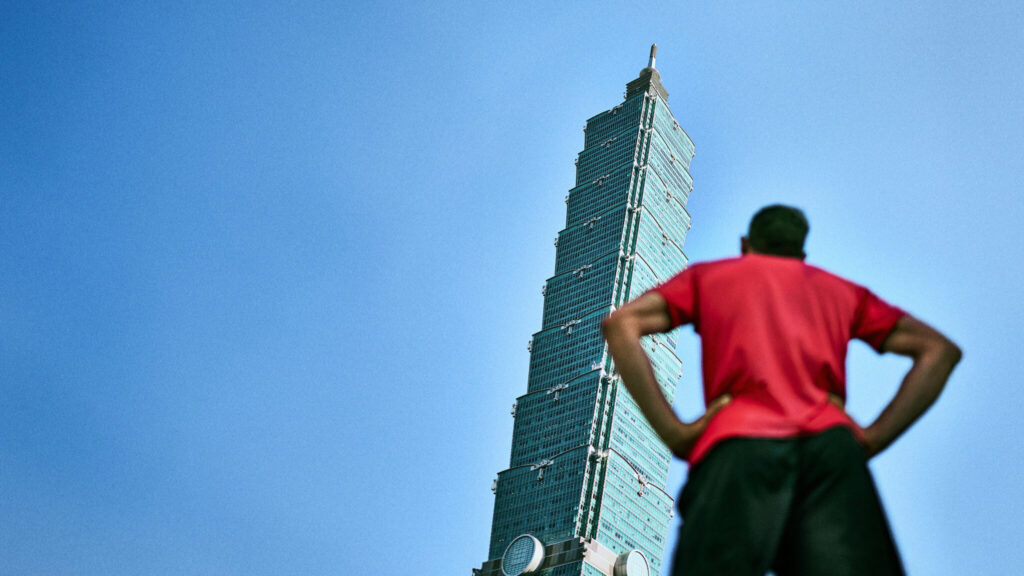
The bamboo box section is where things stop feeling novelty-adjacent and start feeling properly serious. Overhung, steep, and wildly exposed, the boxes feature repetitive pinch holds that turn this into a long, grinding endurance test.
One of the standout moments of this stage were the sequences involving the Ten Steel Dragons. Honnold could have taken an easier line and continued straight up the building, but instead chooses the exposure and heads outward onto the highly polished dragons. It’s a genuine hold-your-breath moment.
On the third dragon, Honnold switches sides, climbing on the left after taking the first two on the right. The change in routine likely gave his arms a break. Each hop onto the curved surface of the dragons had me tensing every time. The traverse from the corner, stemming across to the fourth dragon, came with wild exposure. Around thirty-seven minutes in, Honnold mentions he’s already pumped—which somehow feels both alarming and entirely expected.
The small details are where this section shines: heel-hook rests while chalking up, wiping his shoes on his pants to improve friction. Familiar, practical habits—just happening hundreds of metres above the city.
Placing his wife, Sanni, on the 60th floor felt wrong. I understand this was in some ways reality tv but it doesn’t alleviate my discomfort. Sanni was smiling for the cameras, but the level of anxiety she must have been experiencing at that moment would have been monumental.
The traverse past the 89th-floor observation deck is peak second-hand stress. The crowd is close, the wind has picked up, and the exposure is relentless. Honnold completes the bamboo boxes at the one-hour-ten mark.
The Tower
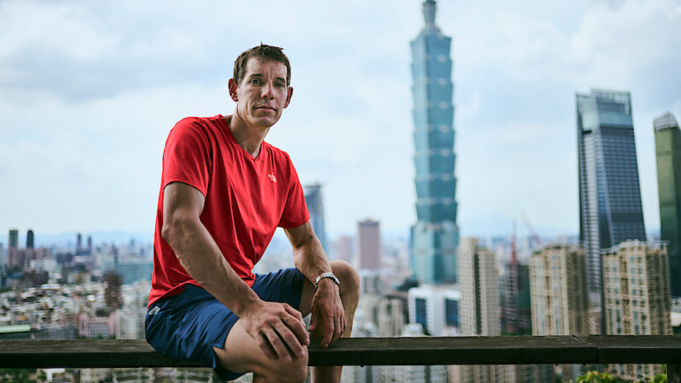
The tower section begins with an overhang that Honnold makes look deeply unreasonable to describe as “easy.” What follows is a series of small roof-like overhangs with extreme exposure. Higher up, the moves become more physical—campusing into heel hooks and pulling onto ledges. He repeats this sequence three times to reach the top of the 101st floor.
The Spire
The spire features a series of overhung rings that require precise heel hooks. At one point, Honnold settles into a no-hands rest on a solid heel hook—casual, relaxed, and frankly rude—before climbing a visibly wobbly wire ladder.
Above that are big high steps leading to the very top. His first word on reaching the summit is simply, “Sick.” A perfect summary.
He then pulls out his phone and takes a selfie, because of course what else would you do after making history.
The obvious question is how he gets down. A harness and rope were stashed at the top, allowing him to rappel down the spire.
The entire climb is completed in roughly one hour and thirty-one minutes.
Throughout the event, a rotating cast of TV personalities provided live commentary. I fully expected it to be cringe-worthy, but Emily Harrington delivered solid, thoughtful insight that grounded the broadcast in real climbing experience. That said, the coverage would have benefited from more climbers on the mic. Additional technical voices would have added real depth as opposed to the other hosts.
Overall, it’s a pretty good watch. Impressive, uncomfortable and a very different way to see one of the world’s most well-known climbers operate.