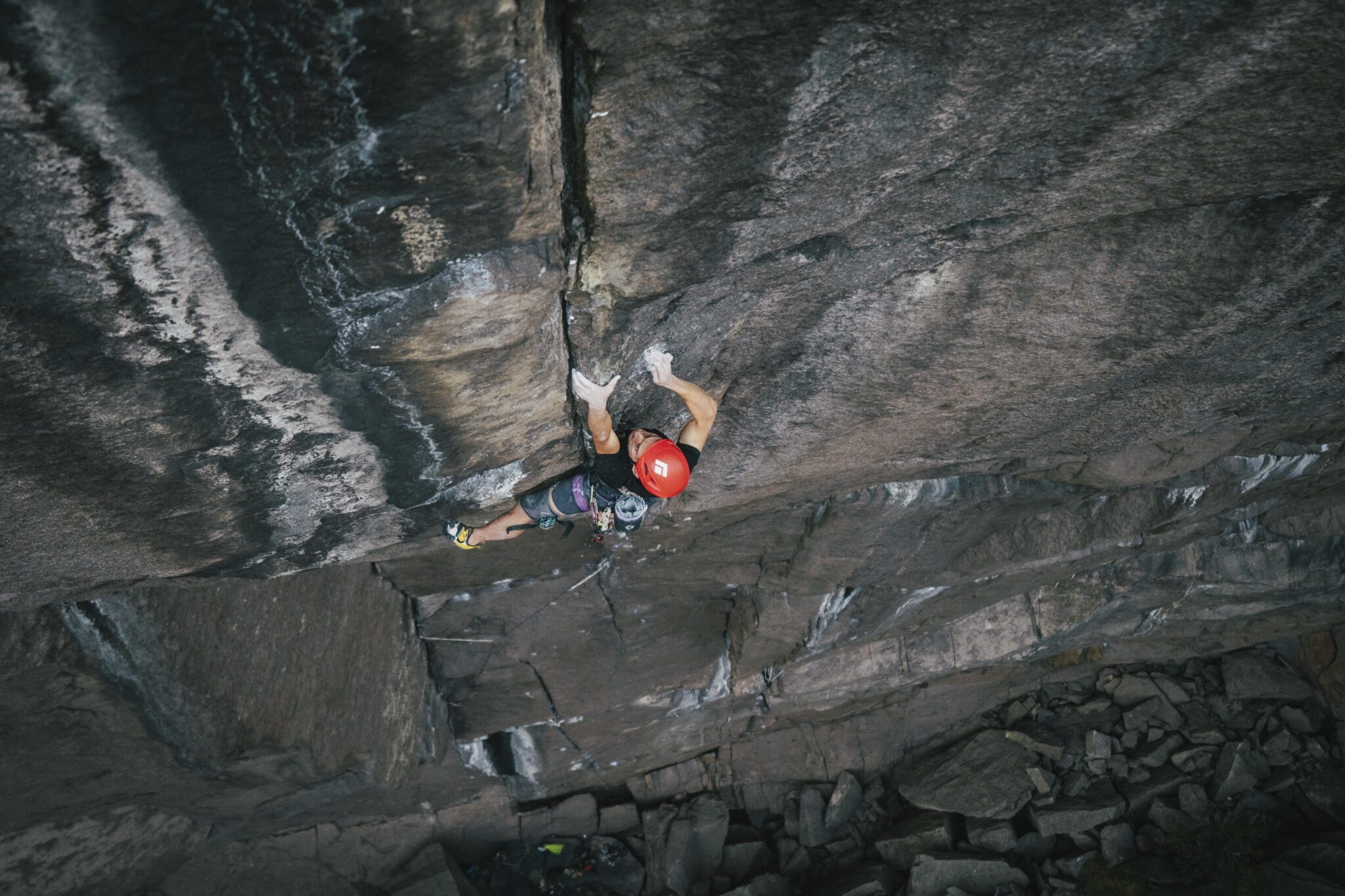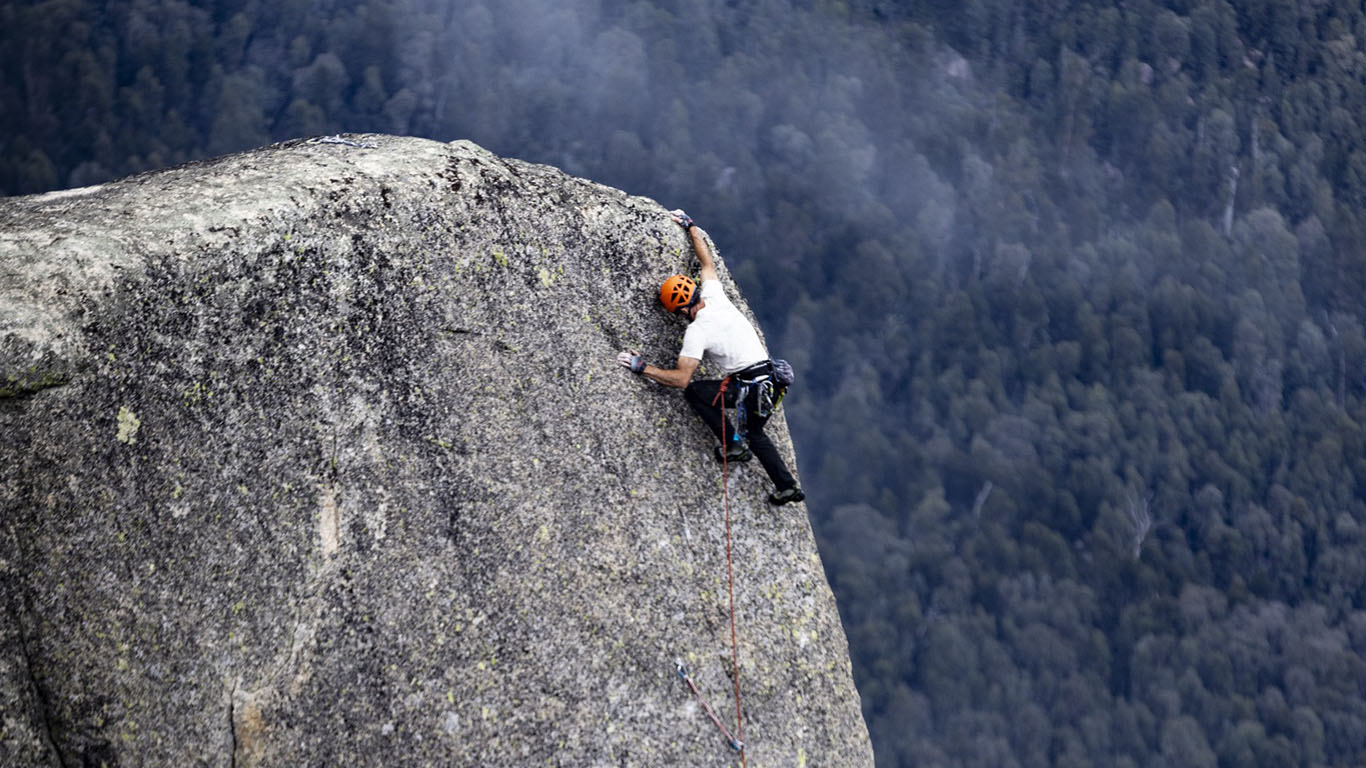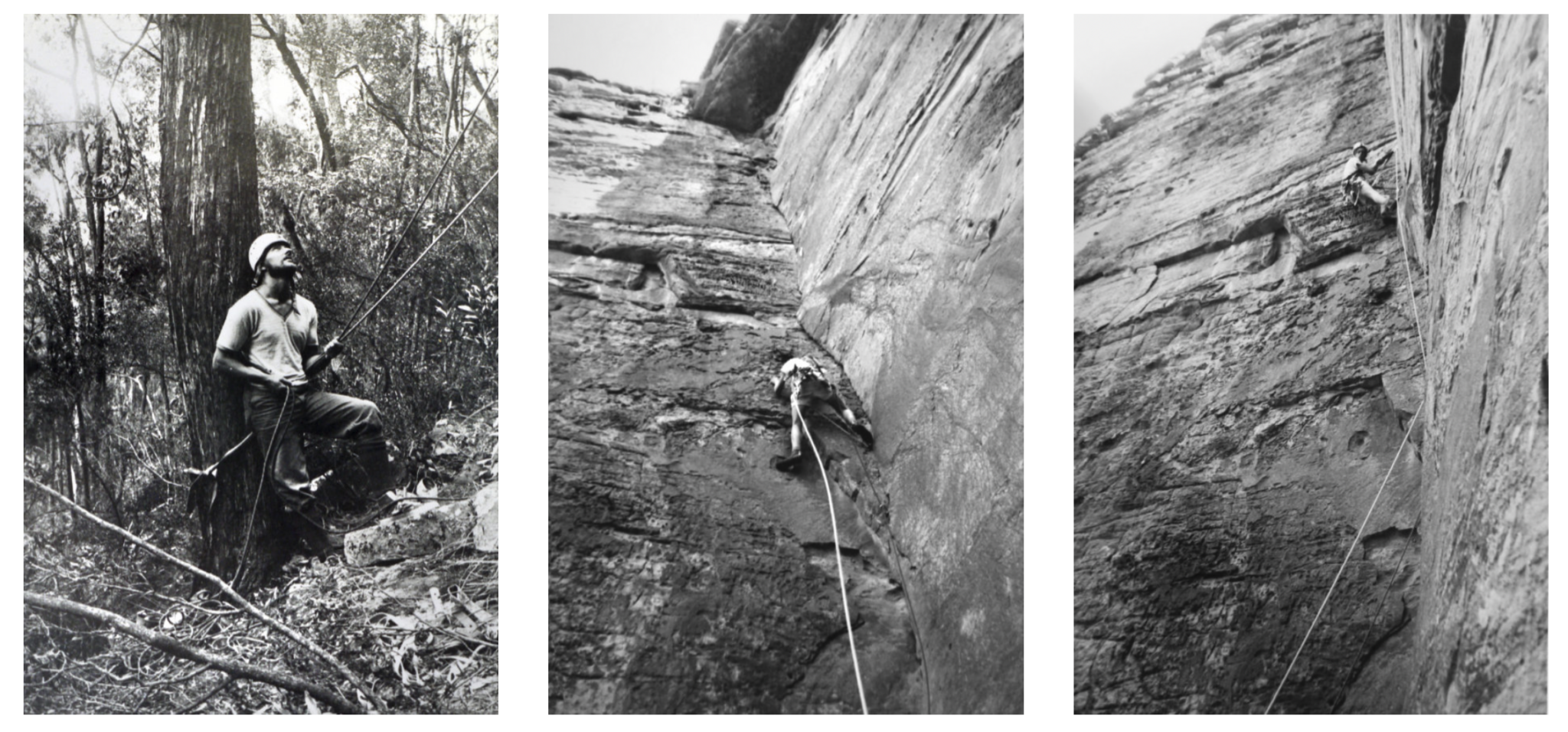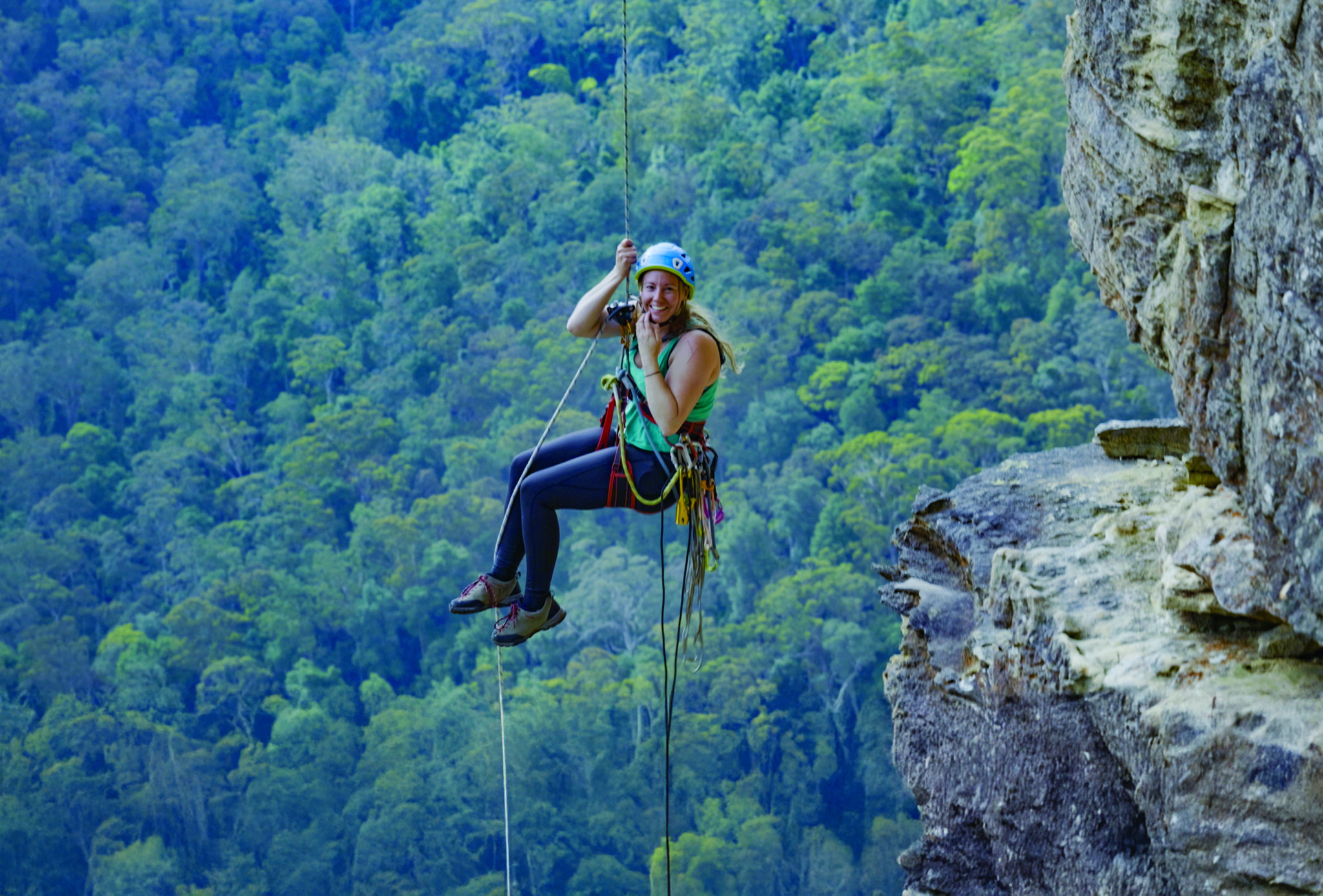
For over 40 years, Punks in the Gym has stood as a benchmark of hard climbing—sharp crimps, relentless sequences, and zero room for mistakes. A route with a rich legacy, it continues to lure and humble climbers from around the globe.
Nestled in the heart of Victoria’s Wimmera region, Mount Arapiles / Dyurrite is a world-renowned climbing destination celebrated for its impeccable rock quality and the diversity of its routes. Among its many iconic lines, none is more legendary than Punks in the Gym—a climb that redefined the limits of what was possible and placed Australia firmly on the global climbing map.
In 1985, Punks in the Gym (32, 8b+/5.14a) became the hardest route in the world, forever etching its name into climbing history. Located on the left face of the Pharos at Mount Arapiles. The line of Punks was conceived by Swiss climber Martin Scheel. While out climbing with Kim Carrigan and fresh off completing Masada (originally grade 30, now 29), Scheel began searching for a new project.
“I looked for new ground and was fascinated by the wall above the route Punks in the Gunks,” he said. “It seemed possible to me, so I set up the line with bolts.”
Scheel worked tirelessly on the route. “Unfortunately I could not free the line. After a break of 30 seconds I could climb the crux and connect the rest, but I couldn’t do it from the bottom. It was also always much too hot, 30 degrees Celsius in the shade, and in the morning nothing worked at all because it is an east wall,” he said.
“At Easter, Wolfi [Wolfgang] came. I had to go home and I gave him the line. Had I known that it would be the most difficult route in the world for some time, I would have stayed and waited for colder weather.”
On April 9, 1985, after just six days of projecting, Wolfgang Güllich of Germany ultimately claimed the first ascent.
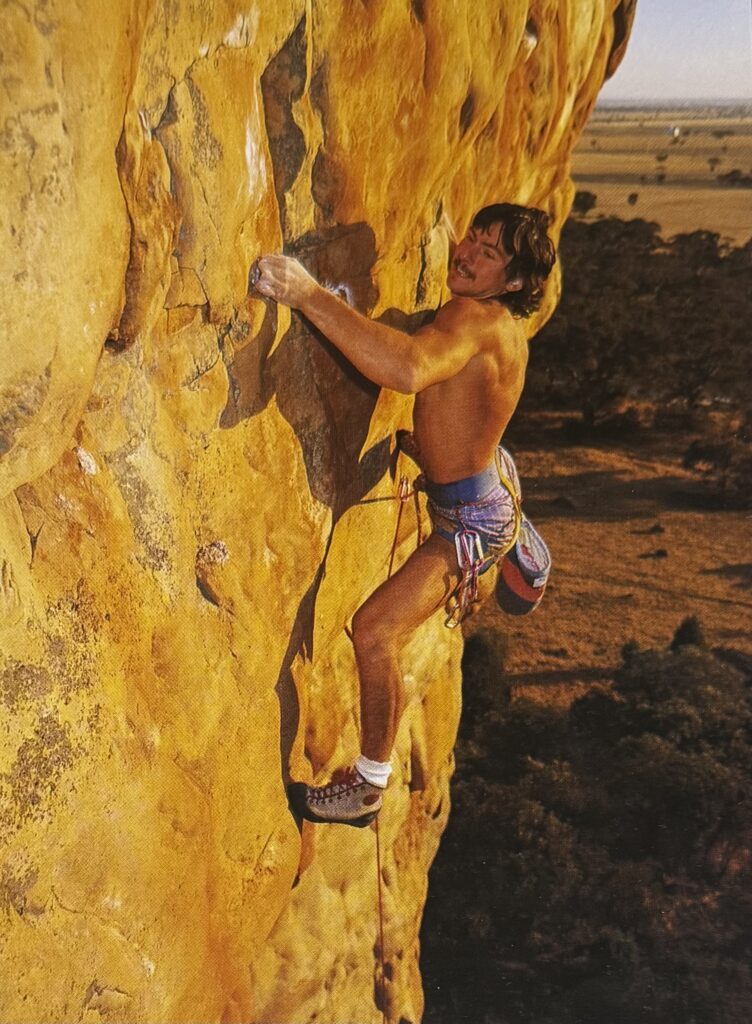
Wolfgang Gullich on the first ascent of Punks in the gym (31/32) Mt Arapiles Image by Heinz Zak
The route is an unlikely but beautiful 35-metre line protected by just eight bolts. Despite its global fame, it has never been on-sighted—a testament to its ongoing difficulty. The fastest ascent on record belongs to British climber Steve McClure, who astonishingly redpointed it in just two hours.
Over the years, Punks in the Gym has drawn elite climbers from around the world, each adding their own chapter to its legendary history. German powerhouse Stefan Glowacz made the second ascent back in 1986, while Australians Stuart Wyithe and Dave Jones notched the first Victorian and second Australian ascents, with Wyithe pushing the envelope further with his variant, Pretty in Punk.
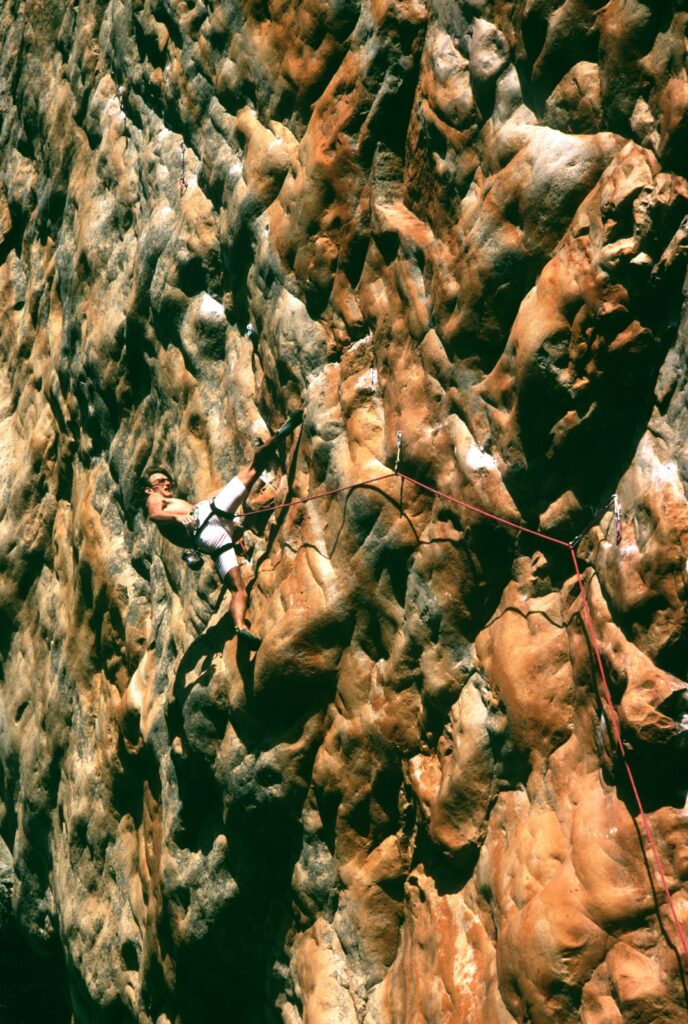
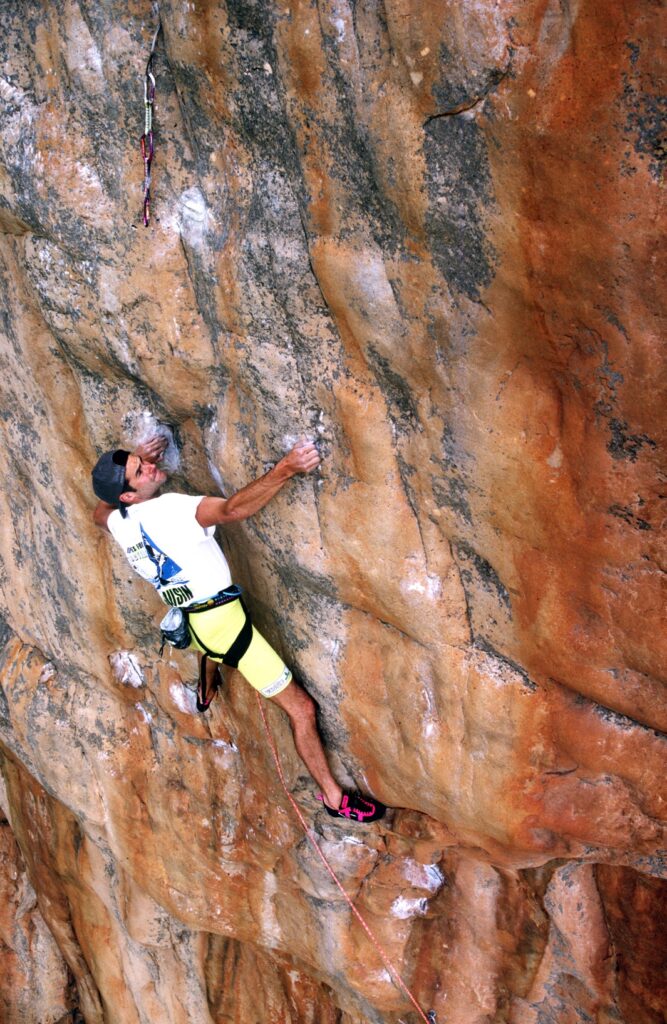
Left: Marko Lukic by Glenn Robbins Right: Jerry Moffatt by Glenn Robbins
In 2012, after nearly two and a half years of unwavering determination, Mayan Smith-Gobat claimed the first female ascent, marking a milestone for women in the sport. Then, in 2015, whispers in the climbing community suggested that none other than Alex Honnold quietly joined the list of those who’ve conquered this iconic line.
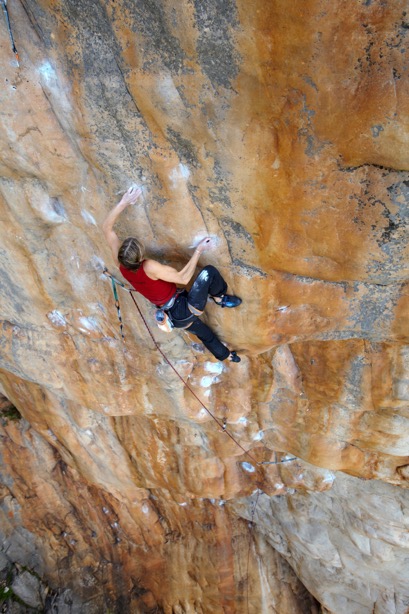
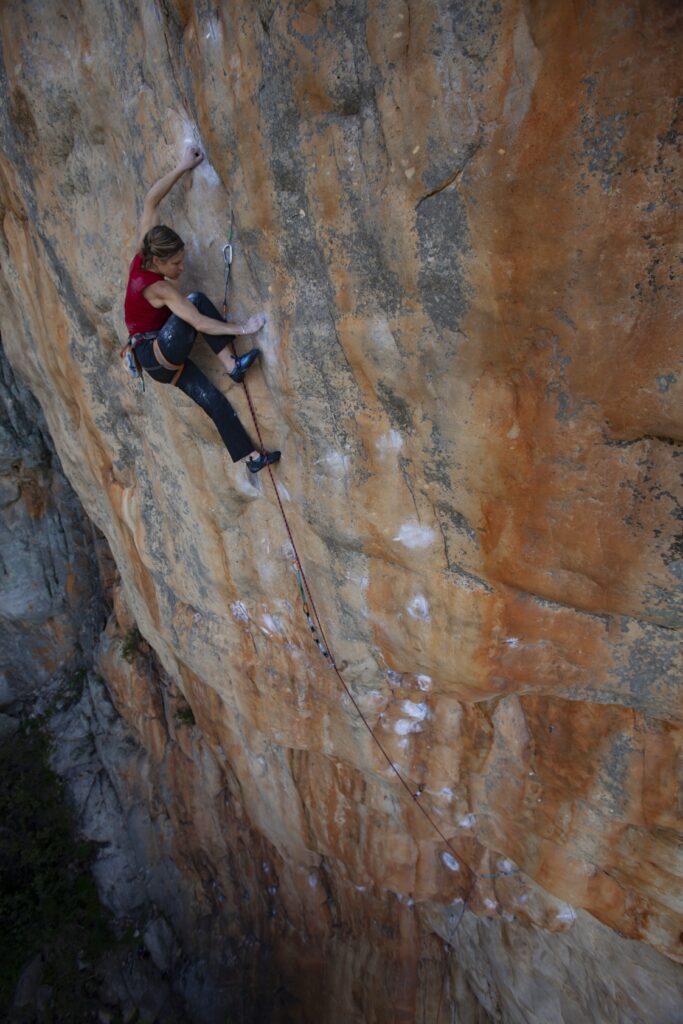
Mayan Smith Gobat – First female Ascent, Images by Simon Mentz
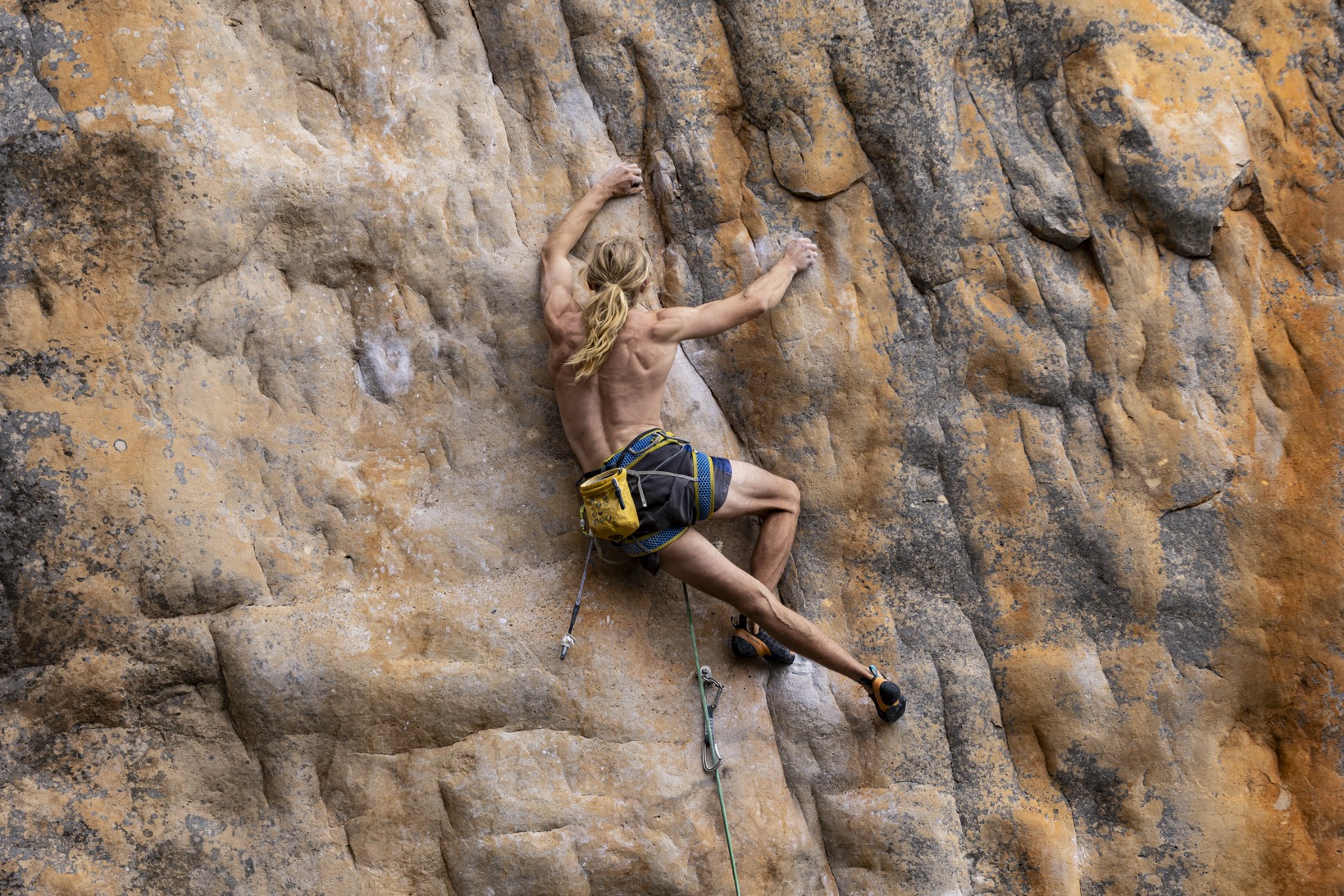
Punks in the Gym requires some of the most unusual and technical movements you’ll find anywhere. It’s not a climb you muscle through; it’s one you have to solve. The climb is best described by Nathan Hoette in the book, Arapiles, a million mountains:
“It is super-sequential. On Punks there are about six downward pulling holds in 18 metres. The rest are layaways, gastons, pinches, underclings, smears, the full works.
Normally, you move your hands then your feet. But on Punks you have to move your feet before your hands – do three foot moves then grab an undercling. You have to put your foot where it won’t slip, but where is that? Smears only work under full weight. You have to be really patient with the moves.”
Success on Punks doesn’t come from being strong. It comes from being calm, precise, and patient. It’s a climb that rewards creativity and punishes hesitation. The sequence doesn’t just test your body—it tests your mindset. Climbers often say the real crux isn’t one move, but the overall discipline it takes to keep flowing through the whole thing.
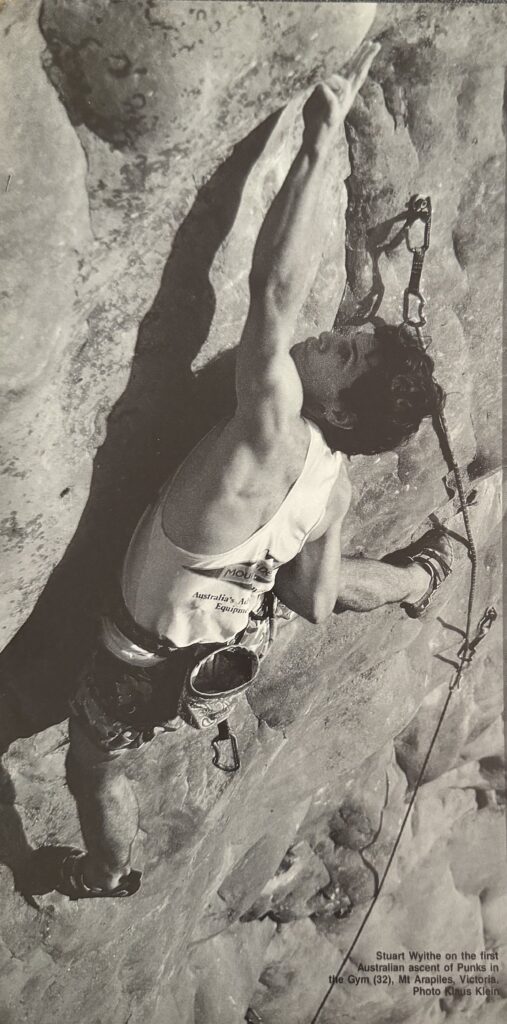
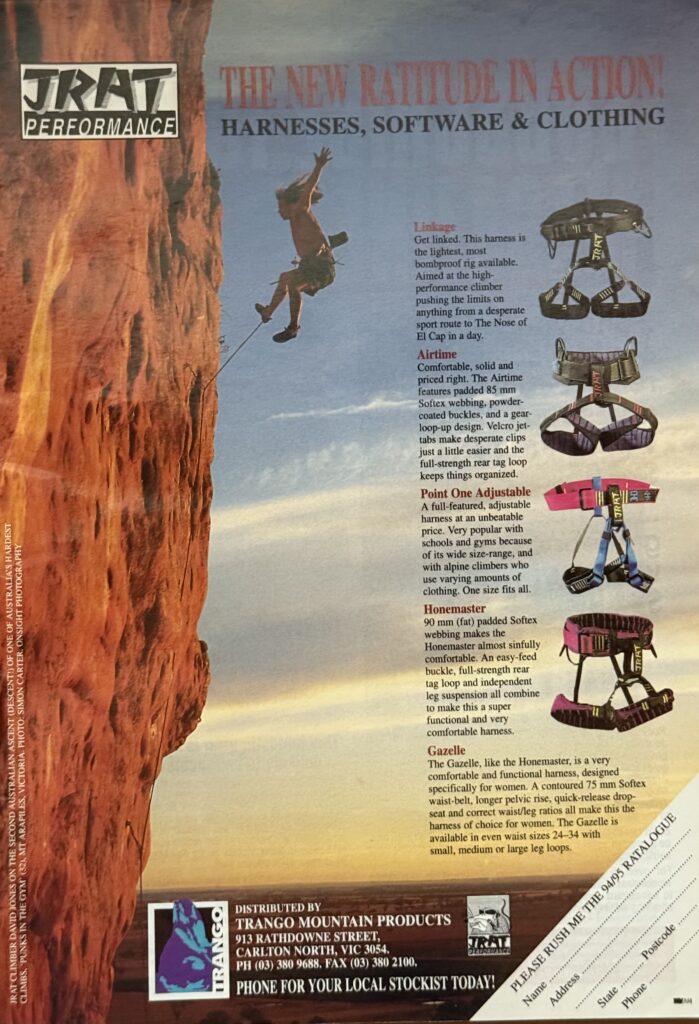
Left: Stuart Withe on the firstAustralian ascent of Punks in the Gym Image by Kiaus Klein Right: David Jones on the second Australian ascent (descent) Image by Simon Carter
The route’s legacy hasn’t been without controversy. For years, a debate has simmered over whether Martin Scheel may have chipped a crucial hold—now known as the “birdbath.”
When I spoke with Scheel, he was quick to clarify: “It’s important to me to note that I did not hammer any holds. The hold at the crux was a small flake, which broke off with a light knock from a carabiner. After that, it had a sharp edge and was about 9mm deep.”
Years later, it was Andy Pollitt who reinforced the hold, believing it had deteriorated further over time. Using epoxy glue, he shored up the crumbling edge, shaping a depression capable of holding water—earning it the nickname “the birdbath.”
When discussing the movement required before the glued hold was added, Martin Scheel reflected on how different the crux used to be:
“The original hold was about 9 millimetres deep—I can still remember the line it left in my finger skin. It seems the hold has become much deeper and wider due to the gluing. The way some climbers are now switching hands in online videos would have been absolutely impossible with the original size. An ascent before or after the hold broke just isn’t comparable (sorry to those who’ve since repeated the route).
I had to climb the crux completely differently—and I’m sure Wolfi did it the same way:
- Left hand to the hold, then clip.
- Right hand onto a shoulder-level crack, about 50 cm above the hold.
- Left hand joins on the same shoulder hold—this is where climbers now often already have their left hand—both hands straining outward.
- Then place a foot on the original hold.
The real crux was moving from step 2 to 3. That shoulder move—step 2—isn’t used at all anymore. I’m convinced the glued hold has made the route about a third of a grade easier.”
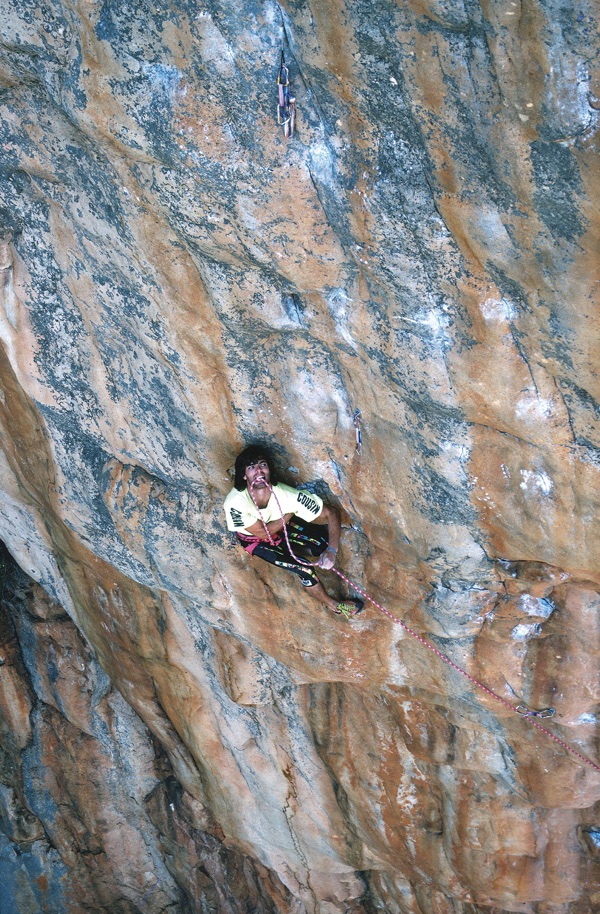
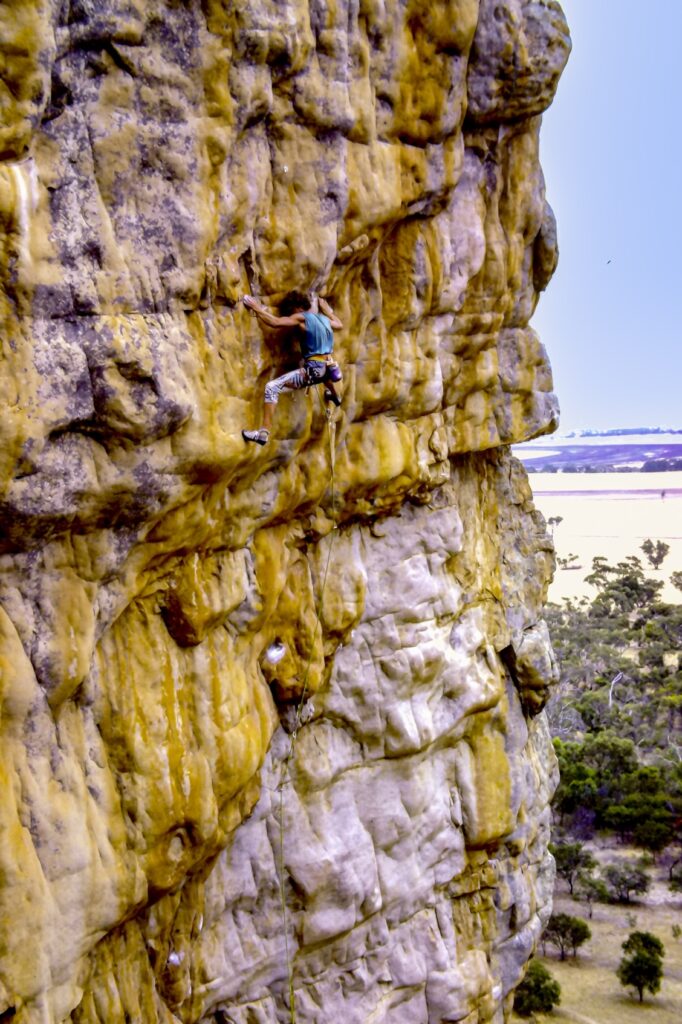
Left: Andy Pollitt, Image by Glenn Robbins Right: Martin Scheel by Kim Carrigan
Over the course of three years, Andy Pollitt poured himself into Punks in the Gym, spending more than 60 days battling the route. His relentless effort became the stuff of legend, marked by obsession and determination.
Simon Mentz recalls:
”I remember belaying for Andy—he’d take a fall at the crux, then just get straight back on and send it to the top. The guy was running on VBs, cigarettes, and the occasional Cherry Ripe. His whole routine was: have three goes on Punks, rest for two days, then get back on the wall on day three.
On his second trip out, I was belaying him on the final day before his flight. He had two shots that morning, and on the second, he came off right at the end of the crux sequence. I lowered him down and, just as we hit the ground, it started to drizzle. Andy looked up and said, “That’s it—I can’t do this route.”
But I could see how strong he was climbing, and I said, “You were looking solid. This drizzle will pass. Let’s meet back here later this arvo and give it one more crack. You’ve got nothing to lose.”
Sure enough, we came back that evening. He jumped on, punched through the crux for the first time ever after two years of trying, and then… fell right at the very top of the wall. He was gutted. I was gutted for him.
It wasn’t until his third trip that he finally ticked the thing.”
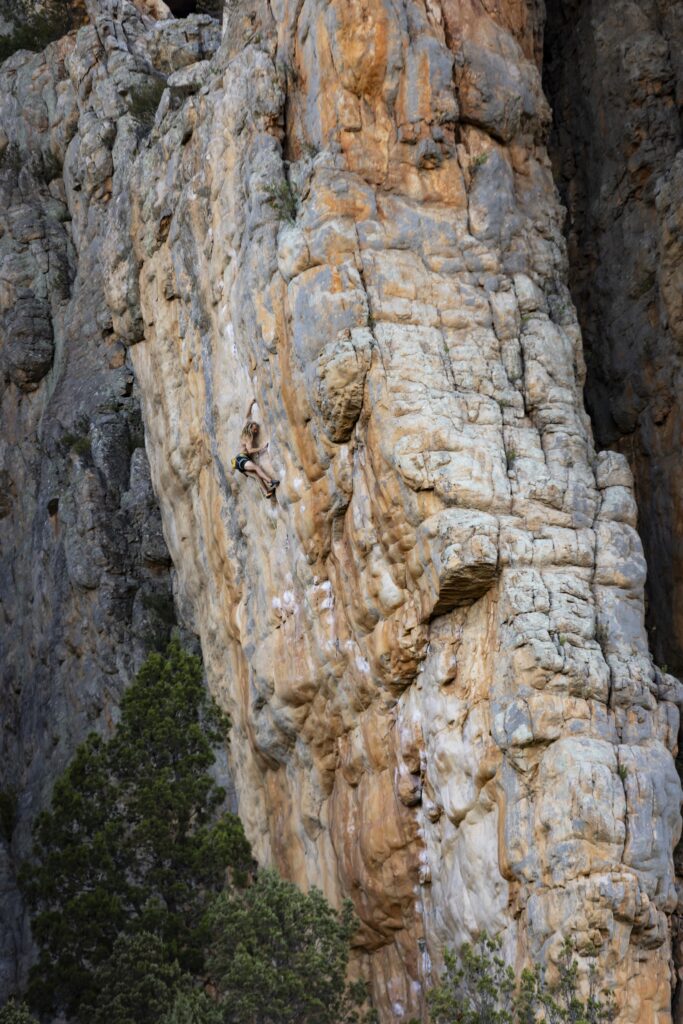
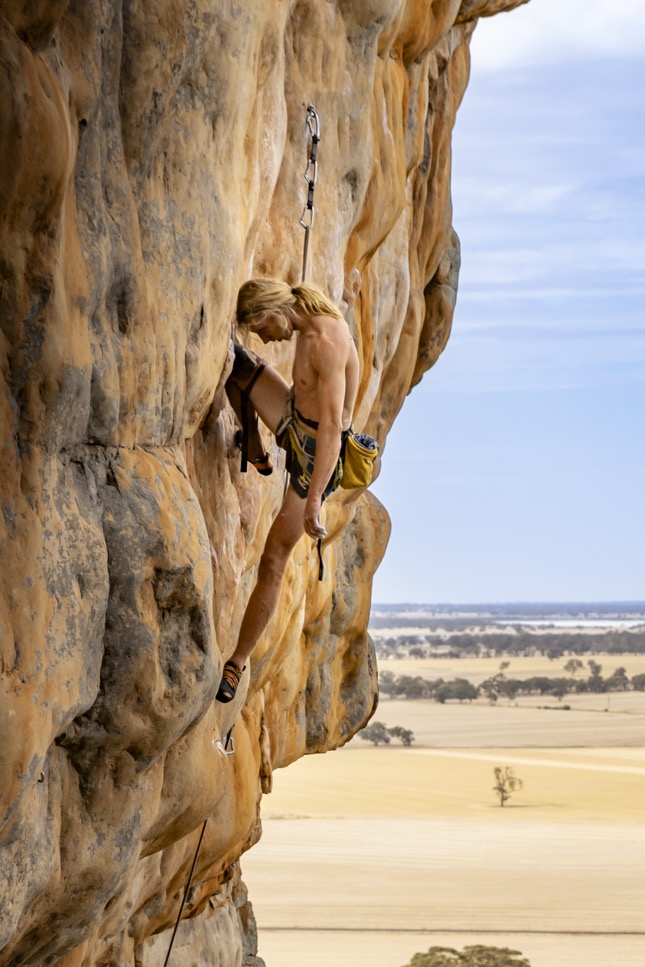
Daniel Nikitin Images by Claire Williams
These days, it’s more than just a climb—it represents how climbing has evolved and how it keeps pushing the limits. At Arapiles, where the rock is full of history and character, this line continues to draw in climbers from around the world, challenging and inspiring each new generation that steps up to it.
I’ve had the privilege of watching this next generation take on Punks. Watching Daniel Nikitin on the route is like witnessing art in motion. Each movement is a piece of perfectly timed choreography—fluid, deliberate, and precise. He glides effortlessly across the rock, the slick surface of the wall transformed into a polished canvas beneath his hands and feet.
Daniel first heard of Punks in the Gym at Burnley Bouldering Wall. The name stuck—quirky and challenging, a hard route that seemingly mocks the very idea of indoor training. Curiosity quickly turned into obsession. An injury on the nearby route Somalia pushed his attention toward Punks. “It’s less demanding on the fingers,” Daniel explains. “A possible option amidst recovery.”
On May 15th, 2025, Daniel linked the crux and clipped the chains—claiming the redpoint at last. His journey to this moment is what makes his story so powerful. The dedication, patience, and love for the process he brought to the climb reflect exactly what this line has always stood for—pushing your limits, embracing the struggle, and showing up day after day. Daniel’s ascent adds to keeping the spirit of this iconic line alive.
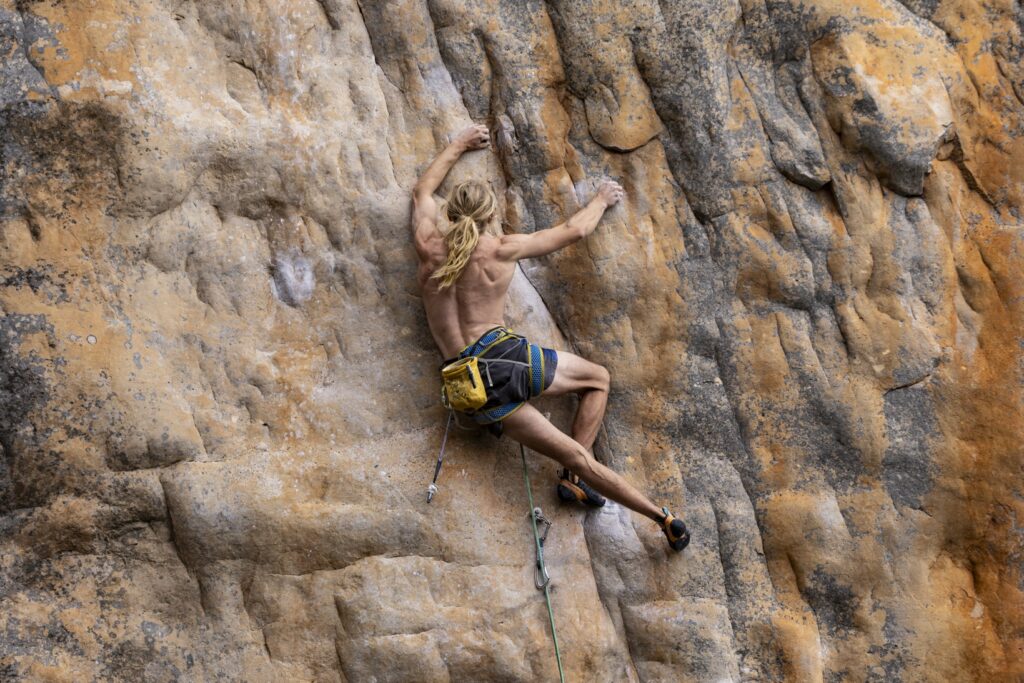
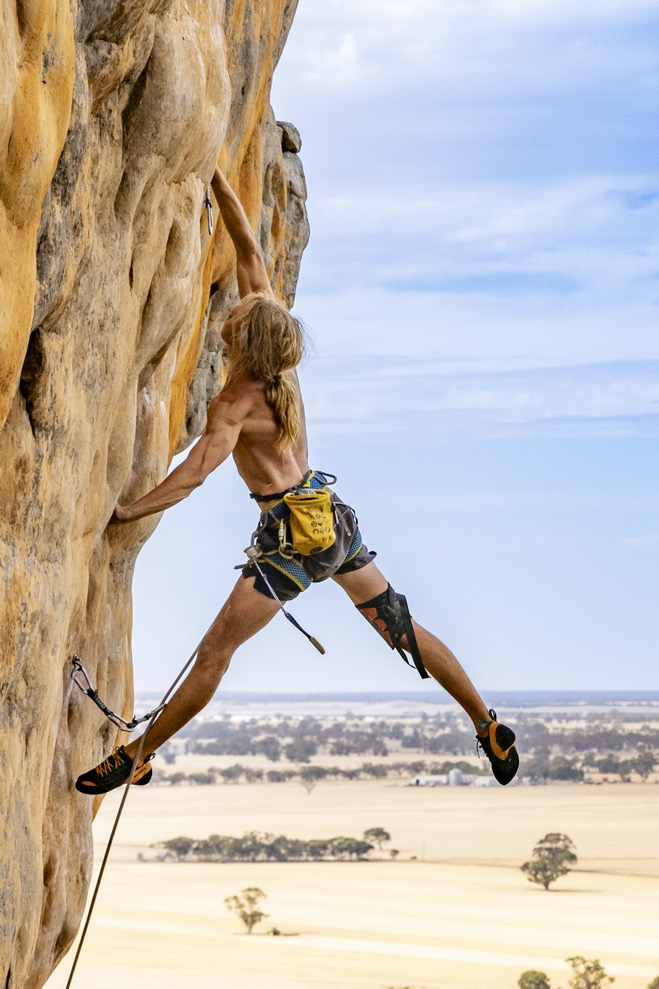
Daniel Nikitin Images by Claire Williams
In the early 1990s, photographer Glenn Robbins spent 45 days living in a caravan among the gum trees, documenting the life and climbing of Andy Pollitt. Acting as Pollitt’s personal photographer during this intense period, Robbins captured not just the climbing, but the character behind it. Here he reflects on that time.
Punching in at the Gym
By Glenn Robbins
We lived in a static van parked at the top of the gums. Borrowed from some artistic type. Strategically parked at such an angle as to be baked in the full afternoon sun, my end of the van as it happened.
The only material we could scrounge to cover the large front window was a bright red banner with the words “MEAT FOR SALE” emblazoned upon it in bold white.
Day after day we’d return from yet another protracted thrashing to find some punter milling about the van practically bursting with excitement at the prospect of obtaining meat.
I was keenly aware of their disappointment and sense of betrayal, as I apologised profusely. We turned the banner upside down and inside out—they still came. In an act of contrition I was sorely tempted to offer up slices of Andy, albeit a bit singly – Lean and Mean.
The banner cast a weird red light throughout the van well into the summer night.
We imagined punters lining up for an entirely different product or service with Andy offering me up, as I possessed a little more fat, particularly around the rear rump.
Desperation and despondency had taken their toll, with blackness descending upon us over time. By the second month we’d barely speak, a morning greeting at best – merely acknowledging each other’s presence. After coffee and cigarettes we‘d pick up the packs and shuffle off to Punks to take up our positions.
Readers more advanced in years may remember The Looney Tunes characters ‘Ralph Wolf’ and ‘Sam Sheepdog’ punching in each morning with a simple greeting—“Morning Sam”, “Morning Ralph”—moments before all the fisticuffs and hands about the throat business. Summing it up perfectly.
The occasional desperate plea for a break in the routine, another climb or change of scene, a successful ascent to raise the spirits, fell on deaf ears.
I had counted 45 days on the thing before losing track, patience and funds fully depleted. I had to find work to carry on, subsist.
Not being present on the day that he completed it, I was never forgiven. Andy hung up his boots and would never climb again.
The supposedly iconic shot (on the cover of Andy’s book) with the wild eyes and rope in his teeth was captured on the second day…while he was in the process of falling.