The Hidden Cost of “Secret” Locations: A response from Lost mtns & Bluemtns Explore
Back in February, Vertical Life Magazine published an online article by Blue Mountains canyoning guide Aimee Elise titled The Hidden Cost of “Secret” Locations: How Exposure is Damaging Blue Mountains Canyons.
The piece explored a growing issue: a surge in visitor numbers to once-quiet canyoning locations, driven by guidebooks, blogs, and social media posts promoting “secret” infinity pools and hidden swimming spots.
With that rise in popularity has come visible impact—graffiti on rock walls, rubbish left behind, and human waste appearing along access tracks—raising concerns about the long-term health of these fragile environments.
While the article did not name any specific company or individual, online discussion quickly pointed toward Bluemtns_Explore and Lostmtns Guidebooks.
Following the article’s release, a spokesperson for the companies contacted Vertical Life to request the opportunity to respond.
This is what they had to say:
Protecting fragile canyon environments in the Blue Mountains is a necessary conversation. Increased visitation brings impact that is not in dispute.
A lot has changed since we were in Katoomba High School, hitting canyons in the mid-afternoon, all piling into a mate’s Holden Commodore and driving out to Mt Hay for a glorious few hours in the canyons before returning home at dark. A bunch of kids muddy, hungry and cold.
Since then, social media has become part of everyday life. We launched BlueMtns_Explore, and one of our team founded LostMtns. The landscape both physically and digitally has shifted.
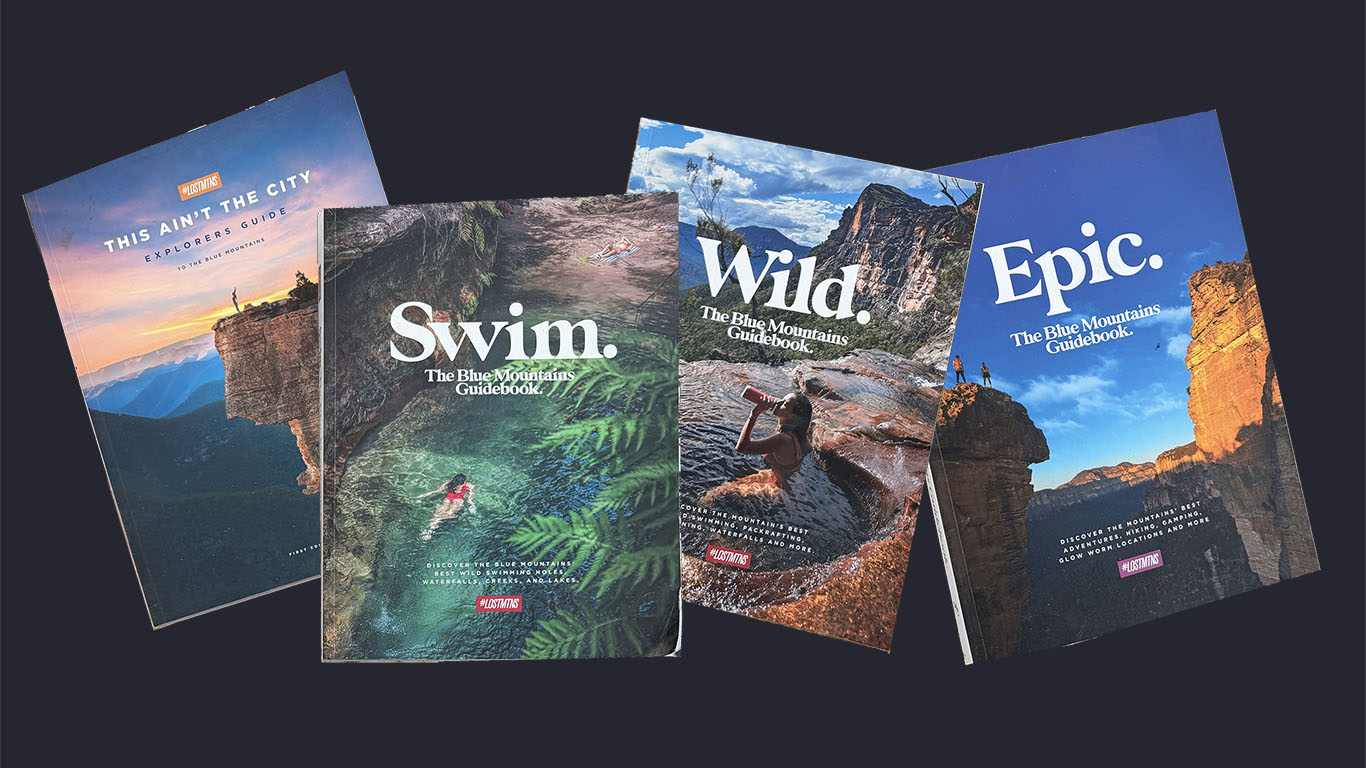
Over the past six years, our team has released five Blue Mountains guidebooks, collectively covering more than 30,000km while researching them in the Blue Mountains. We have seen our fair share of the beautiful Blue Mountains wilderness, and the diverse differences that have changed our local landscape. The guidebooks that we have released are designed to help people get outside responsibly, to understand how to behave in fragile environments and how to navigate safely using reliable mapping tools.
However, an increasingly common claim is that guidebooks and social media are the primary drivers of environmental damage in the Blue Mountains.
Interestingly enough the argument has never been that the information inside any Blue Mountains guidebooks is incorrect. Rather, the claim is that the very existence of that information and their distribution is the reason more people are visiting and, in turn, trashing our home.
That distinction matters.
Take, for example, the individuals spray-painting arrows onto sandstone. These people are not following professionally produced guidebooks or structured online maps. They are not reading conservation sections or engaging with proper education.
They are piecing together incomplete information, fragments from blogs, cropped screenshots and second-hand directions, then improvising in sensitive terrain.
That behaviour stems from a lack of reliable information and education.
There are more than a dozen Blue Mountains guidebooks in circulation, some of which have been around for decades. Blue Mountains Best Bushwalks alone has sold over 60,000 copies. If professionally researched guidebooks were inherently destructive, the damage would have been evident long ago.
Instead, guidebooks provide context: clear access points, accurate directions, environmental warnings, difficulty ratings and explicit guidance on fragility and ethics. People navigating with reliable information do not need spray cans to mark their way. They are far less likely to cut new tracks or dump rubbish because they understand the impact of their behaviour.
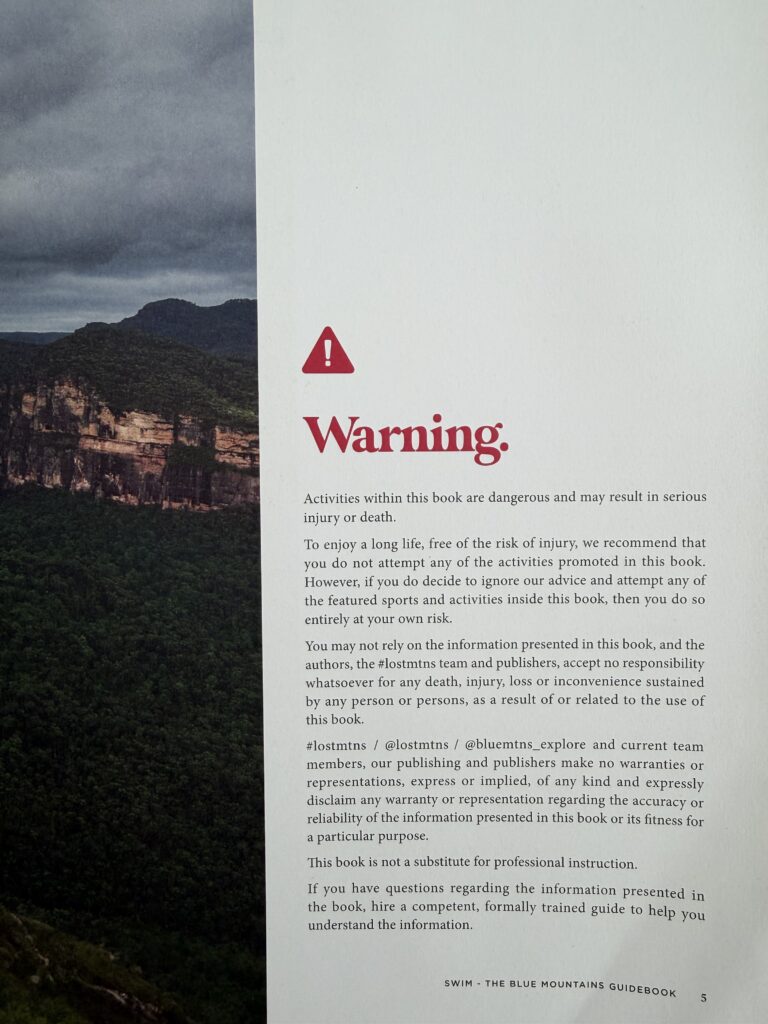
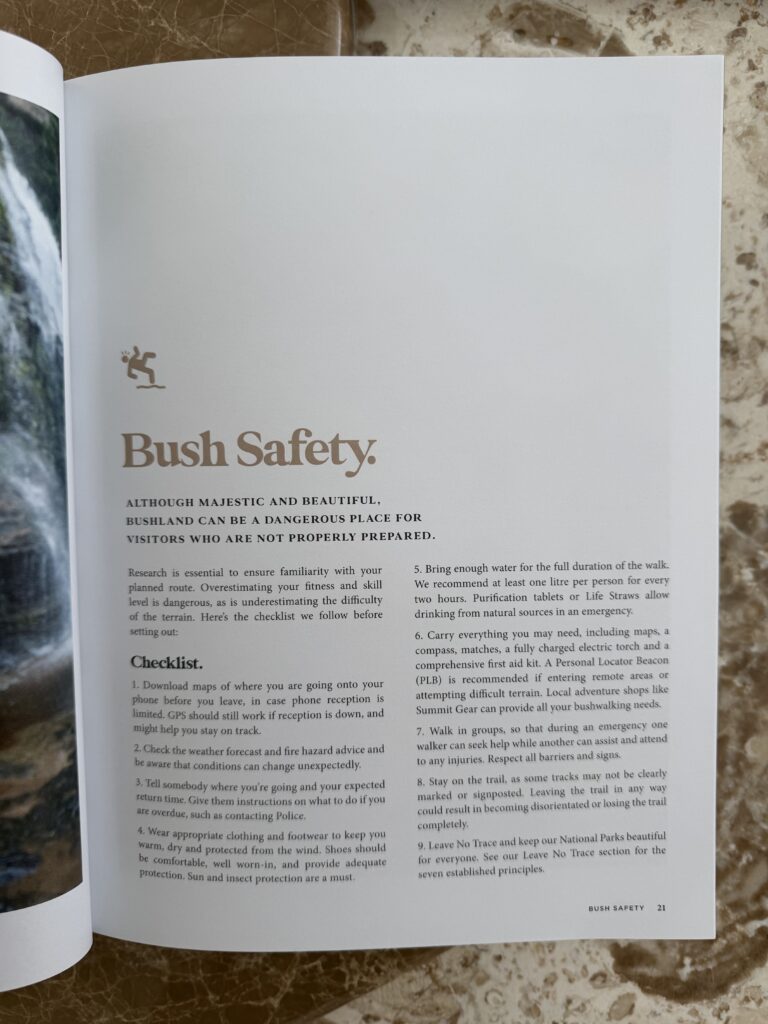
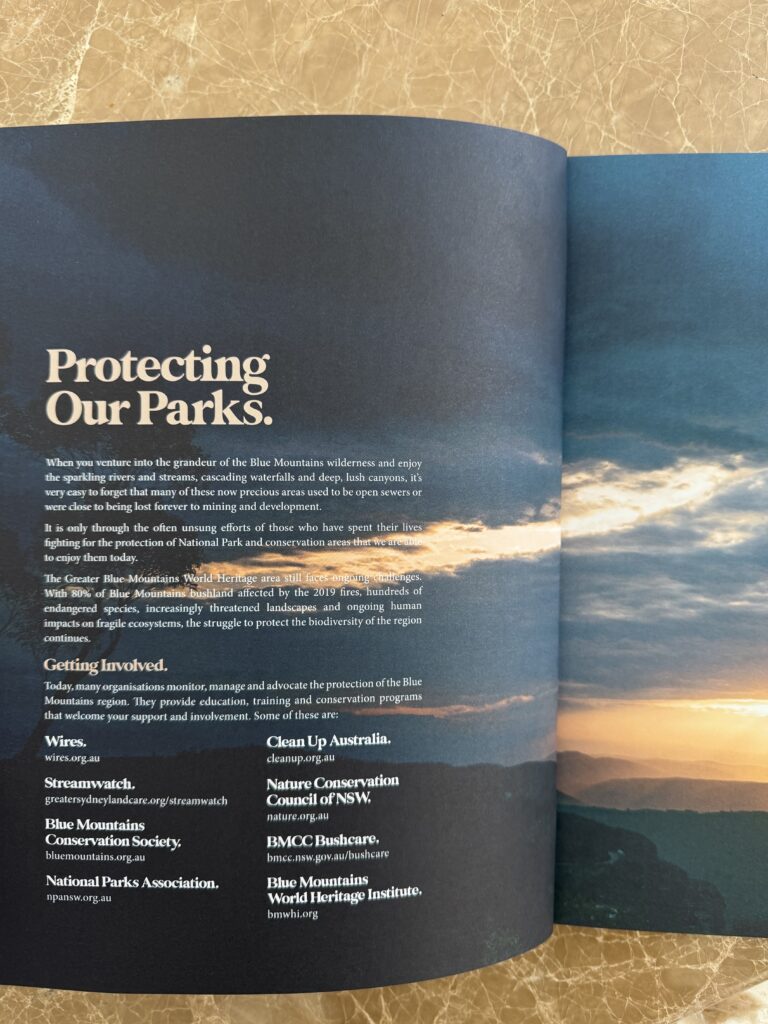
Left: Warning page included in the guidebooks. Centre: Bush safety page. Right: Stewardship page.
If guidebooks and accurate resources disappear, visitation will not. People do not suddenly stop exploring.
Instead… they go blind.
And blind navigation is where damage accelerates. Without clear entry points or directions, walkers create new tracks. When uncertain, some mark walls or trees or worse, spray arrows onto rock.
So who, then, is responsible?
Social media influencers? Guidebook creators? Blogs? National Parks? Tour operators? The government? Your neighbour?
If someone vandalises public property, do we blame every mural artist in the region?
If someone is caught speeding on the highway, do we blame google maps or the car manufacturer?
No. We hold the individual accountable.
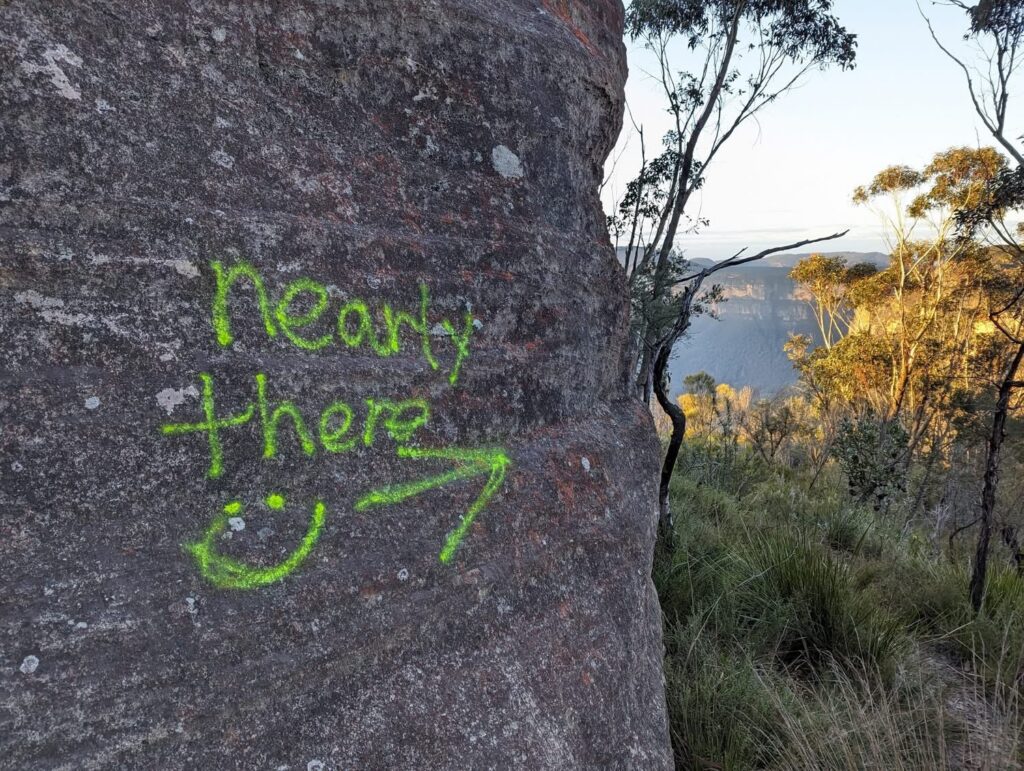
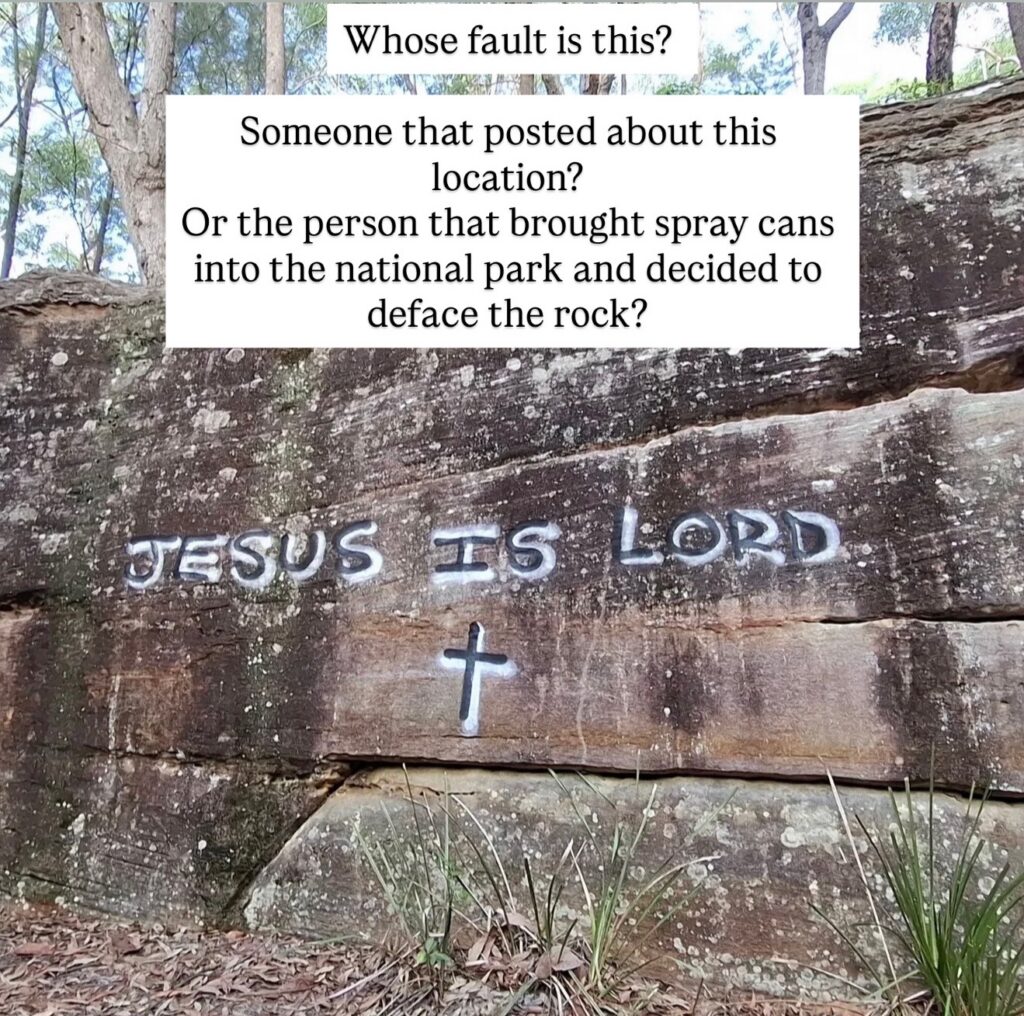
Left: Image from the original article by Aimee Elise Right: A social media post from Wild Magazine, with comments from Bluemtns_explore.
Personal responsibility still exists. Shifting blame away from those causing damage weakens the entire conversation. People cannot deface rock, litter, destroy fragile ecosystems, and then have responsibility redirected elsewhere because it’s convenient.
There is also a contradiction in the gatekeeping argument. If exposure alone is the problem, then anyone who visits somewhere beautiful and uploads a photo contributes to visibility.
Have you ever posted a photo of somewhere special? That image can be screenshot, reverse-searched and traced. Someone with half-baked directions may then pack a car with friends and attempt to find it without context or guidance.
Blaming visibility alone quickly becomes illogical and weakens the conversation.
The real issue is behaviour once people arrive.
We are not saying social media has no impact. For example, Lincoln’s Rock saw a dramatic spike in visitation after a high-profile post from a Korean pop star went viral. But was shutting it down the only solution? Or does that highlight the need for infrastructure, education and management alongside exposure?
Want to join the conversation?
Jump over to the Vertical Life Mag socials and have your say!
To conclude: there should absolutely be consequences for vandalism and littering just as there are for damaging public property elsewhere.
There should also be serious discussion about carrying capacity and access management within the parks.
But responsibility must remain with the individuals who cause damage, not those promoting informed, ethical engagement.
Environmental protection will not be achieved through scapegoating. It will be achieved through education, stewardship and accountability.
How many signs on our trails clearly explain Leave No Trace principles?
How much visible education exists at key lookouts?
How prepared are international visitors for Australian bush conditions?
We receive millions of visitors from diverse cultural backgrounds. Many simply do not understand bush ethics. Education is paramount. A sign will not fix everything but it is a start.
Fragile landscapes deserve more than online outrage. They deserve practical education so those who enter them understand how to behave.
In our view, education is the only scalable solution.
Education makes it clear: you cannot litter. You cannot deface rock. You cannot damage fragile environments without consequence, to the land and to yourself.
And look, no one is perfect we’ve all made mistakes.
The real question is: once you learned better, did you do better?
Isn’t education what changes behaviour?
So how do we educate millions of Australians and international visitors?
Clear signage. Infrastructure. Enforcement. Guidebooks, and social media. It all plays a part.
Reels that show environmental damage. Posts explaining why we do not mark rock. Content reinforcing Leave No Trace principles. Guidebooks packed with not just directions, but conservation messaging.
From our perspective, that is constructive contribution. Not wasting time blaming everyone else and finger pointing but rather educating others in how to act in the wild.
Because the stark truth is this: there are thousands of influencers promoting the Blue Mountains with step-by-step directions to all of these places and zero conversation about behaviour.
There are hundreds of blogs with patchy or incomplete information.
And with Western Sydney Airport opening soon bringing millions of additional visitors, exposure is not decreasing.
So what happens then?
That is the real conversation.
Enjoying this content?
Stay updated on our latest stories by subscribing to Vertical Life Magazine.